If you want to send someone a good congratulations message for a new baby boy, here are a few ideas:
- Congratulations on the birth of your son!
- Congratulations on your beautiful baby boy!
- Welcome to the world, little guy. We are all so excited to meet you!
- Sending you the warmest congratulations on the birth of your son and wishing you nothing but love.
- A son is a blessing. Congratulations, and may you cherish him forever.
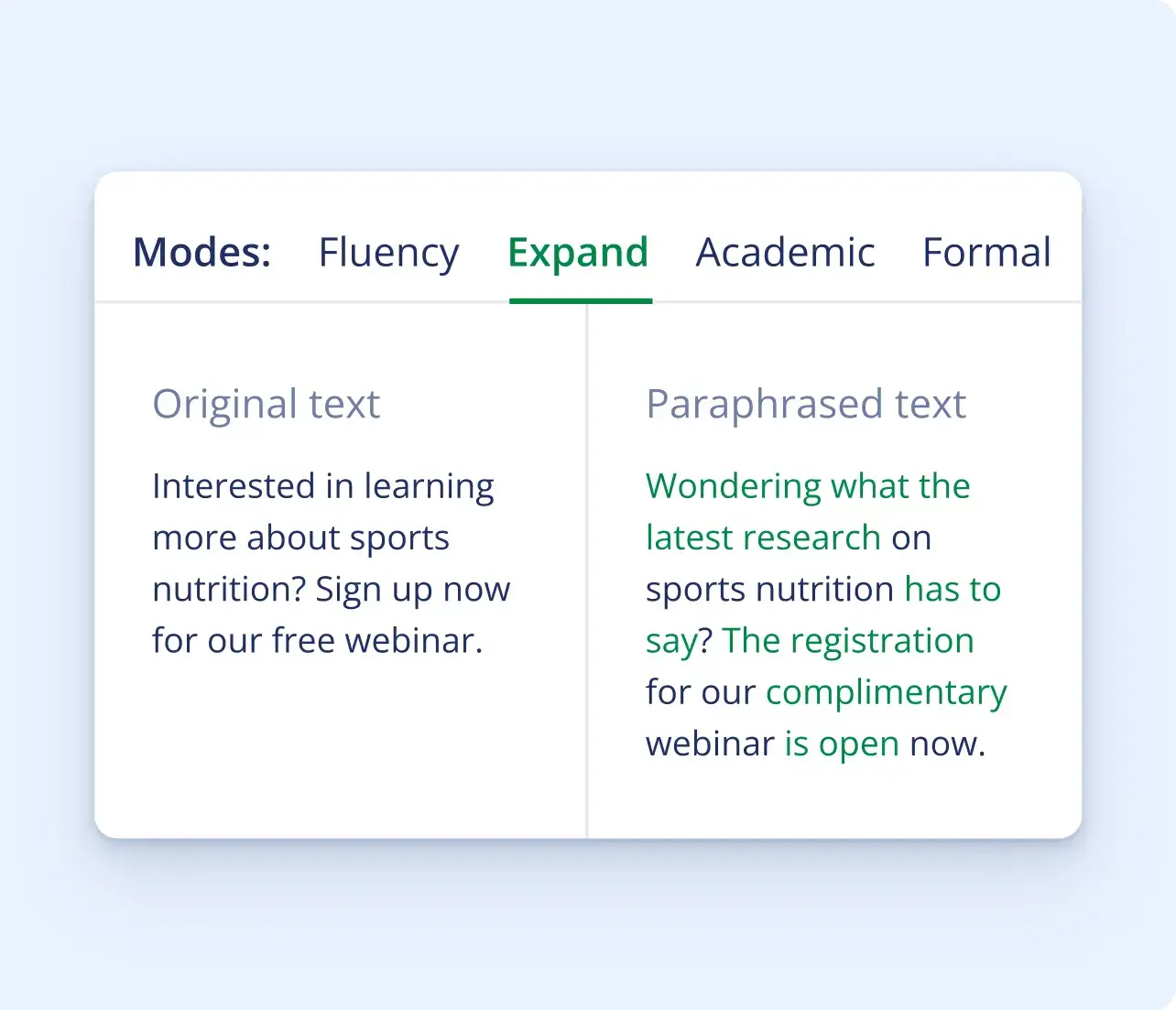
You can also use Quillbot’s Paraphraser to help you write your own unique new baby congratulations message.
Read this FAQ: What’s a good congratulations message for a new baby boy?
Want to send congratulations to someone for the arrival of a new baby girl? Here are some messages you could use:
- Congratulations on the birth of your daughter!
- Congratulations on your beautiful baby girl! I wish you both health and happiness.
- Wishing you all the best with your new daughter. Congratulations!
- A daughter is a true blessing. Congratulations on her arrival!
- Sending the warmest congratulations for the birth of your daughter and wishing you many moments of love together.
Or use Quillbot’s Paraphraser to help you find just the right words for your new baby congratulations message.
Read this FAQ: What’s a good new baby girl congratulations message?
You can create a happy Sunday meme using an AI image generator like Quillbot’s AI Image Generator. Just enter your happy Sunday meme idea as a text prompt. For example:
“A silly internet meme of a smiling cat. The caption says, “Every day is Sunday for me.”
Improve the happy Sunday prompt until you generate a version you like.
Read this FAQ: How can I create a happy Sunday meme?
You instantly convert your happy Tuesday GIFs to image files online for free using Quillbot’s GIF Converter. Just follow these steps:
- Upload your image file. The drag and drop function makes it easy.
- Choose your output format—such as JPG, PNG, WEBP, AVIF, HEIC, or BMP.
- Click “Download,” and you’re ready to go!
Read this FAQ: How can I convert a happy Tuesday GIF?
You can make happy Tuesday memes using online tools like Quillbot’s Image Generator. Simply follow these steps:
- Enter your prompt. You can say something like “Generate a taco Tuesday cartoon meme.” Be as specific as you want.
- Adjust the output in the side bar by describing any changes you want to make.
- Once you’re happy with the final product, click the “Download” icon in the button right corner of the image.
Read this FAQ: How can I make happy Tuesday memes?
LGBTQ+ is an acronym that stands for lesbian, gay, bisexual, trans, and queer. The plus symbol (+) is added at the end to recognize that many other identities—such as intersex and asexual individuals—can also fall within the LGBTQ acronym. You can use this acronym in your Happy Pride Month wishes and greetings.
LGBTQ+ is used to recognize the common causes of those who live and love outside heterosexual norms.
Create acronyms using Quillbots free Acronym Generator.
Read this FAQ: What does LGBTQ+ stand for?
When referring to the month-long celebration and commemoration of LGBTQ+ rights, Pride Month is capitalized as a proper noun.
Pride Month takes place every June in the United States. It often features pride parades in cities around the country, along with other LGBTQ+-focused events. During this time it’s customary to wish LGBTQ+ friends, relatives, and allies Happy Pride.
Make your Happy Pride Month messages flawless with Quillbot’s free Grammar Checker.
Read this FAQ: Is it pride month or Pride Month?
“Happy Pride” is a common greeting or affirmation during Pride Month.
Pride Month is dedicated to LGBTQ+ rights and visibility. It began as a commemoration of the 1969 Stonewall Uprising, which occurred in response to a police raid on the Stonewall Inn, a gay bar in New York City.
Today, Pride Month takes place during June in cities across the United States. It’s often marked by pride parades and other LGBTQ+-focused events.
Craft personalized Happy Pride messages using Quillbot’s Text Generator.
Read this FAQ: What does “Happy Pride” mean?
Yes, “autumn” and “fall” refer to the same season between summer and winter. “Autumn” is more common in British English, while “fall” is used more often in American English.
However, if you say, for example, “happy autumn,” both British and American people will understand you.
If you want to experiment with changing up vocabulary, tone, or style in your writing, try out Quillbot’s free Paraphraser.
Read this FAQ: Is autumn and fall the same?
The autumn equinox is usually on September 22 or 23 in the Northern Hemisphere. It marks the beginning of astronomical autumn and is therefore a great day to wish your loved ones a happy autumn.
Learn more about the autumn equinox by asking Quillbot’s AI Chat.
Read this FAQ: When is the autumn equinox?