AI Detector for Teachers: Support Academic Integrity
AI tools have quietly found their way into classrooms everywhere. Students use them to brainstorm, draft, and refine their work, and teachers are increasingly asking, ‘How do you tell the difference between a student’s own thinking and a polished AI output?’ That’s where an AI detector for teachers comes in.
Used well, an AI detector for teachers becomes a practical ally—flagging submissions that need a closer look, saving hours of manual review, and supporting the kind of professional judgement great teaching already relies on.
This guide breaks down how to use an AI detector for teachers effectively in your classroom.
Why teachers benefit from AI detectors
AI detection isn’t just an academic integrity issue. It’s a practical workload issue too.
Teachers today are managing:
- Dozens of assignments per week
- Increasingly sophisticated AI-assisted writing
- Pressure to assess every student fairly and consistently
With an AI detector, teachers gain:
- A faster way to identify which submissions need deeper review
- A consistent, neutral first pass across an entire class
- More time for meaningful feedback, teaching, and student support
Think of it as a force multiplier: not a replacement for your judgment, but a tool that makes your judgment go further.
How to use AI detectors in practice
The most effective way to use an AI detector is as the first step in your review, not the last. A practical workflow could look like this.
- Run a detector scan across submissions
- Focus your deeper review on flagged work
- Compare against earlier writing samples or in-class work
- Have a brief conversation with the student if needed
- Use findings to inform feedback, not just decisions
This approach is especially valuable for high-volume grading periods. Instead of reading every word of every submission with equal intensity, you can concentrate your attention where it genuinely matters.
Turn flags into teaching moments
One of the most underrated benefits of AI detectors is what they make possible after the flag. A flagged submission is a prompt for a conversation, not a verdict. It gives teachers a concrete, neutral starting point to
- Review the student’s drafting process
- Discuss how they approached the assignment
- Teach appropriate and inappropriate uses of AI tools
These conversations often reveal more about student understanding than the assignment itself, and they create an opportunity to set clearer expectations for the whole class going forward.
Quillbot’s free Plagiarism Checker can also help in situations like this by quickly identifying any copied or closely matched content, giving teachers additional clarity alongside AI detection.
Support your own judgment (don’t replace it)
AI detectors are most powerful when they work alongside teacher expertise, not instead of it.
It’s worth noting that, like any tool, detectors aren’t perfect. Results should be treated as one signal among several, combined with what you already know about the student’s writing style, class performance, and earlier work.
In practice, the best approach is
- Use the detector to prioritise, not to conclude
- Pair results with in-class writing samples or drafts
- Let the conversation with the student complete the picture
Build a consistent review process
One of the quieter advantages of AI detectors is the consistency they bring to a review process that can otherwise vary submission to submission.
Over time, teachers can use detection data to
- Spot patterns across a class, not just individual submissions
- Adjust assignment design to reduce AI reliance
- Build clearer classroom policies around AI use
The result is a fairer, more structured process and a classroom culture where students understand the expectations from the start.
AI detectors give teachers a smarter way to manage one of education’s newest challenges. Used well, they save time, support fair assessment, and open up conversations that strengthen student learning. The real value isn’t in the flag itself. It’s in what you do with it.
Frequently asked questions about AI detector for teachers
- How can AI detectors support academic integrity in the classroom?
-
AI detectors help teachers quickly identify whether submitted work may be AI-generated, making it easier to open fair and productive conversations with students.
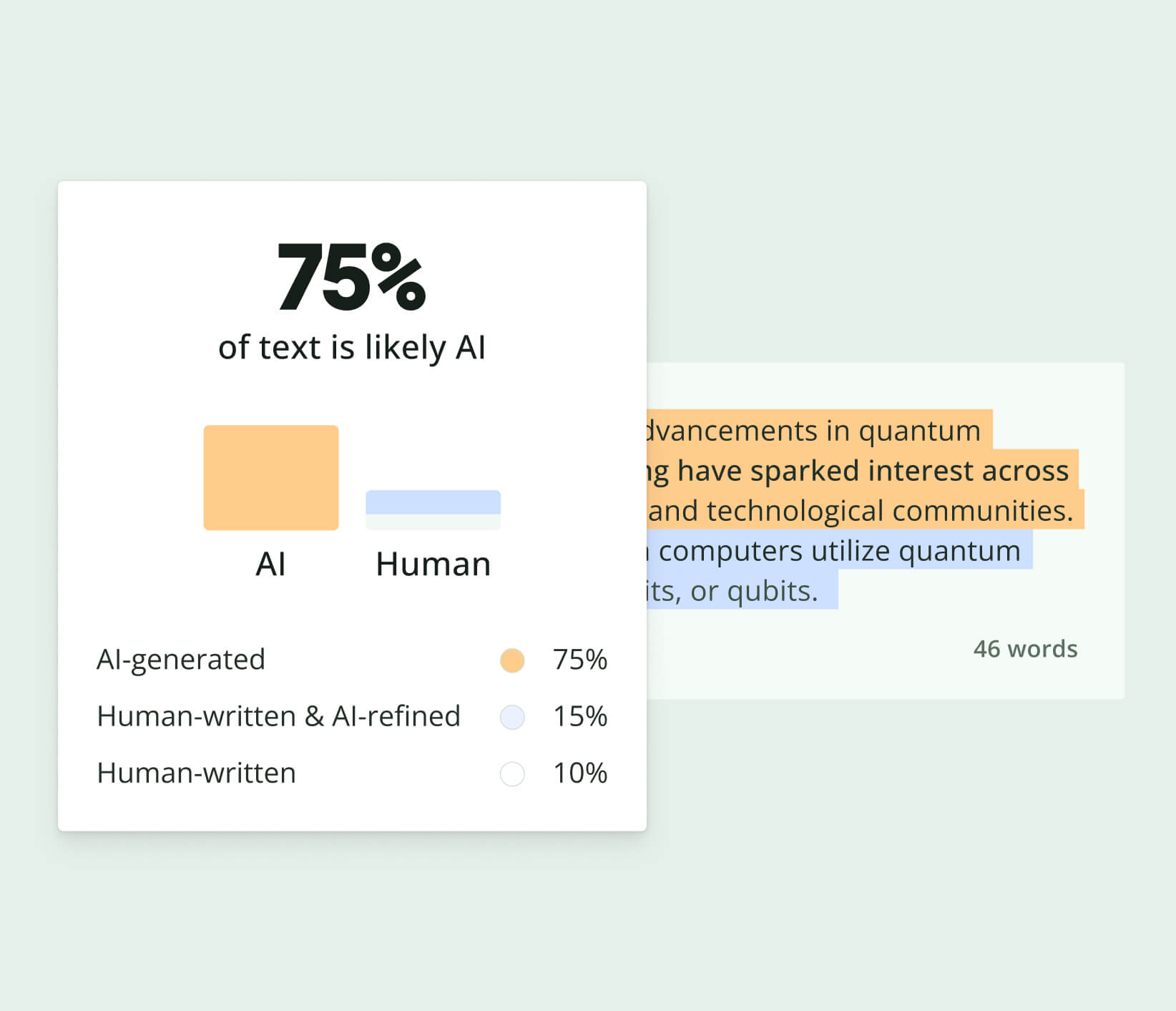
Tools like Quillbot’s AI Detector serve as a helpful first-pass review layer, allowing teachers to focus their attention on work that may need closer examination rather than manually reviewing every submission.
- Can teachers rely on AI detectors for final grading decisions?
-
AI detectors work best as one signal among many, not as a sole judge. For grading decisions, teachers should combine detector results with class participation, writing style patterns, in-class assessments, and one-on-one conversations. The detector helps you ask better questions, not answer them for you.
Rather than reviewing every submission in depth, Quillbot’s AI Detector serves as an initial filter, helping teachers quickly spot work that may need closer attention.
- Do AI detectors help teachers save time?
-
AI detectors can help teachers save time. Instead of reviewing every submission with the same level of scrutiny, teachers can use AI detectors to prioritize which assignments need more attention. This targeted approach reduces workload and allows teachers to invest more time in actual teaching, feedback, and student support.
Quillbot’s AI Detector helps teachers work smarter by quickly highlighting submissions that may need closer attention, making it easier to prioritize reviews while saving time for meaningful feedback and student support.
- What should an instructor do if an AI detector flags student work?
-
A flag is a prompt for a conversation, not a verdict. Instructors can use it as a starting point to discuss the writing process, review earlier drafts, or compare it with in-class writing samples. This allows for meaningful learning conversations instead of immediate disciplinary action.
Instead of delivering final judgements, Quillbot’s AI Detector highlights areas worth a closer look, giving instructors a useful entry point for discussing a student’s writing process and encouraging more thoughtful, constructive conversations.