Blue Color Meaning | Connotations, Shades & Palettes
0000FF
Blue is a very widely used color in design, with meanings that range from calmness and reliability to coldness and emotional distance. This article explores the symbolism of the color blue, outlines its most common shades and types, and includes practical information about blue color codes, hex values, and palette use.

What does the color blue symbolize?
In Western cultures, the color blue is often used to convey:
- Calmness, peace, and tranquility
- Cold and sadness
- Reliability, professionalism, stability, and authority
These associations help explain why blue shows up so often in places where trust, stability, and professionalism are important, like corporate branding, uniforms, and institutional settings. At the same time, certain shades of blue can feel cool or distant, which is why the color is also commonly linked to sadness or emotional restraint.
The meaning of the color blue varies widely depending on cultural traditions and context. In parts of the Middle East and North Africa, blue has long been associated with protection and is often used in amulets or architectural details to ward off negative energy.
In many East Asian traditions, blue is closely tied to the natural world, especially the sky and water. Some blue-green shades also appear in symbolism related to renewal, healing, and long life. In other cultural and religious contexts, blue can be linked to mourning, spirituality, or the afterlife, particularly when it’s connected to the heavens or the divine.
In texting and online culture, the blue heart emoji is commonly used to express trust, loyalty, and a sense of calm.
Color conversion
#0000FF| Format | Value |
|---|---|
| HEX | 0000FF |
| RGB | 0, 0, 255 |
| RGB Percent | 0%, 0%, 100% |
| CMYK | 1, 1, 0, 0 |
| HSL | 240°, 100%, 50% |
Facts about blue
Blue is one of the three primary colors in traditional color theory, alongside red and yellow. This means it can’t be created by mixing other colors but is a base for making a wide range of secondary and tertiary shades, from green and purple to teal and indigo.
One of the most common questions about blue is why the sky and oceans look blue. The sky appears blue because Earth’s atmosphere scatters sunlight, causing the shorter blue wavelengths to spread more than other colors. Large bodies of water often reflect the sky above them, and they also absorb longer wavelengths of light, which makes blue tones stand out even more—especially in deep or clear water.
History
Historically, blue pigments were rare and hard to make, which made blue items especially valuable in many ancient cultures. Early blue dyes and paints came from natural sources like crushed lapis lazuli or plants such as indigo and woad. Since these materials were expensive or took a lot of work to produce, blue clothing and artwork were often linked to wealth, status, or religious significance.
Language
The word “blue” itself doesn’t translate neatly across all languages. In some cultures, shades that English speakers would clearly identify as blue may be grouped with green or described using entirely different color categories. This shows that color perception is partly biological but also strongly shaped by language and culture.
Blueprints are called blueprints because early architectural plans were made using a chemical printing process that produced white lines on a blue background. While modern plans are rarely blue anymore, the term stuck and is still used to describe technical drawings or detailed plans of any kind.
Shades of blue
Commonly used descriptions of different shades of blue include:
- Navy: a very dark blue with subtle gray or black undertones
- Royal blue: a bold, vivid blue with a slightly cool undertone
- Sky blue: an airy light blue inspired by clear daytime skies
- Azure: a bright, medium blue with a slightly green-leaning, sky-like quality
- Teal: a blue-green shade with a balanced mix of cool and warm tones
- Indigo: a deep blue with pronounced violet undertones
- Cobalt blue: a rich, highly saturated blue known for its intensity and clarity
- Steel blue: a muted blue with gray undertones, giving it a cool, industrial feel
- Sapphire: a deep, luminous blue inspired by the gemstone, often associated with richness and depth
- Pastel blue: a soft, muted, light blue
Color variations
Tints
- #1f1fff • Click to copy
- #3d3dff • Click to copy
- #5c5cff • Click to copy
- #7a7aff • Click to copy
- #9999ff • Click to copy
- #b8b8ff • Click to copy
- #d6d6ff • Click to copy
- #ebebff • Click to copy
Shades
- #0000e0 • Click to copy
- #0000c2 • Click to copy
- #0000a3 • Click to copy
- #000085 • Click to copy
- #000066 • Click to copy
- #000047 • Click to copy
- #000029 • Click to copy
- #000014 • Click to copy
Tones
- #0000c2 • Click to copy
- #0808c9 • Click to copy
- #1212ce • Click to copy
- #1d1dd3 • Click to copy
- #2929d6 • Click to copy
- #3f3fcf • Click to copy
- #5454c9 • Click to copy
- #6868c4 • Click to copy
Blue color codes
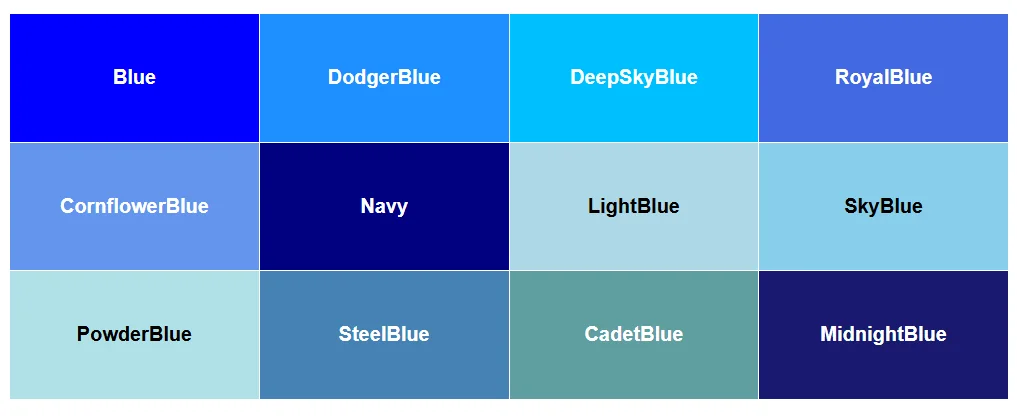
The HTML and CSS color code for blue is #0000FF. These are some frequently used HTML and CSS color names for the shades of blue supported by all modern browsers:
- Blue (#0000FF)
- DodgerBlue (#1E90FF)
- DeepSkyBlue (#00BFFF)
- RoyalBlue (#4169E1)
- CornflowerBlue (#6495ED)
- Navy (#000080)
- LightBlue (#ADD8E6)
- SkyBlue (#87CEEB)
- PowderBlue (#B0E0E6)
- SteelBlue (#4682B4)
- CadetBlue (#5F9EA0)
- MidnightBlue (#191970)
- Mono
- Analogous
- Complimentary
Frequently asked questions about blue
- How do you make the color blue?
-
You can’t make the color blue by mixing other colors, because it’s a primary color in traditional color theory like yellow and red.
You can create many blue shades and variations by mixing blue with other colors. Adding white creates light blues like pastel blue, adding black creates darker shades like navy, and mixing blue with small amounts of yellow or green produces blue-green tones such as teal or turquoise.
Use QuillBot’s free color palette generator to explore the color scheme of an image featuring a specific shade of blue.
- What are some colors that go with blue?
-
Blue goes well with a wide range of colors, depending on the look you’re going for.
Neutrals like white, gray, beige, and black keep things clean and balanced, while warmer colors such as orange, coral, or gold add contrast and energy.
Blue also pairs nicely with other cool tones like green, teal, or purple for a softer, more cohesive feel.
QuillBot’s free color palette generator lets you explore the color scheme used in an image that features the shade of blue you want to use in your project.
- How can I create blue wallpaper?
-
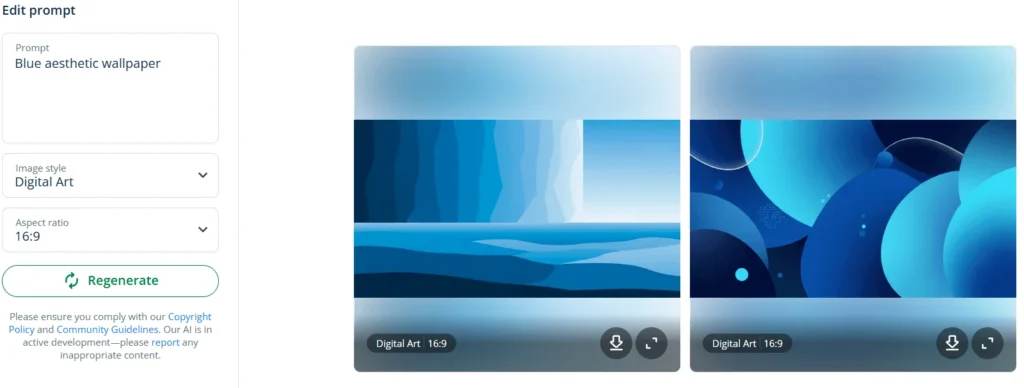
You can create blue wallpaper for the background of your device using a tool such as QuillBot’s free online AI wallpaper generator.
Try starting with a prompt like “Blue aesthetic wallpaper.”

AI blue wallpaper generator