Pastel Blue Color Meaning | Connotations & Hex Code
#AEC6CF
Pastel blue is a light blue hue with relatively low to medium saturation, giving it a soft and muted appearance.
Shades of pastel blue feel airy, gentle, and visually calming. The color is also versatile, pairing well with whites, creams, soft grays, warm neutrals, and other pastel tones like pastel green and pastel yellow.
This article explores the meaning of pastel blue, its symbolic associations, cultural history, color variations, and practical details like commonly used hex codes.

What does pastel blue symbolize?
Pastel blue is often associated with calmness, softness, airiness, and emotional comfort. Compared with darker or more saturated blues, such as navy blue, pastel blue feels less formal and less authoritative.
Because of its lightness, pastel blue is frequently linked to ideas of openness, tranquility, and optimism. In contemporary Western design contexts, it’s often used to convey reassurance without heaviness or intensity.
In design and branding, you can use pastel blues:
- To create a sense of calm, trust, and emotional safety
- As a softer alternative to more intense blues when you want to use blue to signal professionalism
- To appeal to audiences seeking comfort, wellness, or simplicity
- As a cool-leaning neutral that offsets warmer or more energetic accent colors
In an interior design context, pastel blue can be used to:
- Make small spaces feel brighter and more open
- Create relaxing environments in the home
- Complement natural light and pale wood tones
- Add subtle color without overwhelming a neutral palette
Color conversion
#AEC6CF| Format | Value |
|---|---|
| HEX | AEC6CF |
| RGB | 174, 198, 207 |
| RGB Percent | 68%, 78%, 81% |
| CMYK | 0.16, 0.04, 0, 0.19 |
| HSL | 196°, 26%, 75% |
Facts about pastel blue
Pastel colors get their name from pastel sticks, an art medium made by mixing powdered pigment with a filler such as chalk. This addition lightens the color and gives pastels their soft, pale hues.
The Renaissance painter Leonardo da Vinci experimented with early pastel techniques, but the medium truly came into its own in the 18th century.
Although the word “pastel” is often used to describe pale colors, high-quality pastel sticks can also produce saturated tones, including deep blues, reds, and vivid oranges.
In the 1920s and 1930s, pastel colors were a common feature of Art Deco interiors, ceramics, and graphic design, often paired with metallic accents. These pastel shades made a comeback during the 1980s Art Deco revival, when soft blues, yellows, greens, and pinks were used in a brighter, more playful reinterpretation of the style.

Color variations
Tints
- #c2d4db • Click to copy
- #d5e2e6 • Click to copy
- #e9eff2 • Click to copy
- #f2f6f7 • Click to copy
- #f2f6f7 • Click to copy
- #f2f6f7 • Click to copy
- #f2f6f7 • Click to copy
- #f2f6f7 • Click to copy
Shades
- #9bbac5 • Click to copy
- #88acb9 • Click to copy
- #759fae • Click to copy
- #6291a3 • Click to copy
- #558191 • Click to copy
- #4a707d • Click to copy
- #3e5e6a • Click to copy
- #334d57 • Click to copy
Tones
- #486d7a • Click to copy
- #56717b • Click to copy
- #65757b • Click to copy
- #75797a • Click to copy
- #808080 • Click to copy
- #878787 • Click to copy
- #8f8f8f • Click to copy
- #969696 • Click to copy
Pastel blue hex code
There is no single standard CSS hex code for pastel blue. A CSS color name that produces a shade of pastel blue is “PowderBlue,” with the hex code #B0E0E6.
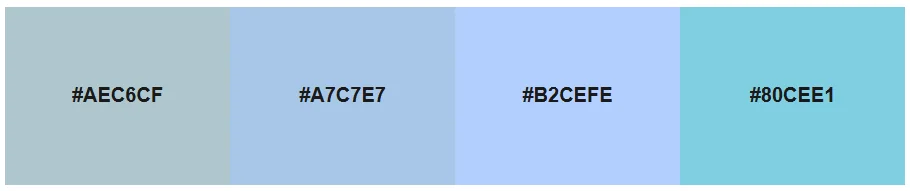
Other commonly used pastel blue hex codes include:
- #AEC6CF
- #A7C7E7
- #B2CEFE
- #80CEE1
Color names for pastel blue
The following color names are often used to describe shades that fall within the pastel blue range:
- Baby blue
- Powder blue
- Beau blue
- (Pale) cornflower blue
- Light blue
- Pale blue
- Mono
- Analogous
- Complimentary
Frequently asked questions about pastel blue
- How can I make pastel blue wallpaper?
-
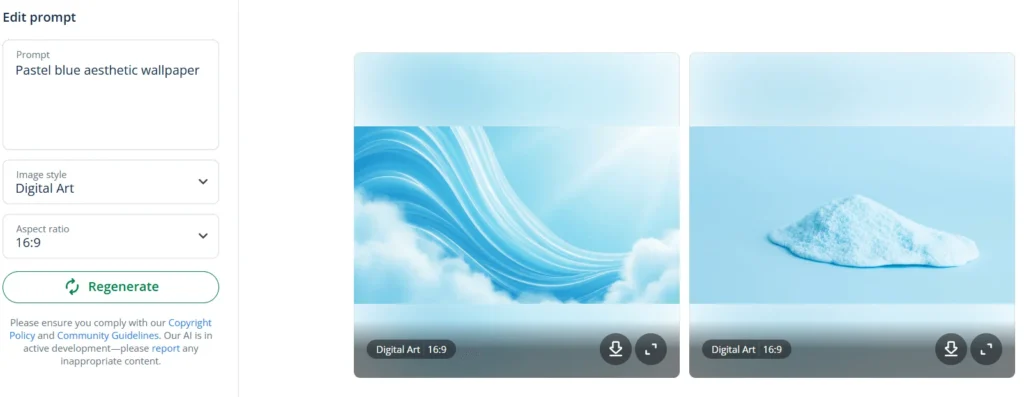
You can make pastel blue wallpaper using a wallpaper generator, such as QuillBot’s free online AI wallpaper generator.
Using an AI wallpaper generator is easy; just enter a prompt that describes the design you want.
You could start with a prompt like “Pastel blue aesthetic wallpaper.”

- What are the pastel blue rgb color values?
-
In CSS and web design, there are no standard RGB color values for pastel blue.
However, these are some commonly used RGB values you can use to achieve shades of pastel blue:
- 176, 224, 230
- 178, 206, 254
- 167, 199, 231
- 174, 198, 207
- 128, 206, 225
The CSS color names PowderBlue (hex: #B0E0E6; rgb: 176, 224, 230) and LightBlue (hex: #ADD8E6; rgb: 73, 216, 230) also produce shades of pastel blue.
If you have an image that uses the particular shade of pastel blue you’re looking for, you can identify its RGB values using QuillBot’s free color palette generator.
- What is the hex color code for light pastel blue?
-
There is no single hex code for light pastel blue, but you can get a hex code for the light pastel blue you’re looking for using a color wheel tool—start with a pastel blue hue and increase the lightness.
You can do this in QuillBot’s free color wheel by moving the pointer closer to the center of the wheel.
Try these pastel blue hex color codes:
- #B0E0E6
- #AEC6CF
- #A7C7E7
- #B2CEFE
- #80CEE1