How to Answer Tell Me About Yourself
Answering Tell me about yourself effectively is about understanding what the interviewer really wants to know when they ask this question and how to answer it in a way that helps you make a strong first impression.
Read on for tips on how to answer “Tell me about yourself,” example answers, and advice on avoiding common mistakes.
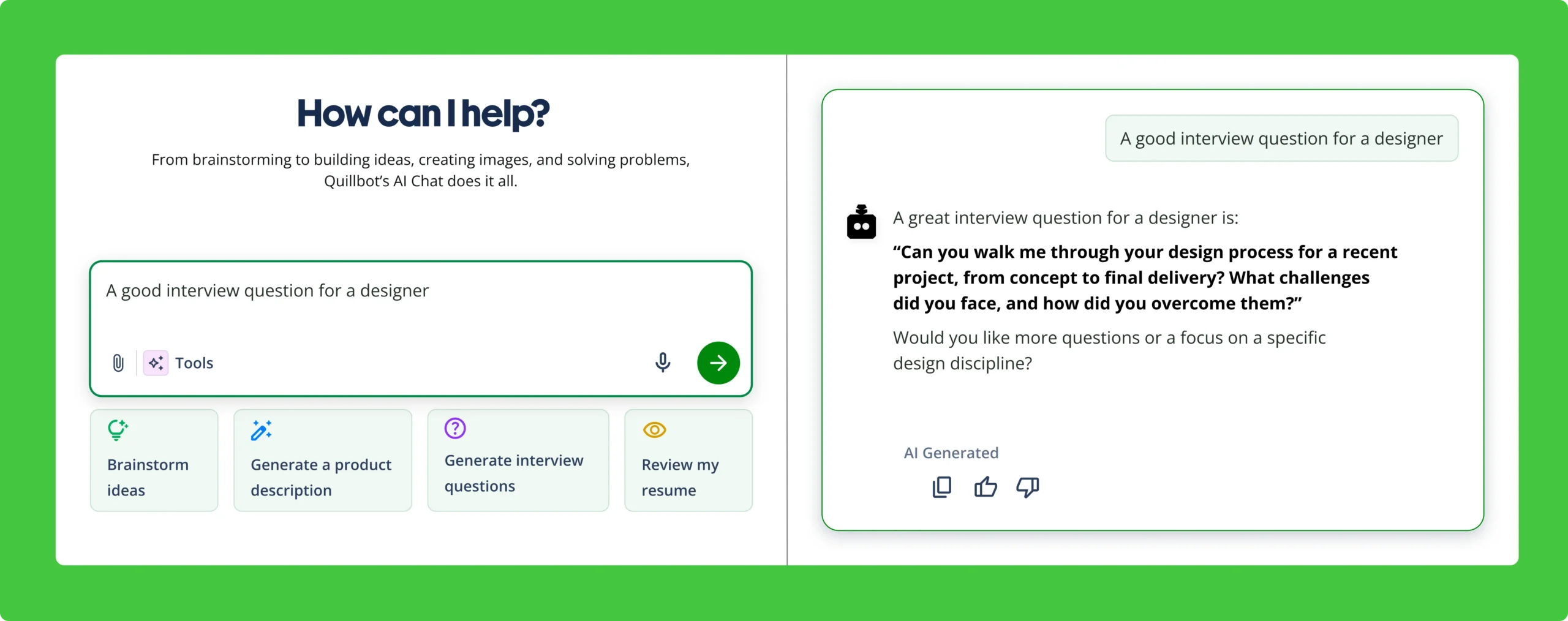
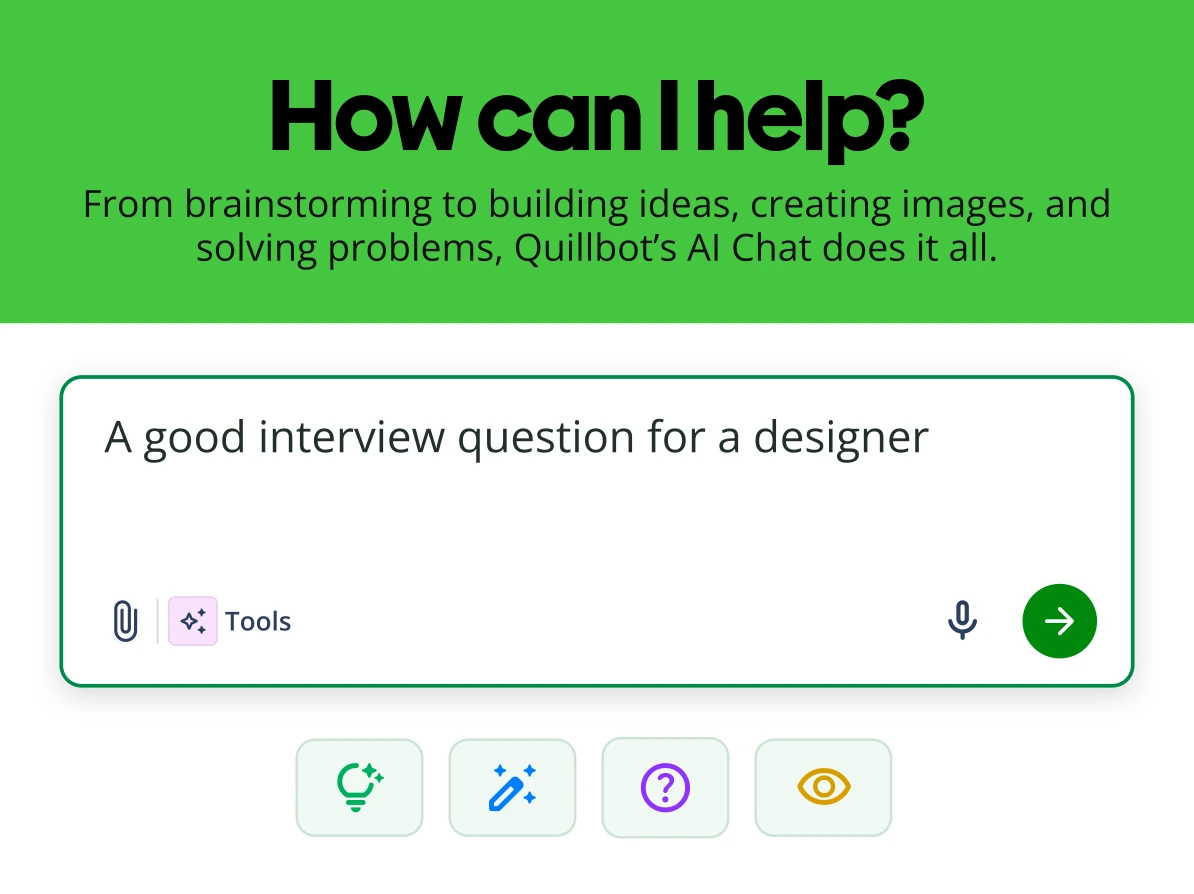
Enter the job description and some information about your work experience, then ask AI Chat to help you brainstorm the strongest points to include in your answer.
Key takeaways
- “Tell me about yourself” is usually an invitation to give a brief professional introduction, not a personal life story.
- A strong answer summarizes your current role, relevant background, key strengths, and why you’re interested in the job.
- Aim for a concise answer of about 30–90 seconds so you can make a good first impression without taking over the interview.
- Adding a brief narrative detail, such as a project, achievement, or career turning point, can make your answer more engaging.
- Prepare your main points in advance, but don’t memorize your answer word for word. You want to sound confident and natural.
Why interviewers ask Tell me about yourself
The “Tell me about yourself” interview question at the start of an interview puts you in an unusual position: you’re the “guest,” but your host is making you do all the work to break the ice. They want you to launch into a monologue before you’ve even had a chance to get your bearings. And it’s such a general question—what do they want you to talk about exactly? This isn’t a situation we encounter in everyday life.
Interviewers ask this question because it’s an open-ended icebreaker that invites an extended answer. They don’t have much time, so they’re keen to give you the floor so they can listen to you and begin forming a first impression.
It also buys the interviewer a bit of time to remind themself which candidate you are and what they want to ask you, find your resume, or start filling out an evaluation form.

How to interpret Tell me about yourself
You can think of “Tell me about yourself” as an instruction to give a brief summary of your career, a kind of spoken version of your resume summary. It’s also an opportunity to draw their attention to some of the strengths of your application.
The interviewer is expecting you to mention things like:
- Your current or most recent role
- Relevant experience
- Relevant education, training, or qualifications
- Key skills or strengths related to the job
- Notable career achievements
- Why you’re interested in this role
Your answer doesn’t need to be a comprehensive overview of your career; the interviewer has your resume and can ask you specific questions later. Your job is to break the ice with a brief, relevant introduction and then hand the conversation back to the interviewer.
Example answers to Tell me about yourself
Strong answers to “Tell me about yourself”:
- Are concise
- Are focused on your career rather than your personal life
- Highlight some reasons why you’re a good fit
Administrative assistant
In the example answer below, the candidate for an administrative assistant position focuses on the relevance of her current role, communicates her enthusiasm for office administration, gives a brief overview of her previous jobs, and says why she’s excited about applying for the job.
My role covers a pretty wide range of responsibilities, including scheduling, document management, vendor records, and day-to-day support for senior staff. I also help with basic accounting tasks and financial recordkeeping.
I like administrative work because I’m good at juggling different priorities and solving practical problems. I also enjoy the variety. I get to work on different kinds of tasks and communicate with people across the company.
My first job was as a receptionist, and after nine months I was promoted to office assistant, which helped me build a stronger foundation in office support.
I’m excited about this position because you’re looking for someone who can work independently, take initiative, and help improve processes. And that’s the kind of role I would enjoy.
Data analyst
In the next example, the candidate for an entry-level data analyst position focuses on the story behind his interest in becoming a data analyst. He emphasizes that he’s well qualified for the job and points out that he has experience with a couple of the “nice-to-have” technical skills mentioned in the job posting.
What appealed to me was how practical his work was. To do the job well, he needed strong technical skills, but he also had to understand how the business actually operated and how the data connected to real decisions.
I’m now applying for entry-level analyst positions, and I was really pleased to be invited to interview for this role. As you can see from my resume, I have the main requirements for this job and have some experience using SQL and Tableau through my college coursework.
Software engineer
In this final example answer, the candidate for a software engineering position focuses on her current role, which is closely related to the job she’s interviewing for. She also mentions a notable achievement and explains what excites her about the opportunity.
In my current role at a company that builds e-commerce platforms for retail businesses, I work on customer-facing order tracking and account management features for our clients’ platforms. The biggest project I worked on last year, for a home goods retailer, won a retail technology award.
I’m interested in this position because it seems closely aligned with the kind of work I’ve been doing, and I’m excited by the chance to join a growing e-commerce technology company where I could keep developing as an engineer and take on more responsibility over time.
Telling a story
Your answer to “Tell me about yourself” will probably include a list of factual information, such as your current role, relevant experience, skills, and reasons for applying. But adding a brief narrative detail can make your answer more engaging. This doesn’t mean telling a long story; it means briefly mentioning a situation, experience, or achievement that involved change, development, or impact.
In the example answers above, the first candidate mentions how she helped support a company during a period of rapid growth, the second explains how an internship sparked his interest in data analysis, and the third describes how a project she worked on contributed to an award-winning customer platform.
Here are some ideas for narrative details that can add interest to your answers:
- How you first became interested in your field
- A period of change or growth you helped your team or company navigate
- A project you’re especially proud of
- A specific achievement that shows the impact of your work
- A promotion, increased responsibility, or turning point in your career
- A problem you helped solve in your current or previous role
- A skill you developed because of a particular challenge
- An experience that helped you understand what kind of work you enjoy
- A connection between your current work and the role you’re applying for
- A recent project, course, internship, or qualification that helped prepare you for the position
Common mistakes when answering Tell me about yourself
Avoid the following common pitfalls when answering “Tell me about yourself” in a job interview.
Being unprepared
Read through the job description and the resume and cover letter you wrote for the application shortly before the interview. These will contain most of the information you need to give a strong answer, so make sure the key details are fresh in your mind.
Make notes about what you want to focus on, and practice answering the question out loud. But avoid memorizing your answer word for word, as this can make you sound inauthentic.
Getting too personal
In a US context, it’s safest to assume that “Tell me about yourself” means “Tell me about your professional background in relation to this job,” rather than “Tell me about your family, friends, and hobbies.”
Only mention hobbies or free-time activities if they help show skills, experience, or qualities that are relevant to the role you’re applying for.
Talking for too long
The interviewer is giving you the floor so you can break the ice, introduce yourself, and help them start forming an impression of you. You don’t need to give a comprehensive overview of your whole career.
An answer of about 30–90 seconds is usually fine. Try to read the room, and bring your answer to a close if you sense that the interviewer wants to move the conversation on by asking another question.
Frequently asked questions about how to answer Tell me about yourself?
- How long should my answer to Tell me about yourself be?
-
A strong answer to the interview question “Tell me about yourself” will usually be around a minute long.
It’s an opening question that functions as an icebreaker, so you don’t need to give a comprehensive overview of your whole career.
If you go into too much detail, your answer could come across as rambling.
Quillbot’s free AI Chat can help you brainstorm how to answer Tell me about yourself.
- Should I talk about my family, friends, and hobbies when answering Tell me about yourself?
-
When answering the interview question “Tell me about yourself” in a US context, it’s usually best to assume that the interviewer wants a career-related answer.
You don’t need to talk about your family, friends, marital status, or personal life. These details usually aren’t relevant to your qualifications, and they may raise personal topics that interviewers are generally expected to avoid in a US hiring context.
Only mention a hobby or personal interest if it clearly helps explain something relevant about you, such as your creativity, curiosity, discipline, or connection to the role or company. Otherwise, keep the focus on your work experience, skills, achievements, and reasons for applying.
If you’re searching for a job, use Quillbot’s free Grammar Checker to keep your resumes and cover letters typo-free.
Other interesting articles
If you want to know more about colors, letters, or the meaning of emojis, make sure to check out some of our other articles with explanations and examples.