AI Detector for ML Engineers: Validate AI Code
AI tools have quietly become part of the everyday workflow for teams working in Machine Learning (ML). From generating documentation to drafting experiment summaries, they save time, but they also introduce a new problem: how do you verify whether something is AI-generated, reliable, or even safe to use?
That’s where AI detectors come in.
But here’s the catch: just like AI content planning, detection is not a “set it and forget it” tool. If you rely blindly on an AI detector, you’ll either over-trust or over-reject content, and both are bad for engineering workflows.
This guide breaks down how ML engineers can actually use AI detectors effectively by combining machine efficiency with human judgment.
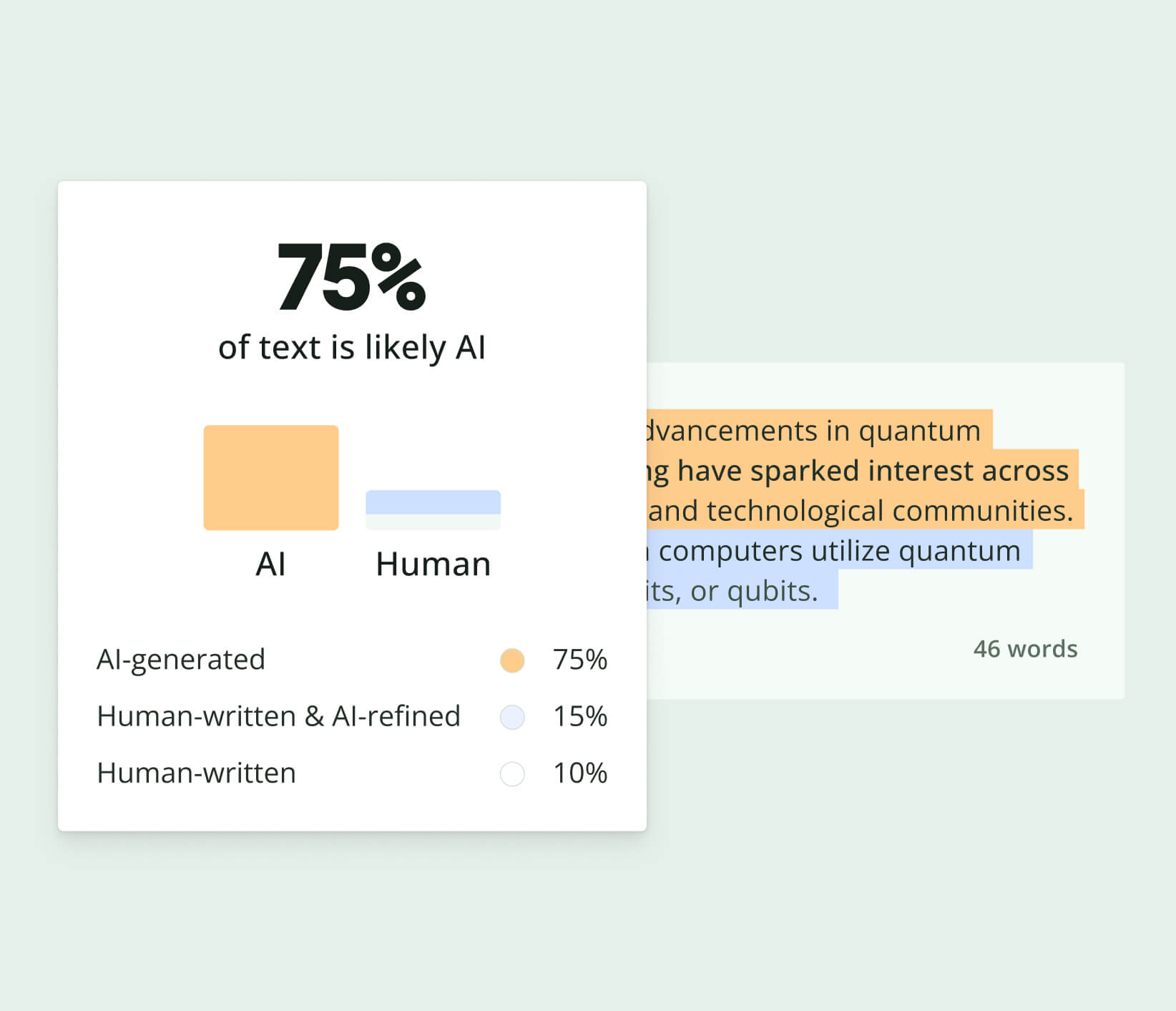
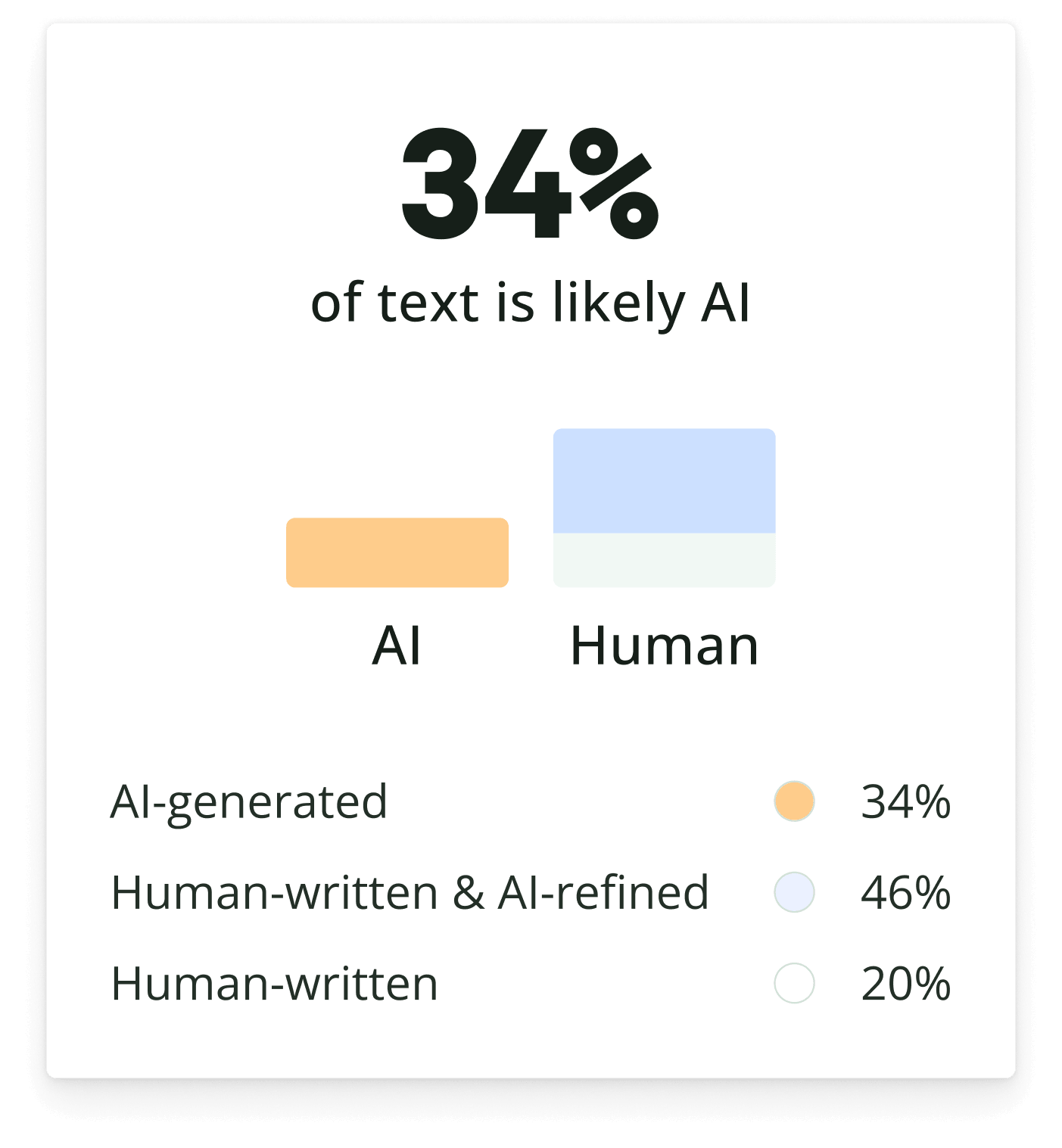
They work best for evaluating AI-generated writing and documentation, helping you flag content that may need closer human review. Think of them as a first-pass filter, not a source of truth.
Table of contents
- Why ML engineers even need AI detectors
- Start with context, not just detection
- Refine detector output (don’t trust it blindly)
- When used right, AI detectors become a force multiplier
- Validate with real-world signals
- Fill the gaps AI misses
- Build a human-in-the-loop workflow
- Optimize for your workflow (not generic accuracy)
- Create a feedback loop
- Frequently asked questions about AI detector for ML engineers
Why ML engineers even need AI detectors
At first glance, AI detection might seem like mostly a recruiter or academic problem. It’s not.
ML engineers deal with:
- Auto-generated code snippets
- AI-written model documentation
- Synthetic datasets and summaries
- External contributions (GitHub, forums, etc.)
Without validation, you risk:
- Hallucinated logic in code
- Subtle bugs hidden in generated outputs
- Security vulnerabilities
- Misleading experiment documentation
An AI detector acts as a first-pass filter, not a final judge.
Start with context, not just detection
Detection accuracy depends heavily on context. Instead of asking:
“Is this AI-generated?”
Ask:
- Where did this come from?
- What is its purpose?
- What’s the risk if it’s wrong?
A generated README and a generated model pipeline should never be treated the same.
- Detector says: “Likely human”
- Reality: The code lacks null handling and edge-case checks
Without context, the detector result is meaningless.
A low AI score does not guarantee reliability; a high score does not imply risk.
Validation should always rely on execution, testing, and reproducibility.
Detectors help you focus your review. They should not replace it.
Refine detector output (don’t trust it blindly)
AI detectors are not always 100% accurate:
- Sometimes, they flag human text
- Occasionally, they miss AI-generated content
So you need a refinement layer to:
- Merge duplicate flags
- Focus on patterns, not isolated sentences
- Look for generic or templated outputs
When used right, AI detectors become a force multiplier
AI detectors aren’t just risk filters. They can significantly improve how ML teams operate at scale.
When integrated thoughtfully, they help:
- Reduce time spent on manual reviews
- Highlight high-risk areas in large codebases or documentation
- Standardize quality checks across teams
Instead of reviewing everything line by line, engineers can focus their attention where it matters most.
Instead of reviewing every document in full, they prioritize only flagged sections, cutting review time by more than half while maintaining quality.
Validate with real-world signals
In content marketing, you validate ideas with search data. In ML, you validate with execution.
If something passes detection:
- Run the code
- Test edge cases
- Compare outputs
Because ultimately a working model matters more than a clean detection score.
The detector passes it, but your evaluation metrics fail.
That’s your real signal.
Fill the gaps AI misses
AI detectors analyze patterns, not intent. They won’t tell you:
- What assumptions are missing
- Whether reasoning is complete
- If edge cases are ignored
This is where ML engineers add the most value.
Build a human-in-the-loop workflow
The best teams don’t rely on tools only. They design systems around them.
A practical workflow:
- Detector scan
- Engineer review
- Risk classification
- Documentation tagging
Optimize for your workflow (not generic accuracy)
Most detectors are trained on general text, not technical ML artifacts.
So instead of chasing accuracy:
- Customize usage rules
- Align with your coding standards
- Integrate into your CI/CD pipeline
Create a feedback loop
The most human part of any AI system is learning from outcomes. Track:
- What detectors flagged correctly
- What slipped through
- Where engineers spent time
Then refine your process. This aligns with a broader truth: AI systems improve only when paired with real-world feedback loops.
AI detectors won’t make your ML workflows foolproof, but they can make them faster and more structured. The real advantage comes from how you use them. When combined with engineering judgment, testing discipline, and clear review systems, they become a powerful layer of defense against hidden risks in AI-assisted work.
In the end, the goal isn’t to separate human and AI output. It’s to build systems where both can coexist reliably, with enough checks in place to ensure that what you ship is not just efficient but trustworthy.
Frequently asked questions about AI detector for ML engineers
- What is an AI detector in machine learning workflows?
-
An AI detector analyzes patterns in text or code to estimate whether content was AI-generated. Tools like Quillbot’s AI Detector are useful for quickly flagging synthetic or AI outputs, but they should always be paired with testing and human review.
- Are AI detectors accurate for technical content and code?
-
Most AI Detectors, including Quillbot’s AI Detector, are optimized for natural language, not code.
For better validation:
- Use AI detection for documentation and explanations
- Use manual review and testing for code
- Refine outputs using tools like Quillbot’s Paraphraser to improve clarity and variation
- Can AI detectors identify errors in AI-generated content?
-
No. AI detectors only analyze writing patterns. They don’t evaluate correctness.
To ensure quality, combine detection with:
- Code testing
- Peer reviews
- Grammar checks using tools like Quillbot’s Grammar Checker for documentation accuracy
- Why does human-written content get flagged as AI?
-
Highly structured or polished writing can resemble AI-generated patterns.
If this happens:
- Review tone and variation
- Use Quillbot’s Paraphraser to introduce more natural phrasing
- Re-evaluate with an AI Detector for comparison