Direct instruction is a systematic approach for teaching the skills, steps, and foundational knowledge that an academic task requires. Rather than expecting students to learn through osmosis or trial and error, teachers who use direct instruction leave nothing to chance. Teachers use several techniques to make learning more accessible and manageable:
Divide academic tasks into smaller steps.
Demonstrate and explain each step in real time.
Use precise and beginner-friendly wording.
Illustrate the steps with models and examples
Like other effective teaching strategies, direct instruction often makes the difference between students falling behind or making meaningful strides. This guide explains what direct instruction is, why it matters, and how to use it in your classroom.
Curious about other educational terms and best practices? Ask Quillbot’s AI Chat for definitions and examples.
NoteThe term “direct instruction” has several slightly different uses in the field of education, which include:
A trademarked program for math and literacy instruction that Siegfried Engelmann and colleagues developed in the 1960s.
A broader teaching strategy, where the instructor directly shares the steps, procedures, and knowledge students need in order to meet a learning objective.
This article focuses on direct instruction as a broader teaching strategy. Researchers and educators also use the terms “explicit instruction” and “explicit, direct instruction” for this teaching strategy.
Key takeaways
When teachers use direct instruction, they break complex tasks into manageable steps, demonstrate and explain each step, use beginner-friendly language, and share examples of effective work.
Direct instruction is especially effective for teaching students the steps in a process and the foundational knowledge that a task requires.
Benefits of direct instruction include greater student confidence, fewer barriers to learning, and stronger academic performance.
Each direct instruction technique (task analysis, demonstrations, student-friendly language, and examples) involves a variety of steps and approaches.
How long is an essay? There’s no one-size-fits-all answer. An essay can be a few paragraphs or several pages long, depending on the assignment. If you’re new to essay writing, figuring out how much to write and how to translate a word count into paragraphs can be challenging.
Most assignments specify the required length in words, pages, or paragraphs. But if your assignment calls for 1,000 words, how many pages or paragraphs should you write? To achieve the right essay length, you need to know how these measurements are related.
This guide breaks down the average essay length for different academic levels and explains how to translate word counts to the number of paragraphs and pages. You’ll also learn how to expand or shorten a draft to meet the required length.
TipHave you tried Quillbot’s Grammar Checker? In addition to flagging typos and errors, it underlines wordy passages that could be more concise.
Key takeaways
Essay length varies by academic level and assignment type, ranging from a few hundred words for high school essays to several thousand for university research papers.
Most essays need at least four paragraphs, but the ideal number depends on the word count, paragraph length, and assignment requirements.
Converting word counts into estimated pages and paragraphs helps you determine how much to write and organize your ideas before drafting.
You can make a draft longer by adding paragraphs or details and shorter by revising wordy phrases and removing unnecessary details.
Differentiated instruction is a teaching strategy that adapts learning materials, activities, assessments, and classroom environments to meet students’ different needs, interests, and readiness levels. Rather than expecting every student to learn in the same way, teachers provide varied pathways to help all students work toward shared learning goals.
Effective differentiated instruction balances an appropriate level of challenge with the support students need to make progress.
This guide explains the four types of differentiated instruction, how to implement them, and classroom strategies and examples to help you get started.
TipQuillbot’s Paraphraser can help you reword explanations and simplify complex language to make content more accessible to students. Review the results to ensure they remain accurate, age-appropriate, and aligned with your learning objectives.
Key takeaways
Differentiated instruction accommodates students’ readiness levels, interests, and learning needs while maintaining shared learning goals.
Teachers can differentiate four areas of instruction: content (what students learn), process (how they learn), product (how they demonstrate learning), and environment (where they learn).
Effective differentiation starts with student data and balances challenge with support.
Strategies for differentiation include tiered assignments, adapted reading materials, choice boards, and learning centers.
An argumentative essay often involves choosing your own topic, but the freedom to write about anything can feel surprisingly challenging. With so many possible argumentative essay topics, how do you choose one that’s relevant, unique, and exactly right for you?
An argumentative essay topic focuses on some type of debate, where there are two or more sides and a variety of reasons that support each side. In the essay, you explain which side you support and provide evidence that your position is valid. Choosing a topic that matches your values and interests can make the process more rewarding.
To help you explore ideas, this guide includes 100 argumentative essay topics across a variety of subjects. You’ll also learn how to channel your interests into a strong and debatable topic idea.
TipAsk Quillbot’s AI Chat to generate a list of argumentative topic ideas based on the hobbies, academic subjects, or current events that interest you the most.
Key takeaways
The best argumentative essay topics are relevant, debatable, defensible, and focused.
Writing an argument is more enjoyable when your topic is related to your interests.
The argumentative essay topics in this guide cover a wide range of interests, including travel, education, technology, and more.
Knowing the material is only part of doing well on a test. Strong test-taking skills can help you manage your time, work through challenging questions, avoid common mistakes, and show what you actually know. Whether you’re taking a unit test, final exam, or a major, high-stakes assessment, the right test-taking strategies make all the difference.
In this guide, you’ll learn 10 strategies for taking tests more efficiently and improving your test-taking skills over time. You’ll also find 10 strategies that are specific to multiple-choice, short-answer, and essay questions.
Before the day of your test, ask Quillbot’s AI Chat to help you make study guides and practice tests.
Key takeaways
A quick test preview and realistic time budget can reduce rushing and help students pace themselves effectively.
Starting with easier questions and returning to challenging ones later can help students make better use of limited testing time.
Multiple-choice strategies such as predicting answers, eliminating distractors, and reading questions carefully can make challenging questions more manageable.
Reviewing test performance afterward can help students identify which study and test-taking strategies are most effective for future exams.
Scaffolding is one of the most effective teaching strategies because it systematically fills the gap between what your students can do now and what you’re teaching them to do next.
Without scaffolding, students often have to perform a skill before they have the knowledge or strategies needed to succeed. Scaffolding breaks that skill into manageable steps, gives students opportunities to practice with support, and helps them build the confidence and independence they need to eventually do the work on their own.
Scaffolding can take many forms, from modeling a skill step-by-step to giving students a template, checklist, or guiding questions. The key is that the support is temporary and targeted, and students gradually take on more responsibility.
TipLearning about scaffolding for a college class or a teaching job? Ask Quillbot’s AI Chat to show you examples and beginner-friendly resources.
Key takeaways
Scaffolding provides temporary support that helps students develop skills they can eventually perform independently.
Effective scaffolding targets specific learning gaps rather than simply giving students more help when they struggle.
Teachers can scaffold learning in many ways, including modeling, chunking, graphic organizers, guided questions, sentence frames, and collaborative activities.
Scaffolds should gradually fade as students become more proficient, transferring responsibility from the teacher to the student.
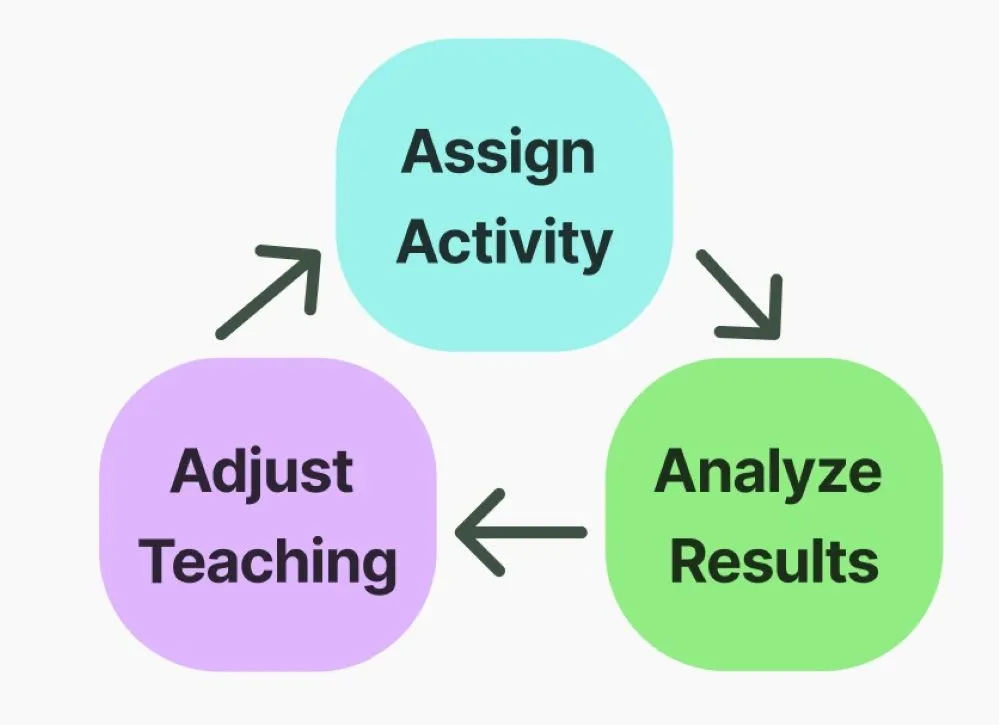
A formative assessment is an assignment or activity that helps you monitor students’ progress and align your lesson plans to their needs. Unlike a test or project at the end of a unit, a formative assessment gives you information while students are still learning. It shows you what to teach next, which skills to review, and which students may need additional support.
The formative assessment process generally follows three steps:
Assign an activity
Analyze the results
Adjust future instruction
The most common examples of formative assessment include homework assignments, class discussions, quizzes, and informal writing prompts.
TipNeed ideas for your next formative assessment? Quillbot’s AI Chat can help you brainstorm activities, questions, and prompts tailored to the skills you’re teaching.
Key takeaways
Formative assessment is an ongoing process of checking students’ understanding during learning and using what you learn to guide instruction.
The goal is to identify learning gaps early so you can reteach skills, provide additional support, or move on when students are ready.
Formative assessments can be simple and low-stakes, including homework, quizzes, class discussions, quick writes, and other classroom activities.
The key difference between formative and summative assessment is how and when you use the results: Formative assessments inform instruction during a unit, while summative assessments measure learning at the end.
Lesson planning helps you stay organized, focused, and prepared to support your students. But knowing what to include in a lesson plan and how to leverage your teaching ideas can take some practice.
An effective lesson plan gives you a clear roadmap for teaching your students while aligning the activities with what students need to learn. The most common lesson plan format includes an objective, learning standards, materials, instructional procedures, and an assessment.
This guide covers what to include in a lesson plan and walks you through the process, step-by-step. You’ll also find a free lesson plan template that you can download and adapt for your classroom.
Need help getting started? Quillbot’s AI Chat can help you brainstorm ideas, activities, and assessments based on your learning objectives.
Key takeaways
A lesson plan organizes the objectives, standards, materials, instructional activities, and assessment for a lesson.
Backward design helps teachers plan assessments and instruction around the learning outcomes they want students to achieve.
A lesson plan template can provide a consistent framework for planning and organizing instruction.
An argumentative essay is a type of writing assignment where you take a position on a debatable issue and use reasons and evidence to convince your reader that your position makes sense. It’s one of the most rewarding types of essays because you get to explore an important issue and maybe even change someone’s mind.
Writing an argumentative essay takes practice, but once you know the basic steps, the process becomes more manageable:
Decide what position you want to argue.
Choose the strongest reasons to support your main argument.
Gather evidence to support each reason.
Organize your ideas into an argumentative essay structure that includes:
When it comes to writing essays, you need a systematic way to revise and edit your work. While a revising checklist makes your essay more convincing, an editing checklist makes it look more professional.
Together, these checklists take the guesswork out of improving your first draft. Revising focuses on big picture aspects, like the structure and content, and editing focuses on grammar and punctuation.
This guide breaks down the essay-writing workflow, provides interactive revising and editing checklists you can use right now, and includes a free printable PDF to keep on hand for peer editing workshops and in-class assignments.
Pair these checklists with Quillbot’s Grammar Checker to turn in your best work every time.
Key takeaways
A revising checklist helps you improve your content, and an editing checklist helps you clean up errors.
Use the interactive revising and editing checklists below, or download a free PDF to keep on hand for in-class assignments.
Pairing an editing checklist with a modern grammar checker and an error log helps you make steady improvements over time.
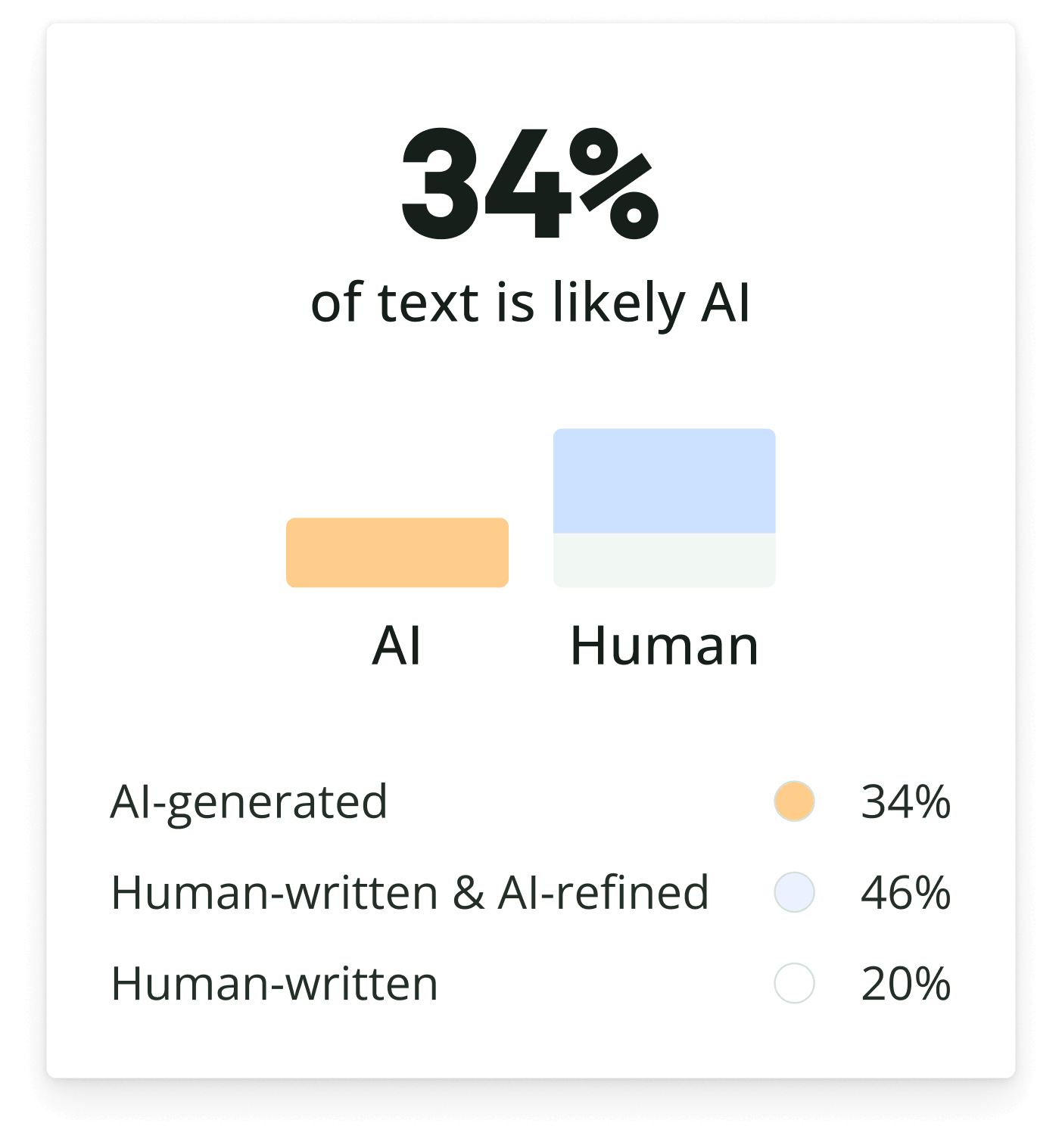
Work smarter with Quillbot’s AI Detector. Quickly assess whether text appears
AI-generated or human-written before publishing or submitting your content.
Work smarter with Quillbot’s AI Detector. Quickly assess whether text appears
AI-generated or human-written before publishing or submitting your content.