
How can I avoid self-plagiarism?
You can avoid self-plagiarism by:
- Citing yourself clearly
- Paraphrasing your previous work
- Speaking with your publisher or professor about their policies
Using tools like Quillbot’s Plagiarism Checker
You can avoid self-plagiarism by:
Using tools like Quillbot’s Plagiarism Checker
An essay paragraph is usually between 150 and 250 words or 1/2 to 3/4 of a page (typed and double-spaced). This information helps you decide how many paragraphs you need to meet the required essay length. For example, a 1,000-word essay usually needs five or six paragraphs.
Once you estimate the appropriate number of paragraphs, plan a topic for each body paragraph before you write the essay. Then, as you’re writing, include a clear topic sentence and several supporting details to fully develop each body paragraph.
If you find that you’re paragraphs are too long, Quillbot’s Paraphraser can show you where to trim extra words or choose more concise phrasing.
To write an argumentative essay introduction, follow 3 steps:
The introduction for an argument essay also needs to be error free. Quillbot’s free Grammar Checker instantly finds and fixes typos.
The most common type of essay at university is the argumentative essay, although it varies in different academic programs and parts of the world. In most universities in the US, the required first-year English courses (e.g., Composition I and Composition II) focus on teaching you how to write this genre.
In an argumentative essay, you take a stance on a debatable topic with at least two different positions. The purpose is to convince your readers that your argument has value or to persuade readers to take a specific action. You do this by developing three or more reasons for your argument and supporting those reasons with evidence from credible sources. The basic format is a separate body paragraph for each reason.
Most argumentative essays need correct citations, especially if you use outside sources. With Quillbot’s Citation Generator, the task of citing sources becomes much easier.
A thesis statement, a research question, and a hypothesis are all related concepts. Together, they form the backbone of any academic research study.
A research question is generally the starting point of any academic research. It should capture what you are trying to learn about. Good research questions are specific, feasible, and relevant. For example, “Does the use of sans-serif fonts improve reading speed in low-light conditions?”
A hypothesis is a clear and testable prediction about the research question. Hypotheses are an essential component of experimental or theoretical work but may not be present in more qualitative work. For example, “Participants reading sans-serif fonts in low light will demonstrate significantly faster reading speeds than those reading serif fonts in the same conditions.”
The thesis statement is the main argument of a paper. It synthesizes a paper’s position/results in the context of existing research. Though it usually appears in an introduction, it is often written towards the end of the research process. For example, “Sans-serif fonts significantly improve legibility in low-light environments.”
If you need help defining a term, Quillbot’s AI Chat is a great way to discuss and dissect new concepts.
Proofreading is the final stage of the text editing process. It focuses on identifying and correcting mechanical errors, such as spelling, punctuation, and formatting issues, as well as ensuring consistency with the relevant style guide.
Proofreading doesn’t typically involve rephrasing sentences, improving word choice, or checking factual accuracy.
Why not use Quillbot’s free Grammar Checker to help you proofread your text?
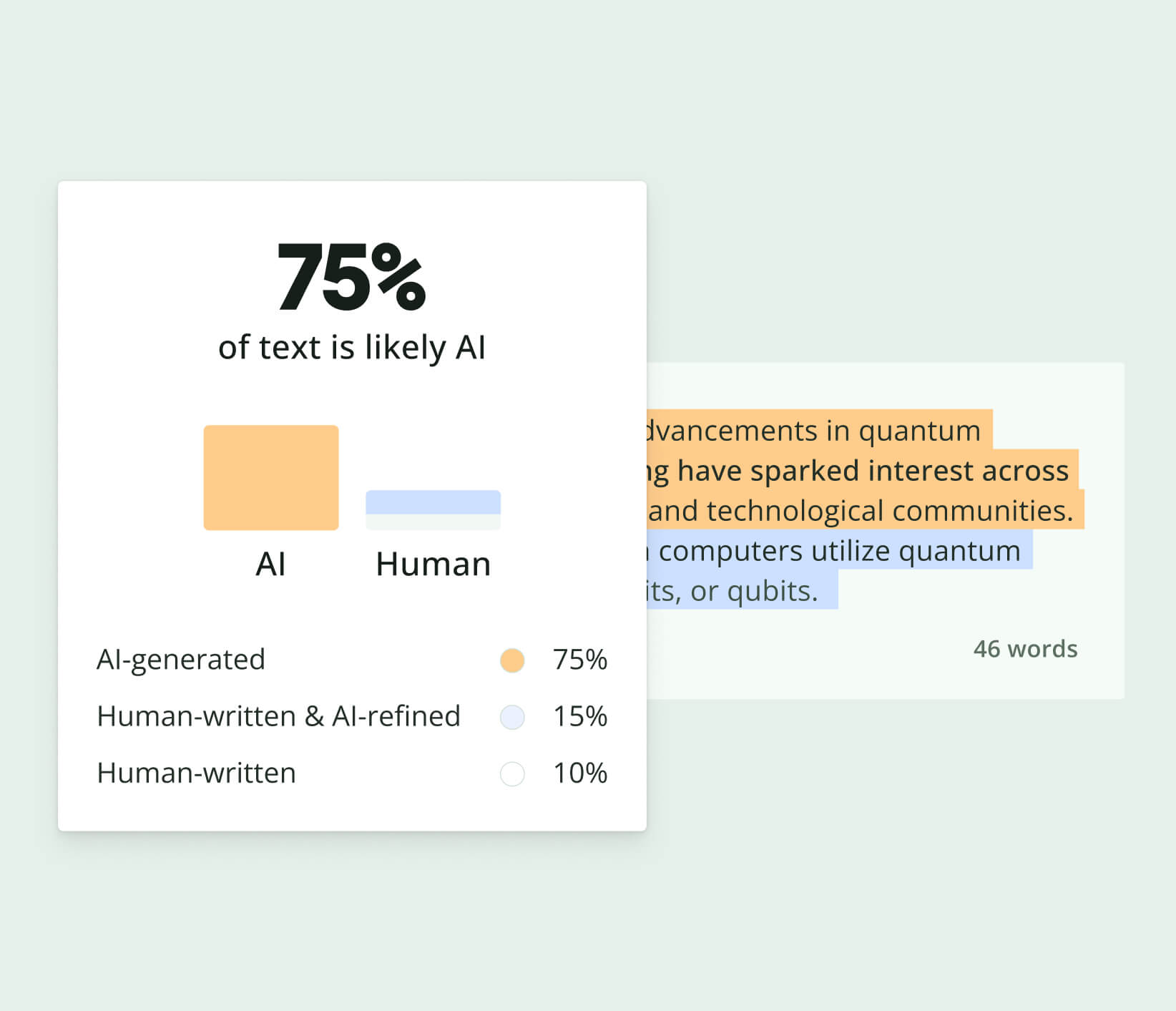
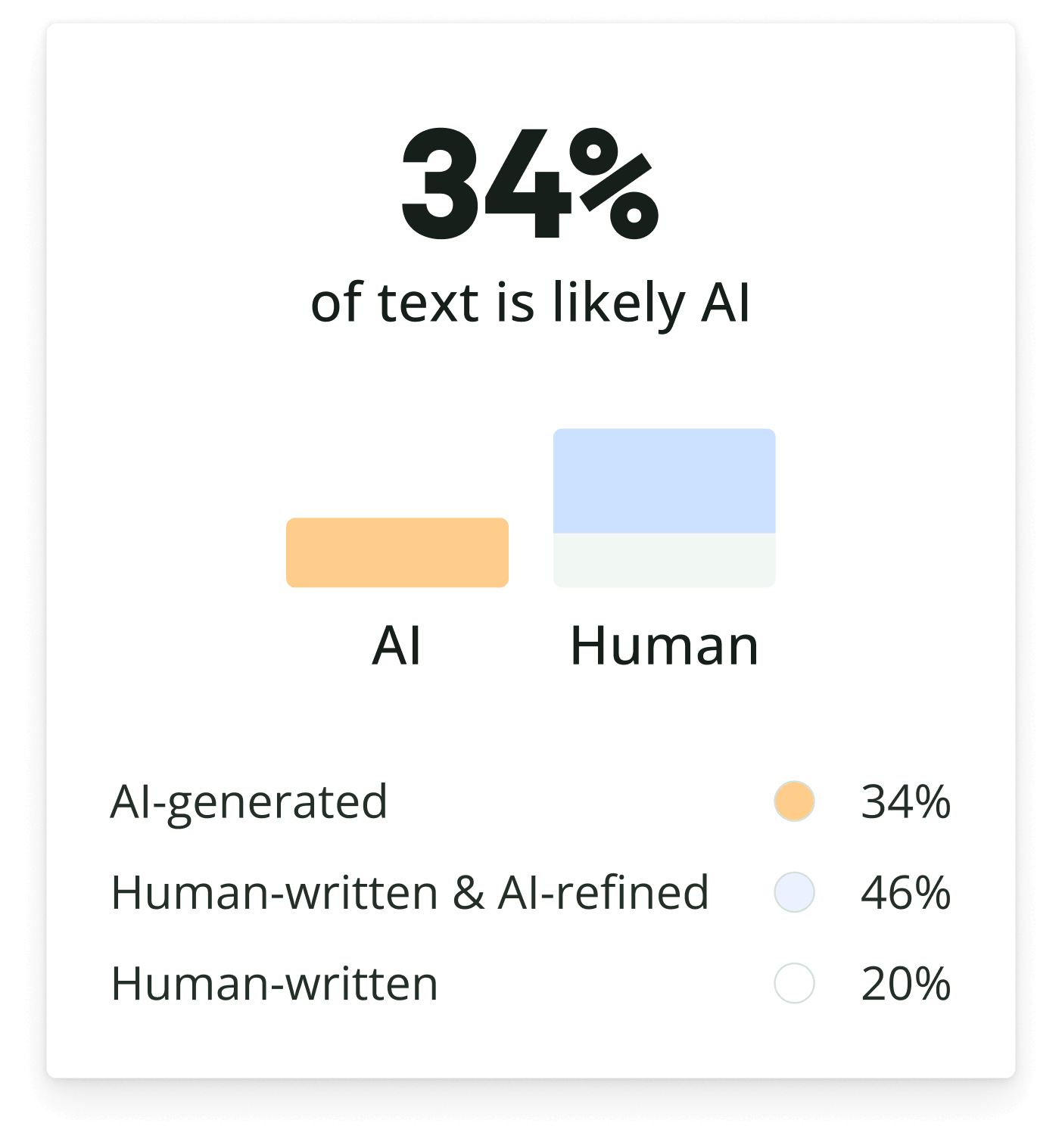
Work smarter with Quillbot’s AI Detector. Quickly assess whether text appears AI-generated or human-written before publishing or submitting your content.
Start detectingWork smarter with Quillbot’s AI Detector. Quickly assess whether text appears AI-generated or human-written before publishing or submitting your content.
 Start detecting