Email Marketing Examples | 12 Emails & Helpful Tips
Email marketing examples can help inspire the design, content, and logistics of your own email marketing. Email may seem like an outdated, unglamorous channel, but it’s actually, for many organizations, a profitable, “owned” form of content marketing.
With email marketing, you don’t need to worry about algorithms and your budget for prices per click. Instead, you can segment and curate audience lists to nurture your customers and guide them towards conversion.
This article includes email marketing ideas for the 4 types of email marketing, with some helpful tips along the way. And once you get inspired, use Quillbot’s Email Templates to turn ideas into reality.
Key takeaways
- Email marketing falls into four main categories—transactional, promotional, newsletters, and retention (behavioral)—and each supports a different stage of the customer journey.
- See real-world examples of every email type, including order confirmations, welcome emails, product launches, newsletters, abandoned cart reminders, and re-engagement campaigns, with explanations of what makes each one effective.
- Use these examples as inspiration for your own campaigns, then adapt the layouts, messaging, and design principles to create emails that engage subscribers and increase conversions.
4 types of email marketing
Before diving into the examples, know that there are 4 types of email marketing, each of which supports a different part of the customer journey. If you’re looking for email marketing examples, it’s important to be able to distinguish which examples fall into which category:
- Transactional: These are automated emails sent to customers in response to a certain action, such as signing up, resetting a password, or making a purchase.
- Promotional: These emails promote your brand or organization and drive the user towards a desired action. They may showcase special promotions, current offers, upcoming events, or product launches, and you may ask customers to make a purchase, sign up for an event, or join a waitlist.
- Newsletters: Email newsletters help build brand awareness and engagement, so they should provide consistent, valuable content to your audience. They may include brand updates, educational tips, industry insights, or customer stories.
- Retention (or Behavioral): Retention or behavioral emails seek to retain or engage existing customers based on how they interact or don’t interact with your brand. A few examples are abandoned cart reminders, requests for testimonials or surveys, and re-engagement emails.
Email marketing examples
These email marketing examples share inspiration for all 4 types of email marketing, whether you’re not sure how to write a welcome email, how to create a newsletter, or what to include when reminding a customer about their abandoned cart. The brands in these examples are fictional, but all these emails were made with (the very real) Quillbot.
Transactional emails
The main goal of transactional emails is to provide peace of mind that a specific action was completed, so they should be straightforward, concise, and clear.
Order confirmation email
An order confirmation email gives a customer security in a critical moment—when they’ve just spent money. This transaction is a good moment to tell your customer what they can expect going forward and to thank them for their purchase, especially if it’s their first one.
Subject line: Thank you for your first order ❤️
Preheader: We’ve received your order and are preparing it with care.
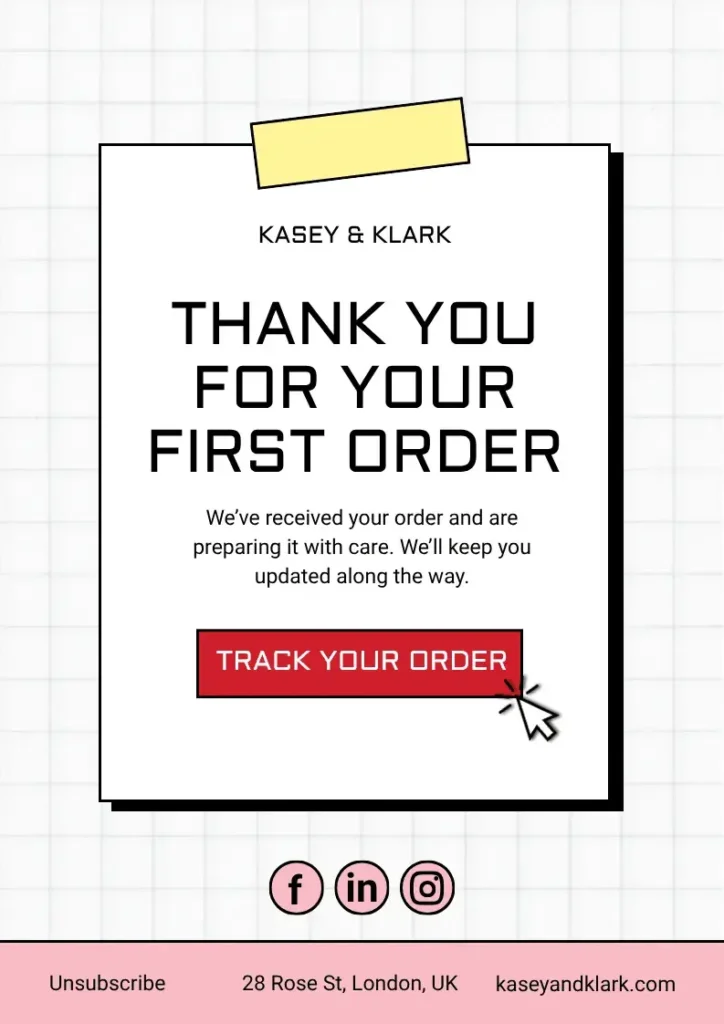
Why this email marketing example works:
- The design is clean. It maintains brand identity but doesn’t interfere with the email’s important details.
- The copywriting is concise and to the point. The customer understands immediately from the subject line and body text what the email is about.
- There is a clear CTA—Track your order—that instills trust in the transaction.
Shipping update email
A shipping update email should get straight to the point to eliminate any anxiety about the recipient’s shipment. Use clear language, avoid unnecessary images, and specify how the recipient can get in touch if they have a question.
Subject line: Your order is on its way
Preheader: Good news! Your order has shipped and is expected to arrive on July 25.
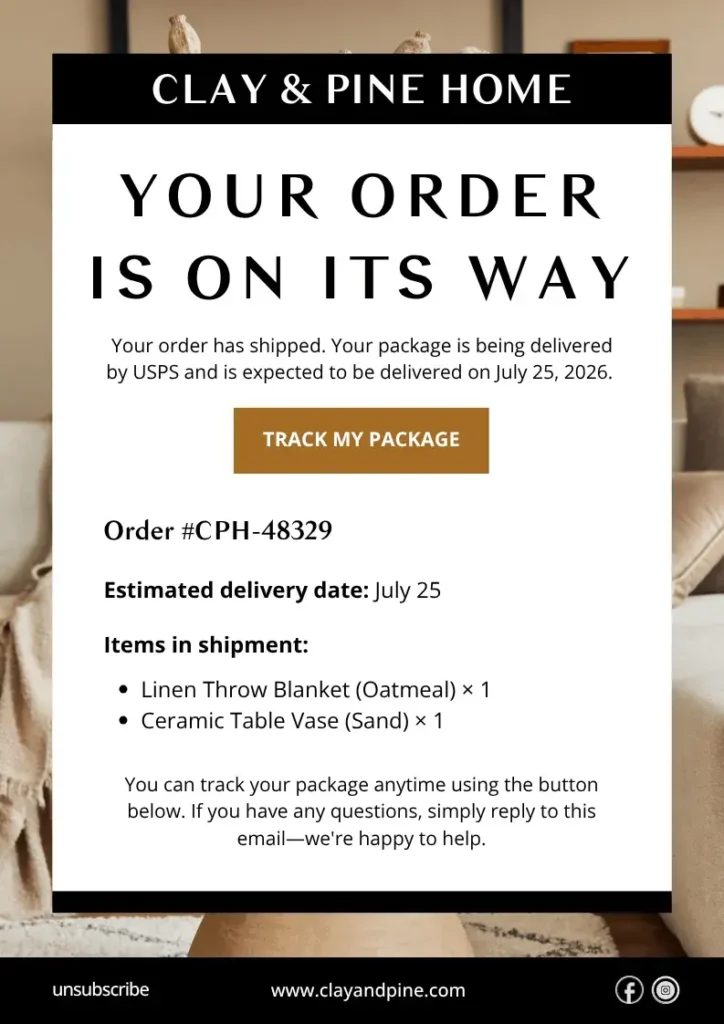
Why this email marketing example works:
- It immediately reassures the customer that their order is progressing and gives a clear CTA so they can continue to track its progress.
- It highlights the most important information (order number, estimated delivery, items purchased).
- It offers support while keeping the email concise and easy to scan.
Password reset email
When a user asks to reset a password, they’re likely feeling confused or frustrated. Password reset emails should contain as little friction as possible to get your user logged in quickly and seamlessly.
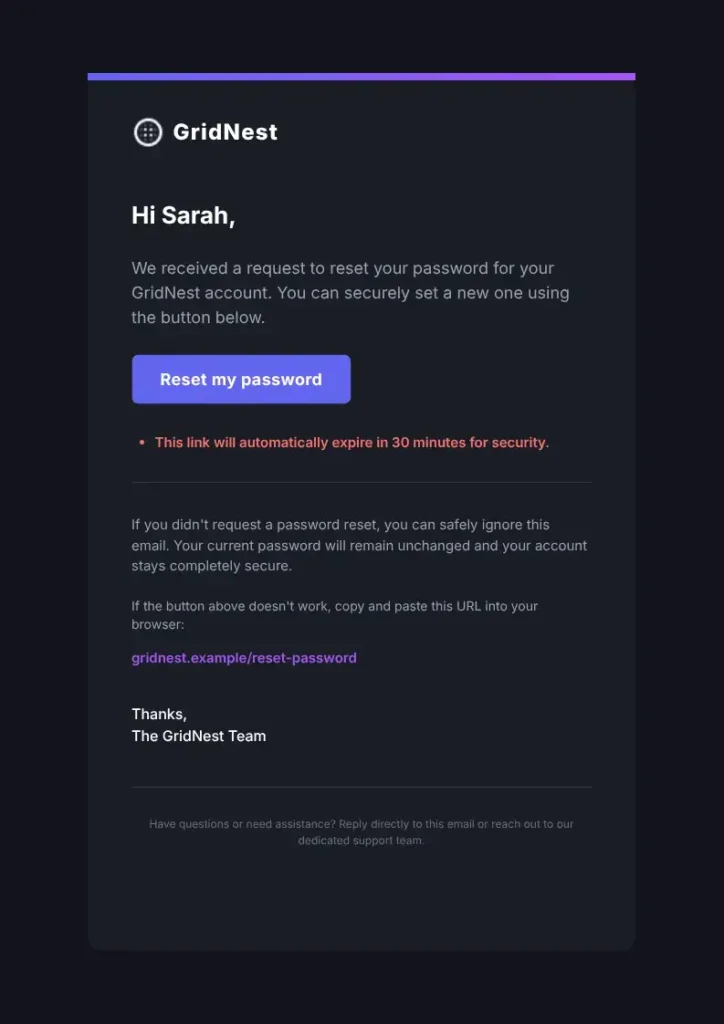
Why this email marketing example works:
- It clearly explains why the recipient is receiving the email and reassures them if they didn’t initiate the request.
- There’s a sense of urgency thanks to the time-limited reset link.
- The email uses a single, prominent CTA and minimal distractions, making the task quick and simple to complete.
Promotional emails
Promotional emails are designed to persuade your target audience, so they should use active voice, punchy language, and calls to action (CTAs).
Limited-time sale email
Limited-time sale emails should create a sense of urgency without feeling pushy. Lead with the discount or offer, make the deadline impossible to miss, and include a clear call to action that makes it easy for subscribers to shop before the promotion expires.
Subject line: 🖤 30% off ends tonight
Preheader: Save on The Black Edit before this limited-time offer expires at midnight.
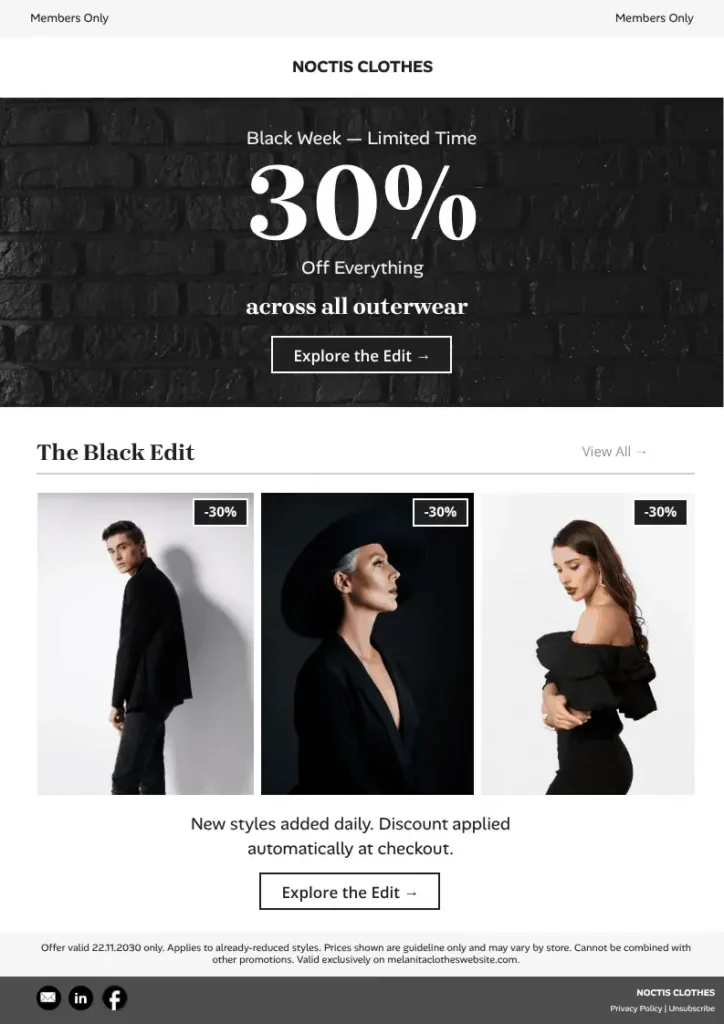
Why this email marketing example works:
- The time-sensitive subject line, clear deadline, and clear benefit create urgency and help readers see the value in opening the email.
- It uses two buttons to promote the same CTA, which encourages conversions.
- The design is clean and reinforces the offer by showing examples of sales items.
New product launch email
Product launch emails build buzz around a new product and encourage subscribers to learn more or make an early purchase. Focus on the product’s most compelling benefits, explain what makes it unique, and include a clear call to action that invites readers to explore or buy.
Subject line: Meet the QXR Wireless, our best headphones yet
Preheader: Noise cancellation redefined, 20 hours of battery life, and total control.
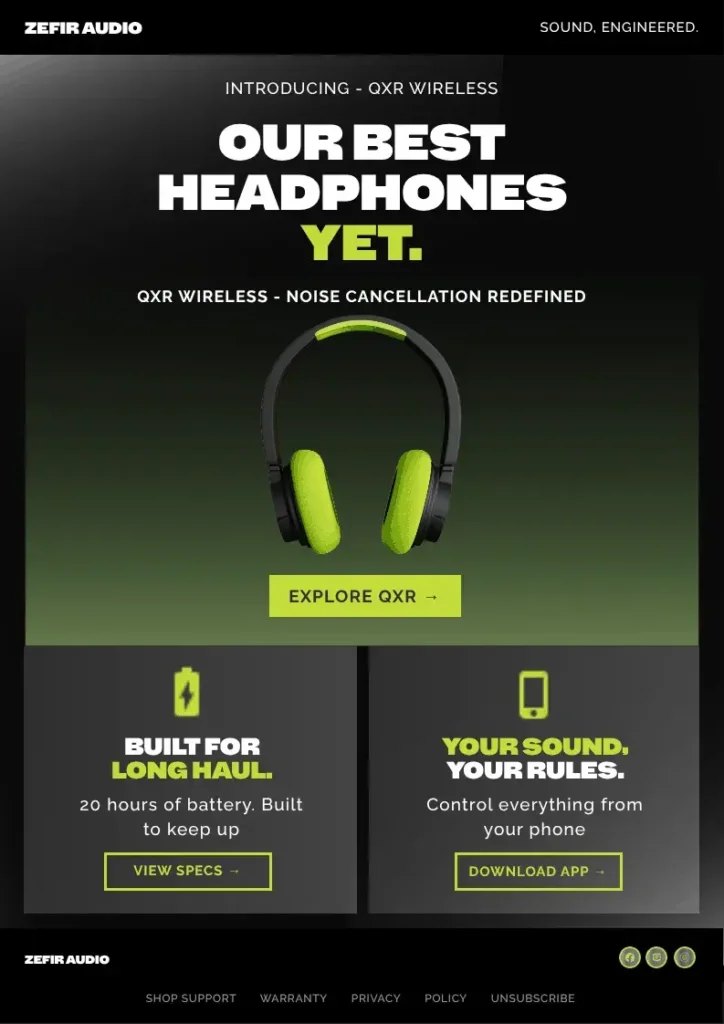
Why this email marketing example works:
- The email clearly and immediately announces the product so readers know why they’re getting the email.
- It highlights the new product’s most compelling features in a scannable format.
- There are various CTAs, each of which leads to different information, but all of which push the reader towards the same goal—learning more.
Seasonal campaign email
Seasonal campaign emails connect your products or services to a particular time of year, holiday, or event. Use timely messaging and visuals, highlight relevant products, and create a sense of urgency by emphasizing that the promotion or product is only available for a limited time.
Subject line: Spring is in bloom! 🪻Refresh your home for the season
Preheader: Shop spring blooms and let your home blossom with beauty.
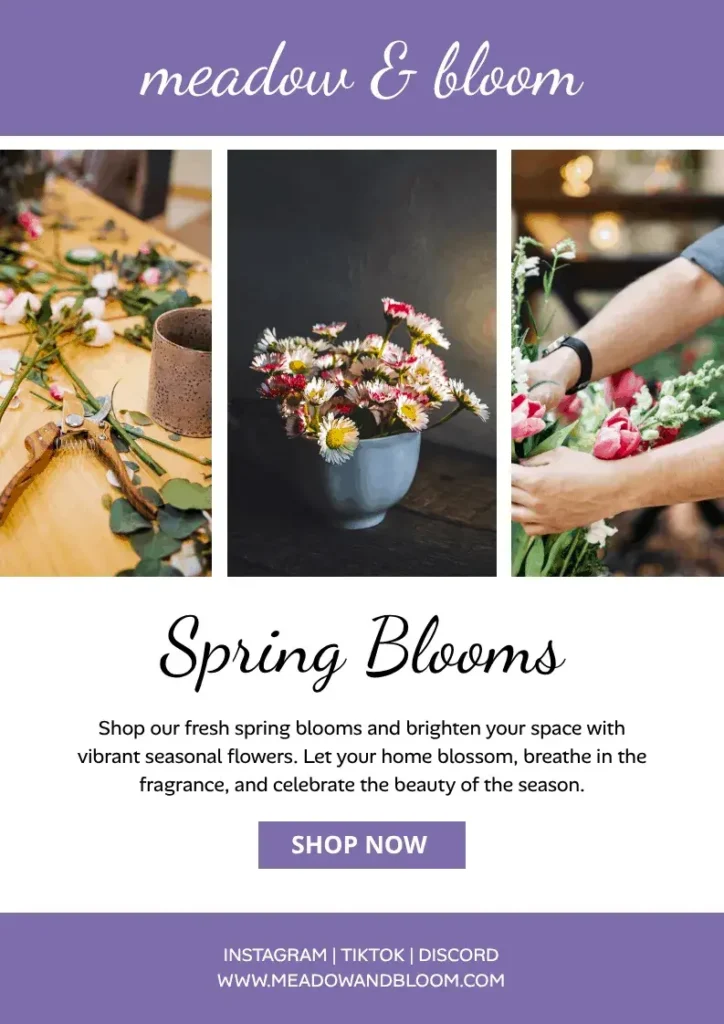
Why this email marketing example works:
- The email connects the products to a timely and relevant seasonal event.
- Seasonal imagery and language create an emotional connection tied to the brand through recognizable colors and fonts.
- It includes a single CTA that keeps the focus on shopping the featured collection.
Newsletters
Newsletters are informative, not a sales pitch, so avoid turning them into a sales pitch for your products or services. These are just a few newsletter examples; for more, why not check your inbox to see what newsletter you receive and which ones capture your attention?
Brand updates newsletter
Brand updates newsletters keep subscribers informed about what’s happening within your business. Share meaningful news, such as product updates, upcoming events, company milestones, or announcements, and organize the content with clear headings so readers can quickly find what interests them.
Subject line: What’s new at Oak & Ink this month
Preheader: New workshops, a community milestone, and upcoming events you won’t want to miss.
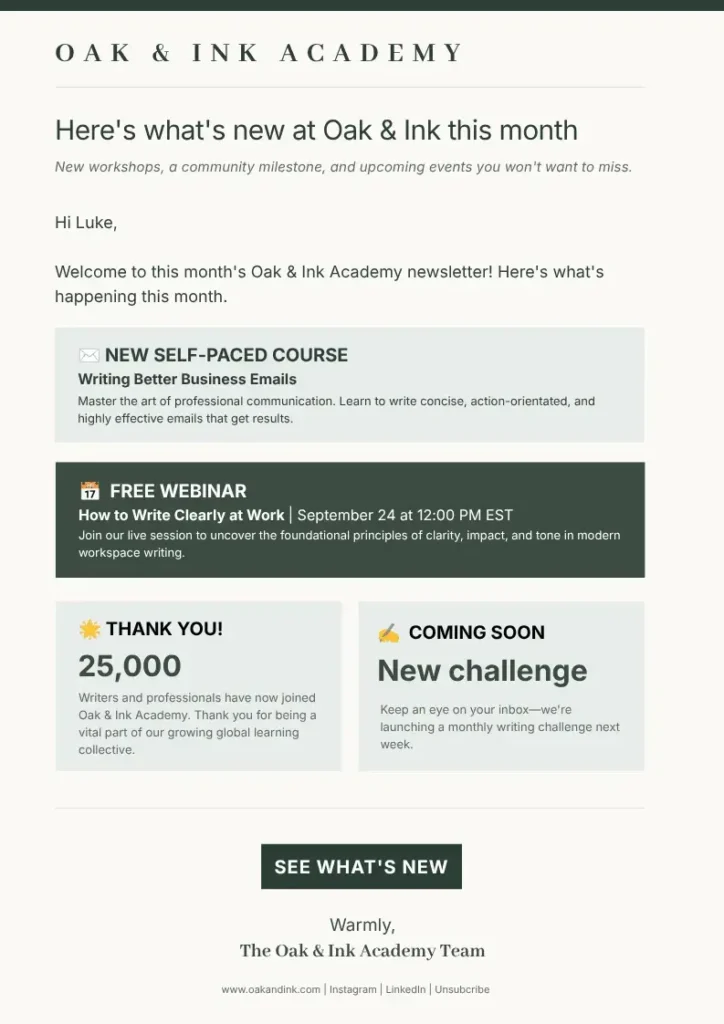
Why this email marketing example works:
- The newsletter highlights several updates without overwhelming readers.
- It uses clear headings and color blocks so subscribers can quickly skim the email for what they’re interested in.
- It ends with one CTA that encourages further engagement.
Educational newsletter
Educational newsletters provide value by teaching readers something useful rather than promoting a product or service. Focus on practical tips, tutorials, or insights, and keep the content actionable so readers leave with knowledge they can immediately apply.
Subject line: 3 simple ways to help your houseplants thrive 🪴
Preheader: Easy plant care tips you can put into practice today.
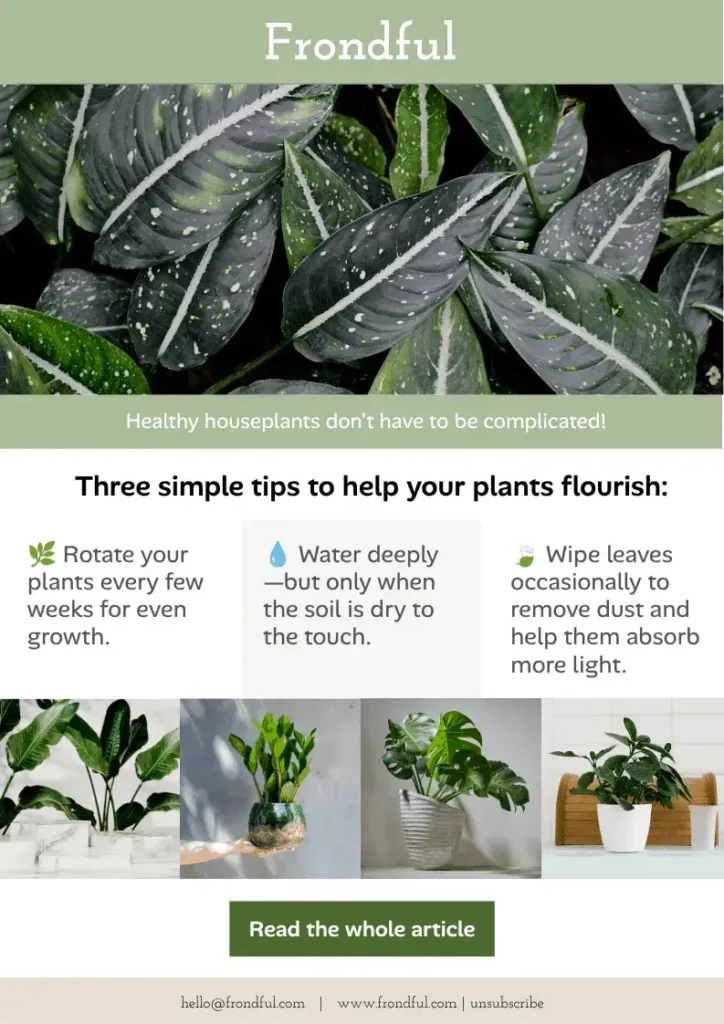
Why this email marketing example works:
- It delivers practical value without trying to sell.
- Three tips inform the reader without overwhelming, and the reader can choose to read more.
- The visuals help create an emotional connection and motivate the reader to learn how to keep healthy plants like in the photos.
Curated resources newsletter
Curated resources newsletters save your audience time by gathering helpful content from your business and other trusted sources in one place. Include a thoughtful selection of articles, videos, podcasts, etc., and briefly explain why each one is worth exploring.
Subject line: This week’s creative picks ✨
Preheader: Our favorite articles, tools, podcasts, and inspiration from around the web.
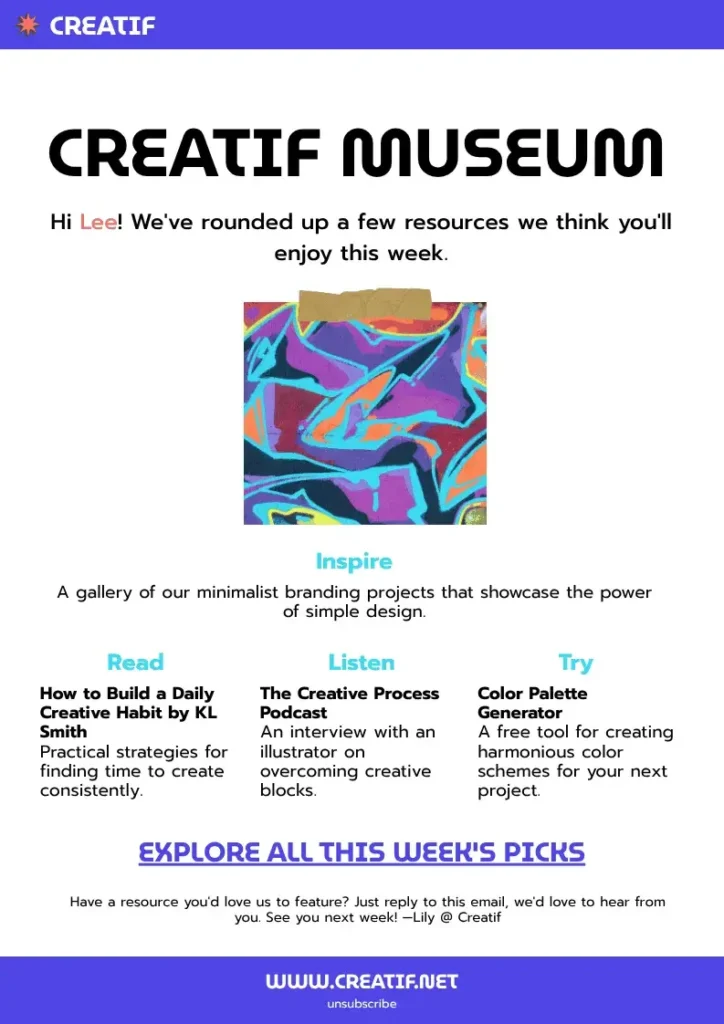
Why this email marketing example works:
- The email curates valuable content from multiple sources that could interest the brand’s readers.
- It organizes resources into clear categories with visual hierarchy for easy scanning.
- It encourages engagement while positioning the brand as a trust source of information.
Retention emails
Since retention emails are written in response to specific actions, the language and tone should be tailored to that specific moment in the customer lifecycle.
Welcome email
Good welcome emails introduce new subscribers to your brand and set the tone for the relationship ahead. They should explain what subscribers can expect and encourage meaningful action.
Subject: Welcome to Spex! 😎 Enjoy 10% off
Preheader: Your future looks a little clearer from here.
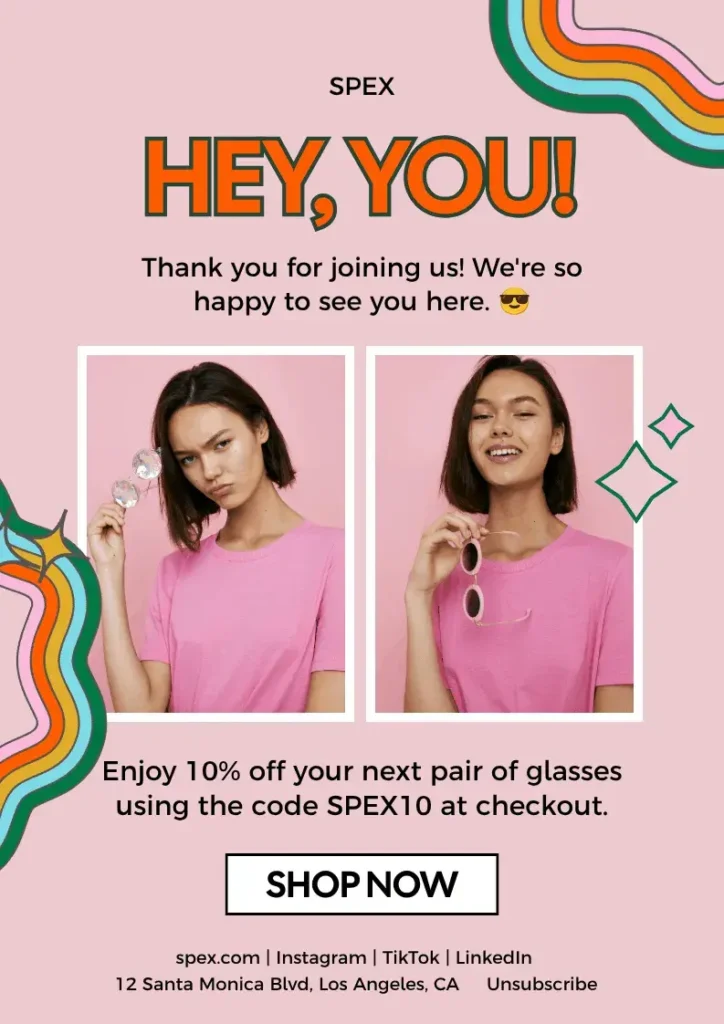
Why this email marketing example works:
- The brand’s fun, retro-modern visual identity is on full display, setting it up for recognition later on.
- The subscriber has a clear CTA and an incentive to follow through on it.
- The casual welcome sets the tone for brand messaging going forward.
Abandoned cart reminder email
Abandoned cart reminder emails remind customers to complete a purchase they started but didn’t finish. Keep the message friendly rather than pushy, remind them what they left behind, address any hesitation with helpful information (or an incentive if appropriate), and make it easy to return to their cart with a clear call to action.
Subject line: Forgot something? Your cart is waiting! 🐾
Preheader: Your furry friend will thank you—complete your order before these favorites sell out.
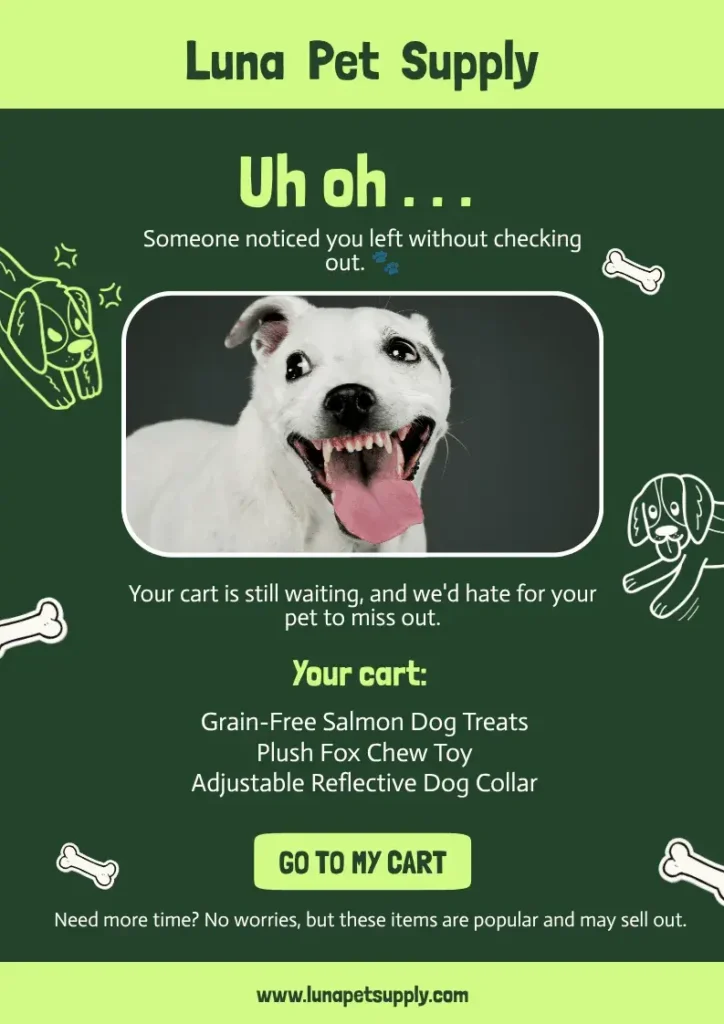
Why this email marketing example works:
- The language uses a playful brand voice and a cheeky but non-pushy tone to remind customers about their unfinished purchase in a lighthearted way.
- The email shows the items left behind to make it easy for customers to pick up where they left off.
- It includes one clear CTA that takes customers directly back to their cart.
Re-engagement email
Re-engagement emails are designed to reconnect with subscribers who haven’t interacted with your brand in a while. Instead of using guilt or pressure, focus on reminding them of the value you provide, highlighting what’s new, and making it easy to return.
Subject line: We miss you—ready to get moving again?
Preheader: Jump back in with a free 7-day workout plan and personalized recommendations.
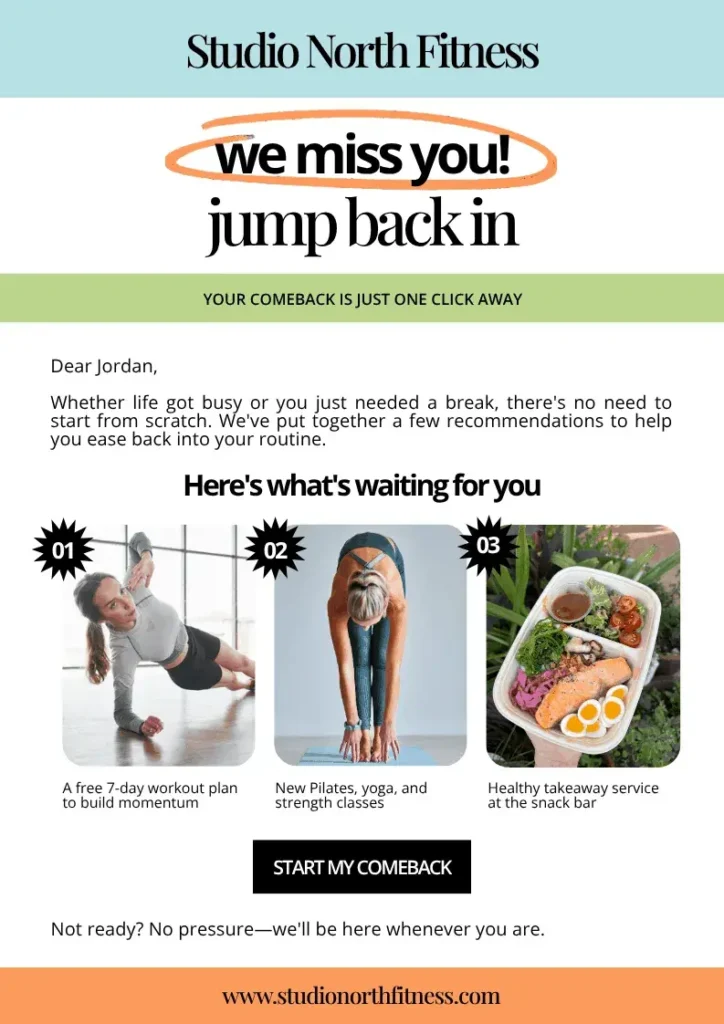
Why this email marketing example works:
- It acknowledges inactivity without making the subscriber feel guilty.
- Uses encouraging, supportive language that informs and motivates rather than pressures.
- Includes a single CTA focused on restarting the customer journey.
- Authenticate your domain and regularly clean lists.
- Segment your audience and personalize the content you send them.
- One clear CTA and goal per email.
- Design for mobile and accessibility.
- Provide value, not just promotions.
- Test and optimize regularly.
- Include unsubscribe links and respect relevant regulations.
Frequently asked questions about email marketing examples
- What are some B2B email marketing examples?
-
Some B2B email marketing examples are:
- Welcome onboarding sequence
- Industry insights newsletter
- Product launch announcement
- Webinar or event invitation
- Newsletter with case studies or testimonials
Whatever the format, B2B marketing emails should focus on delivering clear, actionable advice to busy professionals. You can create your own B2B marketing emails using Quillbot’s Email Templates.
- What are some event email marketing examples?
-
Some event email marketing examples include:
- Networking event invitation
- Conference invitation
- Trade fair invitation
- Online webinar invitation
Good event emails answer the basic questions about the event (when, where, who, and why). They’re often part of a sequence that includes follow-ups, reminders, and post-event thank-you emails.
You can create your own event emails using Quillbot’s Email Templates.
- What are some lifecycle email marketing examples?
-
Lifecycle email marketing examples include:
- Welcome email or onboarding sequence
- Abandoned cart reminder
- Post-purchase tips email
- Email encouraging second purchase
- “We miss you” win-back emails
- Cancellation or exit surveys
Lifecycle email marketing automates emails based on a specific action the user takes and the relevant stage of the customer journey.
You can create your own lifecycle marketing emails with Quillbot’s Email Templates.
Other interesting articles
If you want to know more about colors, letters, or the meaning of emojis, make sure to check out some of our other articles with explanations and examples.