5 Time Management Techniques That Actually Work
Many of us have experienced the feeling of not having enough hours in the day or enough days in the week. When life gets busy and there’s a lot you want to accomplish, it can feel like you’re constantly operating at a time deficit where you find yourself rushing.
Yet, there are ways to fit everything in while simultaneously lowering your stress. That’s because time management is a skill that can be learned and honed. In this guide, you’ll discover time management techniques that work—whether you’re a business builder with lofty career ambitions or a community-oriented creative trying to manage multiple sources of inspiration at once.
Save time on reading and research with the help of Quillbot’s free Summarizer, which can pull the key points from long texts for you.
Key takeaways
- This guide shows how to manage your time more effectively by prioritizing the right tasks, improving focus, and reducing stress.
- You’ll learn practical techniques like the Eisenhower Matrix, the 3-3-3 rule, the Pomodoro Technique, and “eat the frog” to help you work smarter, stay organized, and make steady progress on what matters most.
Table of contents
1. Prioritize effectively with the Eisenhower Matrix
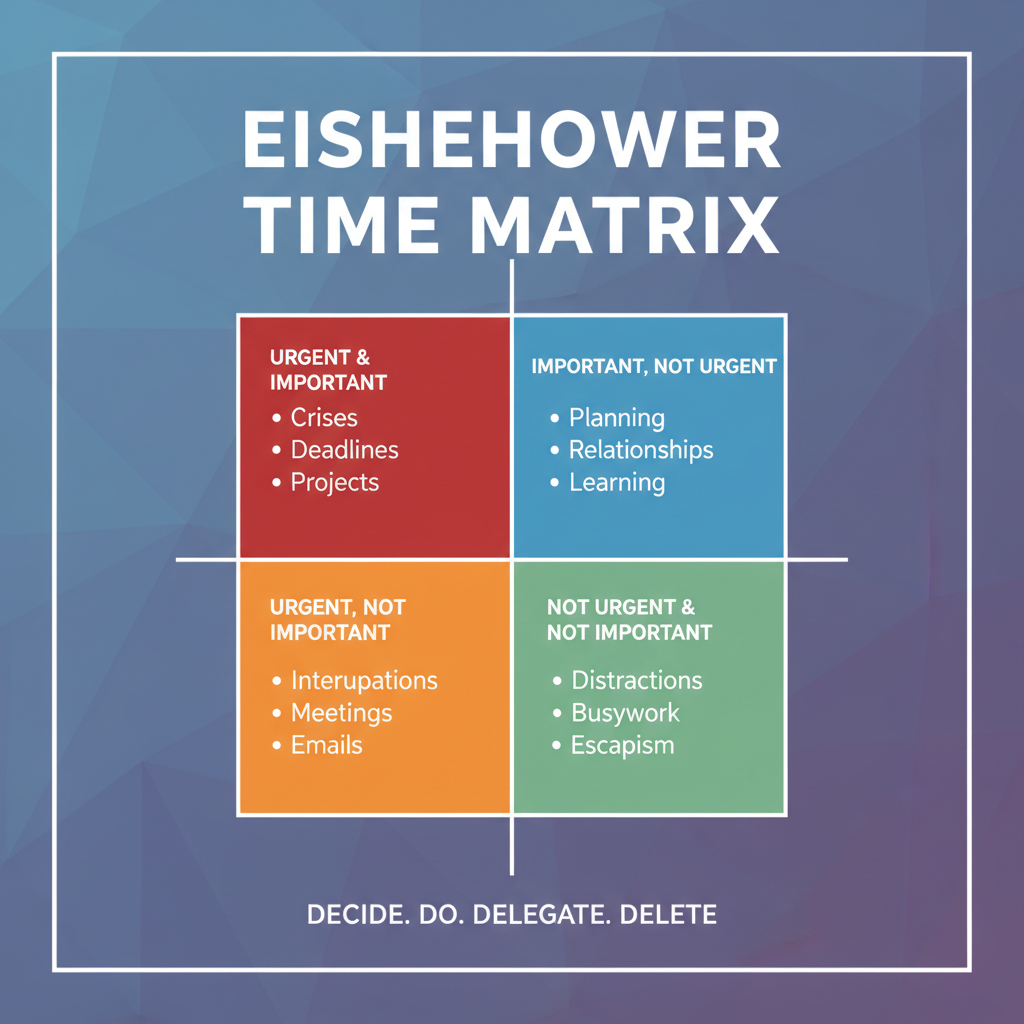
The Eisenhower Matrix is a four-quadrant tool that helps you identify priorities and delegate tasks based on urgency and importance. It’s great for making to-do lists or dealing with your current one when it’s feeling overwhelming. Use the Eisenhower Matrix by reviewing your tasks and categorizing them into the following boxes:
- Do: This box is for tasks that are both urgent and important, such as submitting a grant proposal by an impending deadline or paying your electricity bill.
- Decide: This is for tasks that are important but don’t have a specific deadline attached to them. This could include incorporating a daily writing practice or taking a self-paced online course. Here, the task may involve deciding how to incorporate these into your schedule rather than immediate execution.
- Delegate: This box is for tasks that are important but may be better suited to someone else’s expertise, such as filing your taxes or finally moving a creative project forward by asking for a second set of eyes from a friend or colleague.
- Delete: This quadrant is for tasks that are neither urgent nor necessary. For example, you might decide that decluttering your inbox or learning another language are not currently priorities. You can always come back to these tasks in the future when your schedule allows.
2. Redefine productivity with the 3-3-3 rule
Let’s face it, most of us have limited energy capacities. So part of managing our time is actually managing our energy and focus levels so we can be more efficient. Here’s where the 3-3-3 rule can help cut through the overwhelm and keep things chugging along.
The 3-3-3 method essentially dictates that you break down your day in the following way:
- The first 3 hours are for deep, focused work. This time should be dedicated to your most important project. Put your phone in airplane mode and stay on task.
- Next, choose your 3 most urgent tasks to complete that don’t require hours of focused work. Think responding to that email you’ve been avoiding or paying a bill.
- Finally, do 3 maintenance tasks like organizing your to-do list for the next day, loading the dishwasher, or scheduling a doctor’s appointment.
This method keeps productivity momentum going while making the day’s tasks feel much more manageable.
3. Manage your attention span with the Pomodoro Technique
Perhaps one of the biggest impediments to effective time management is that we live in a world that’s full of distractions, and our attention spans have paid the price. This is where the Pomodoro Technique can be especially useful.
In essence, the Pomodoro Technique is when you block out 25-minute sessions of focused work followed by 5-minute breaks. The idea is to work with your natural attention span and factor in pauses to decompress between focused blocks.
4. Eat the frog
“Eat the frog” is an old adage attributed to the writer and satirist, Mark Twain. The full quote is, “If it’s your job to eat a frog, it’s best to do it first thing in the morning. And if it’s your job to eat two frogs, it’s best to eat the biggest one first.”
In terms of time management, the idea is that it’s best to start your day with the most important task first—especially if it’s something you’d rather avoid. You’ll have the most energy to tackle it, and it promises the relief of putting that to-do list item behind you asap.
This approach will spare you hours of procrastination, and once the hardest task is out of the way, everything else will feel more manageable.
5. Constrain your screen time and turn off notifications
For many, one of the biggest impediments to effective time management is avoiding distracting apps and notifications. These are designed to grab and keep your attention, so it’s often necessary that you get proactive when it comes to reducing any screen time that gets in the way of work.
Some of the easiest ways to do this are to enable browser extensions or physical tools that limit the amount of time you can spend on social media. Airplane mode and leaving your phone in another room while you work is also a surprisingly effective and simple fix.
Frequently asked questions about time management techniques
- What are productivity tips for people who work from home?
-
Productivity tips for people who work from home include:
- Creating rituals for signing on and off from work, even if you don’t have a designated home office space. These can include writing a to-do list, crossing off the date on your calendar, or doing a short meditation.
- Using an accountability buddy. Find a friend or colleague who also works from home and have periodic check-ins, co-working sessions over video call, or share weekly wins. They can help you stay focused and keep you in check on goals like reducing screen time.
- Mixing up your environment. Consider working part time in a local library or favorite coffee shop if working at home is too distracting.
If you’re facing roadblocks that squander your productivity when writing papers, emails, or reports—Quillbot’s free Paragraph Rewriter is a great productivity hack to help you get back on track.
- What are some free productivity techniques that work?
-
Some of the best productivity techniques are surprisingly simple and don’t cost any money.
Free productivity techniques include:
- Extended pomodoros: Try implementing 90 minute focused work blocks followed by 15 minute breaks.
- 3-21- to-do list method. Each day choose three work tasks, two health-related activities, and one fun thing you’ll do. Consider completing this list a productive day.
- Airplane mode. There are tons of fancy products, apps, and gadgets promising to free you from distractions, but simply putting your phone in airplane mode while you work is usually enough to do the trick by reducing unnecessary screen time.
If you need to finish work faster, try Quillbot’s free Summarizer. This productivity hack cuts down the time it takes to read and analyze papers and documents so you can focus on other tasks.