How do you pronounce amphiboly?
The word “amphiboly” is pronounced am-FIH-buh-lee (IPA: /æmˈfɪbəli/).
It is the name of a linguistic error as well as a logical fallacy (i.e., the amphiboly fallacy).
The word “amphiboly” is pronounced am-FIH-buh-lee (IPA: /æmˈfɪbəli/).
It is the name of a linguistic error as well as a logical fallacy (i.e., the amphiboly fallacy).
Ambiguity is pronounced am-bih-GYOO-ih-tee (/ˌæm.bɪˈɡjuː.ɪ.ti/). Understanding ambiguity is an essential part of critical thinking and helps avoid logical fallacies such as the equivocation fallacy and the motte and bailey fallacy.
An example of analogical reasoning in everyday life is the expression “Love is a battlefield.” This analogy emphasizes the challenges, conflicts, and emotional turmoil that can occur in relationships. It suggests that navigating romantic relationships requires strategy, resilience, and sometimes sacrifice, much like a physical battle.
Weasel words (i.e., words that are unhelpfully vague, such as “possibly” and “reportedly”) should be avoided because they can diminish the clarity and honesty of communication, leading to misunderstandings and a lack of trust. Avoiding these words can enhance the transparency and trustworthiness of your statements.
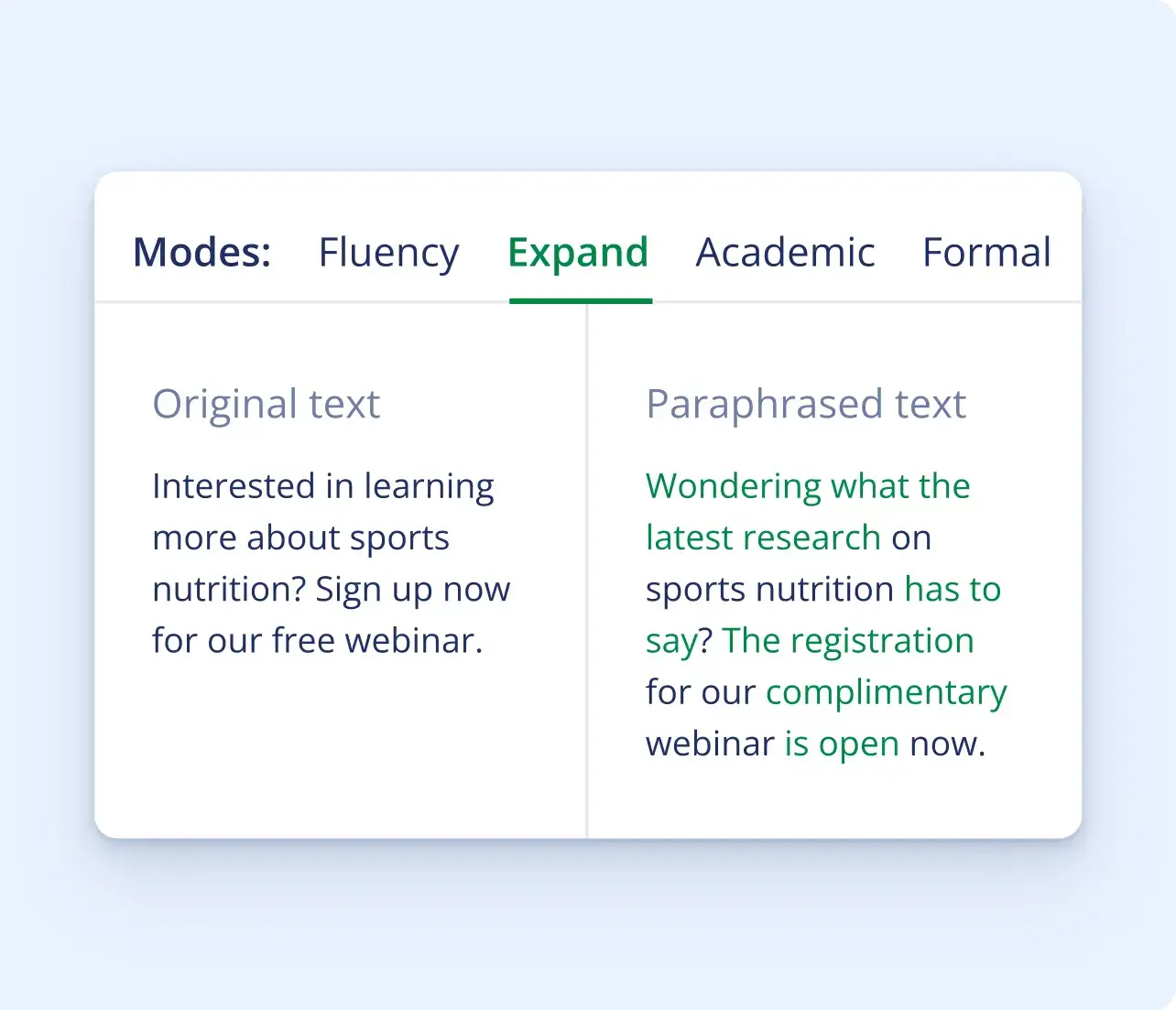
Try Quillbot’s Paraphraser to find the right words to communicate your message.
An example of a disjunctive syllogism in media would be the narrator of a science documentary explaining, “Either the observed celestial object is a comet, or it is an asteroid. It has a tail, which comets have but asteroids do not; therefore, it is a comet.”
Note: Examples of “either–or” arguments seen in the media typically aren’t syllogisms. Arguments found in media discourse are typically examples of inductive reasoning. (When inductive arguments present exaggerated binary options and ignore nuance, they exemplify the either-or fallacy or the false dilemma fallacy.)
Quillbot’s free Paraphraser helps you rephrase sentences and paragraphs to strike the right tone.
Whether you’re writing marketing copy or a social media post, use our paraphrasing tool to find just the right words.
Try Paraphraser now