
Cuba Flag | Symbolism, Meaning, & History
Cuba is a small but resilient nation located in the Caribbean that’s known among other things for its cars, music, and cigars. Cuba has long been subject to interest globally—thanks to its resources like sugar during colonial times and its distinct political history in the 20th century.
In this guide, you’ll learn about the meaning, history, and symbolism behind the flag of Cuba. You’ll also discover unique fun facts about this island nation.
Try Quillbot’s free Image Generator to create custom graphics of your favorite country flags.
Key takeaways
- Get a quick, clear understanding of Cuba’s flag—including its design, symbolism, and why its colors and star matter.
- Discover the story behind the flag’s creation, from Narciso López’s original concept to its adoption when Cuba gained independence in 1902.
- See how Cuba’s history and independence shaped the flag, giving you useful context for understanding its symbols and national identity.
- Go beyond the flag with fascinating facts about Cuba, including its high literacy rate, medical research, unique wildlife, and love of baseball.
Cuba flag overview
Below you’ll learn the basics about the flag of Cuba—including the date it was adopted, its colors, and what inspired it.
| Feature | Details |
|---|---|
| Also known as | Flag of the Lone Star (Bandera de la Estrella Solitaria) |
| Use | National flag and ensign |
| Officially adopted | 20 May 1902 |
| Proportion | 1:2 |
| Colors | White, blue, and red |
| Inspired by | Masonic symbols, Cuban independence movement |
Cuba flag meaning and symbolism
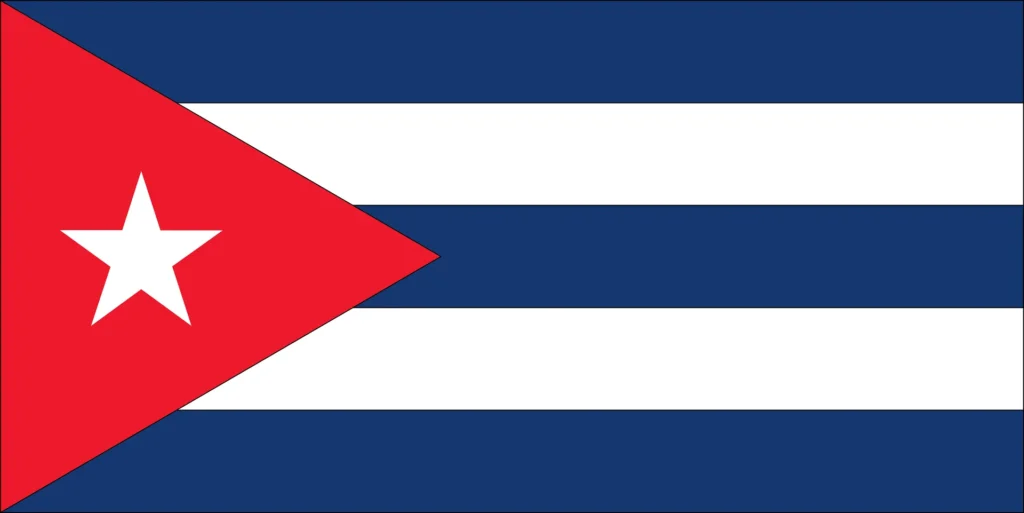
The flag of Cuba consists of three blue stripes, two white ones, and a red equilateral triangle with a white star in the middle.
Here’s what each element symbolizes:
- Blue stripes: The three indigo stripes represent the three departments Cuba was divided into at the time of its independence struggle.
- White stripes: Signify the purity of Cuban patriotism
- Red triangle: A symbol of strength and consistency, derived from Masonic influences
- White star: Stands for freedom, independence, and sovereignty
Cuba flag history
Surprisingly enough, the flag of Cuba was actually designed by a Venezuelan in New York City. The flag’s creator, General Narciso López, was actively engaged in armed struggle against the Spanish colonial government in his home of Caracas before moving to Cuba. Although he came up with the flag’s concept while in exile in New York, he remained a staunch advocate for Cuba throughout his life.
Alongside López, the poet Miguel Teurbe also contributed to the design. Teurbe’s wife sewed the first flag under the guidance of the famed Cuban philanthropist Marta Abreu in 1849. It was officially adopted in 1902 when Cuba finally gained its independence from Spain.
Fun facts about Cuba
Discover some unique facts about Cuba that you may not know.
- Cuba’s literacy rate stands at over 99% and is one of the highest in the world.
- Cuba has pioneered a lung cancer vaccine and is working on research for other vaccine-administered immunotherapies.
- The island of Cuba has been inhabited since 4000 BC, initially by the Guanahatabey and Ciboney indigenous peoples.
- Cuba is home to the world’s smallest bird—known as the bee hummingbird—along with 350 other species.
- Cuba’s national sport is baseball. The national team has multiple Olympic titles.
Frequently asked questions about the flag of Cuba
- Which flags are in the stars and stripes flag family?
-
The main country flags included in the stars and stripes flag family include:
There are also several sub-national flags in this family, including that of Puerto Rico.
Translate messages and greetings into 50+ languages using Quillbot’s free Translate tool.
Other interesting articles
If you want to know more about colors, letters, or the meaning of emojis, make sure to check out some of our other articles with explanations and examples.