
Uruguay Flag | Meaning, Symbolism & History
Uruguay is a small nation in South America known for its progressiveness, love of yerba maté tea, and football.
In this guide, you’ll learn all about the flag of Uruguay—from its history to the symbolism behind it. You’ll also discover some unique facts about Uruguayan society and culture.
Try Quillbot’s free Image Generator to create custom graphics of your favorite country flags.
Key takeaways
- Understand the flag: Nine blue and white stripes represent Uruguay’s original nine departments, while the Sun of May symbolizes freedom and independence.
- Explore its history: Designed by Joaquín Suárez and adopted in 1828, the flag was later reduced from 19 stripes to nine.
- Learn the symbolism: The Sun of May reflects the 1810 May Revolution and Uruguay’s ties to Argentina and the Río de la Plata region.
- Discover Uruguay: Explore its other national flags, renewable-energy leadership, football culture, and tango connections.
Uruguay flag overview
Below you’ll find the basics about the flag of Uruguay—including the date it was adopted, its colors, and what inspired it.
| Feature | Details |
|---|---|
| Official name | National Pavilion (Pabellón Nacional) |
| Use | National flag and ensign |
| Officially adopted | 18 December 1828 |
| Proportion | 2:3 |
| Colors | White, blue, yellow, and brown |
| Inspired by | United States flag; Argentina’s Sun of May |
Uruguay flag meaning and symbolism
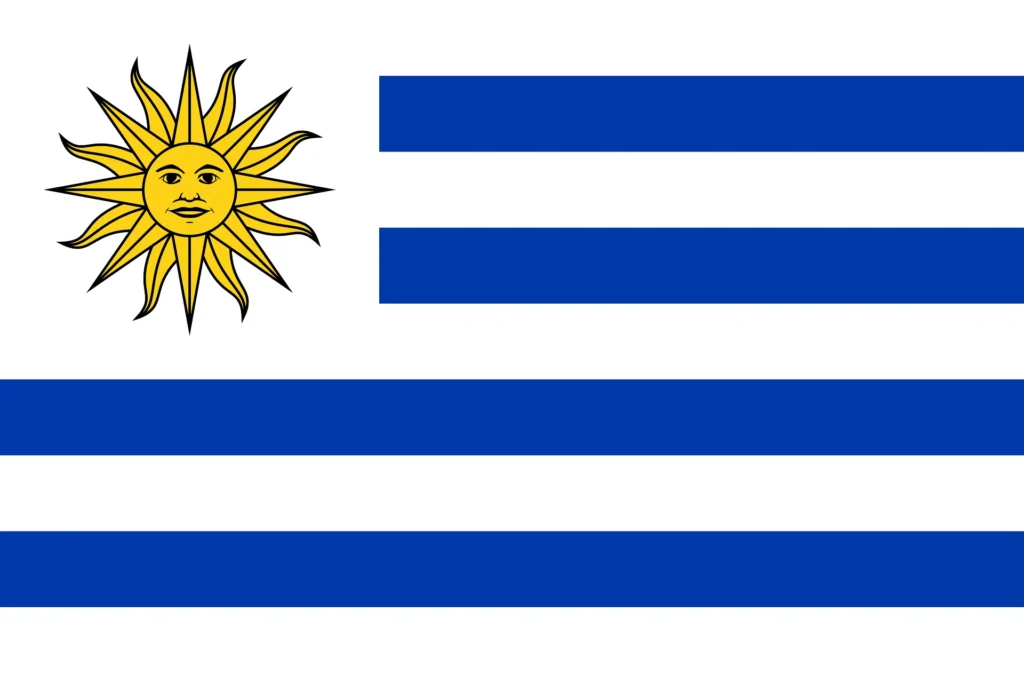
Uruguay’s flag consists of nine horizontal stripes that alternate between blue and white. In the top left corner is the Sun of May, which has 16 rays that alternate between yellow triangular and wavy brown. Here’s a look at what each of the components mean:
- Nine stripes: These represent the nine departments that make up Uruguay.
- Blue and white: These colors were borrowed from the flag of neighboring Argentina to signify their regional and historical ties.
- Sun of May: This signifies the May Revolution of 1810. It’s also reminiscent of the Incan sun god Inti. It also symbolizes freedom and independence.
Uruguay flag history
Uruguay’s flag was designed by Joaquín Suárez. The original version had 19 stripes, but these were reduced to nine to make the flag more recognizable from afar. These nine stripes also represent the original departments of Uruguay.
In addition, the flag takes heavy inspiration from Argentina—particularly the 1810 May Revolution against Spain, which broke out in Buenos Aires but spread across the Río Plata region that both countries share.
Uruguay also has two other official flags. These include the Artigas flag, which is named after the leader who fought for independence, and the flag of the Treinta y Tres (thirty three), which also serves as a national symbol of Uruguay.
Fun facts about Uruguay
Discover some interesting facts about Uruguay that you may not know.
- 100% of Uruguay’s energy comes from renewable sources.
- There are more cows than people in Uruguay. Beef is the country’s largest export, and much of the country outside the capital city is farmland.
- Uruguay has the longest national anthem in the world, with some versions lasting up to six minutes.
- Uruguay ranks 7th in the world when it comes to LGBTQ+ protections.
- Uruguay is arguably the birthplace of tango, although Argentines also claim this distinction.
Frequently asked questions about the flag of Uruguay
- Which flags are in the stars and stripes flag family?
-
The main country flags included in the stars and stripes flag family include:
There are also several sub-national flags in this family, including that of Puerto Rico.
Translate messages and greetings into 50+ languages using Quillbot’s free Translate tool.
- Which country flags have a sun with a human face?
-
The two main country flags that have a sun with a human face are Argentina and Uruguay.
This symbol is known as the Sun of May, and alludes to the 1810 May Revolution, which broke out in Argentina and spread across the region as an independence struggle against Spain.
Translate words and expressions into Spanish and 50+ other languages with Quillbot’s free Translate tool.
Other interesting articles
If you want to know more about colors, letters, or the meaning of emojis, make sure to check out some of our other articles with explanations and examples.