
Flag of Lebanon | Meaning, History & Fun Facts
Lebanon is a small but unique nation located in the Levant region bordering the Mediterranean Sea. It’s known for its cuisine, ancient cities, and cedar trees. In this guide you’ll discover the history behind its flag, what its symbols represent, and interesting fun facts about Lebanon.
Try Quillbot’s free Image Generator to create fun graphics of your favorite country flags.
Key takeaways
- Learn what the flag of Lebanon represents, including the symbolism of its red, white, and green design and the iconic cedar tree at its center.
- This guide also explores the flag’s adoption in 1943, the history behind its design, and interesting facts about Lebanon’s culture, landmarks, and heritage.
Quick facts about the flag of Lebanon
Learn the basics about the flag of Lebanon, including the year it was adopted, its colors, and what inspired it.
| Feature | Details |
|---|---|
| Official name | National flag of Lebanon |
| Use | Official political, ceremonial, diplomatic contexts, and by civil society |
| Adopted | December 7, 1943. |
| Proportion | 2:3 |
| Colors | Red, white, and green |
| Coat of arms | None |
| Inspired by | Lebanese cedar tree |
Flag of Lebanon meaning and symbolism
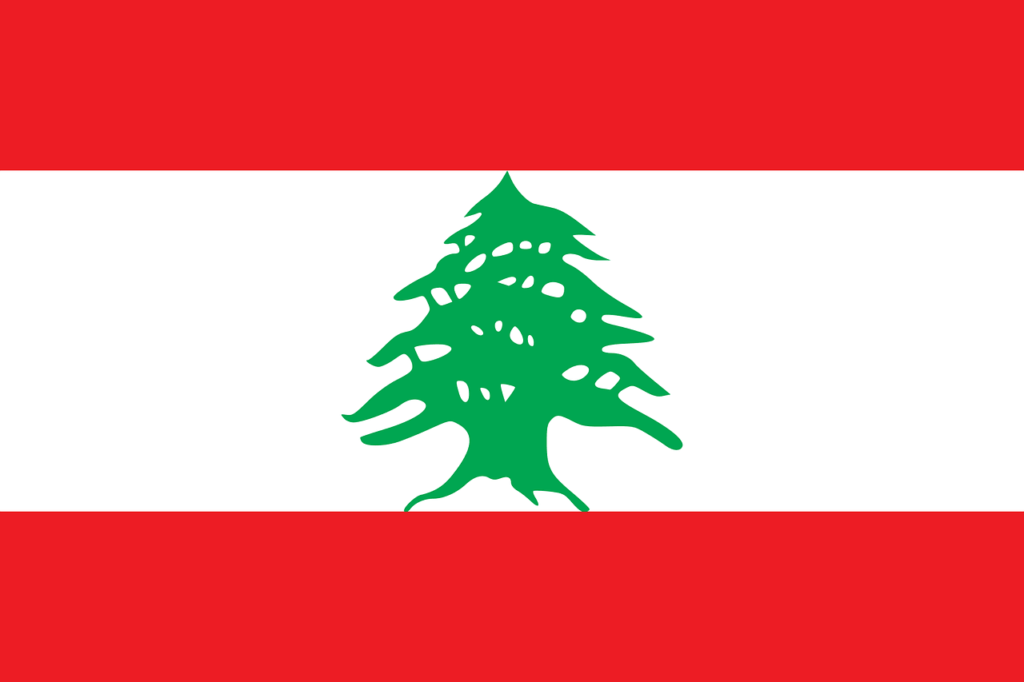
The flag of Lebanon includes the following colors and images, each with its own distinctive symbolic meaning:
- Red stripes: Symbolizes the blood shed by the Lebanese people in their struggles for independence.
- White stripe: Signifies purity, peace, and the snow-covered mountains of Lebanon.
- Green tree: Represents the Lebanese cedar, which has long been a unifying source of national identity and pride as a symbol of resilience and hope.
History of the flag of Lebanon
The flag of Lebanon was officially adopted in 1943 as part of the nation’s independence from France. The flag also bears some inspiration from the red, white, and blue tricolor of the French flag. In fact, during the French mandate period, the Lebanese flag featured the same design but with the cedar tree placed at the center.
The Lebanese cedar tree has long held deep significance for the Lebanese people, with references dating back to ancient Egypt, Mesopotamia, and the Old Testament of the Bible. Its enduring nature is a major point of national pride and represents resilience. This spirit particularly resonated as the country moved towards independence.
The cedar tree flag was also inspired in part by the Maronite flag, an ethno-religious group found in the eastern Mediterranean and Levant regions. Its green coloring holds significance in both Islam and Christianity, two of the country’s major religions. Thus, it serves as a unifying national symbol connecting the diverse ethno-religious groups residing in Lebanon.
Until 1990, when official specifications were established, the flag would sometimes be depicted with variations such as the cedar tree with a brown trunk.
Fun facts about Lebanon
Discover some interesting facts about Lebanon you may not know:
- Lebanon is home to Byblos, the world’s oldest continuously inhabited city.
- The Lebanese cedar tree was used since antiquity for building ancient temples and ships.
- Lebanon is home to snow-covered mountains populated with ski resorts, in addition to long stretches of lush Mediterranean coastline.
- Lebanon is also the birthplace of the oldest phonetic alphabet, invented by the ancient Phoenicians.
- It is prized for its cuisine, which features many Mediterranean and Levantine staples like hummus, shawarma, baba ganoush, manakeesh, tabbouleh, and fattoush salad.
Frequently asked questions about the flag of Lebanon
- Which country flag has a tree on it?
-
The country flag with a tree prominently displayed on it is the flag of Lebanon.
Other national flags that have trees in their coat of arms include:
- Belize
- Equatorial Guinea
- Haiti
- Fiji
Translate messages and greetings into 50+ languages using Quillbot’s free Translate tool.
- Why does the Lebanese flag have a tree on it?
-
The tree on the Lebanese flag is the Lebanese cedar, which is a symbol of national pride, unity, and resilience.
It became part of the official flag of Lebanon in 1943 when the nation gained its independence from France.
Create custom graphics with your favorite country flags using Quillbot’s free Background Generator for your phone or computer.
- Which country’s flag has red, white, and green?
-
Several countries have flags with red, white, and green. These include:
- Italy
- Iran
- Mexico
- Hungary
- Lebanon
- Bulgaria
- Madagascar
Create cards and graphics featuring your favorite country flags using Quillbot’s free Image Generator tool.
Other interesting articles
If you want to know more about colors, letters, or the meaning of emojis, make sure to check out some of our other articles with explanations and examples.