Marketing Funnel | Definition, Stages & Examples
A marketing funnel is a framework that maps the customer journey from first discovering a brand to making a purchase, and, in modern funnels, becoming a loyal customer and advocate.
Marketing funnels have different stages or levels, and some prospects drop off at each. There are various funnels, each with a slightly different customer journey. The type you use depends on your business model and your relationship to your audience.
This guide covers everything you need to know about marketing funnels, including their stages, different models, and how to build one for your business. For specific ideas about how a funnel can work for your business, Quillbot’s AI Chat can help you brainstorm.
Key takeaways
- Marketing funnels map the customer journey from initial awareness to purchase, helping you deliver the right content and messaging at each stage.
- The three core stages—TOFU, MOFU, and BOFU—guide prospects from awareness to consideration to conversion, with each stage requiring a different approach to content and calls to action.
- Modern funnels go beyond the sale by focusing on adoption, retention, expansion, and advocacy to turn customers into repeat buyers and brand advocates.
- A successful funnel requires ongoing tracking and optimization. By monitoring performance and identifying where prospects drop off, you can improve your content, messaging, and customer experience over time.
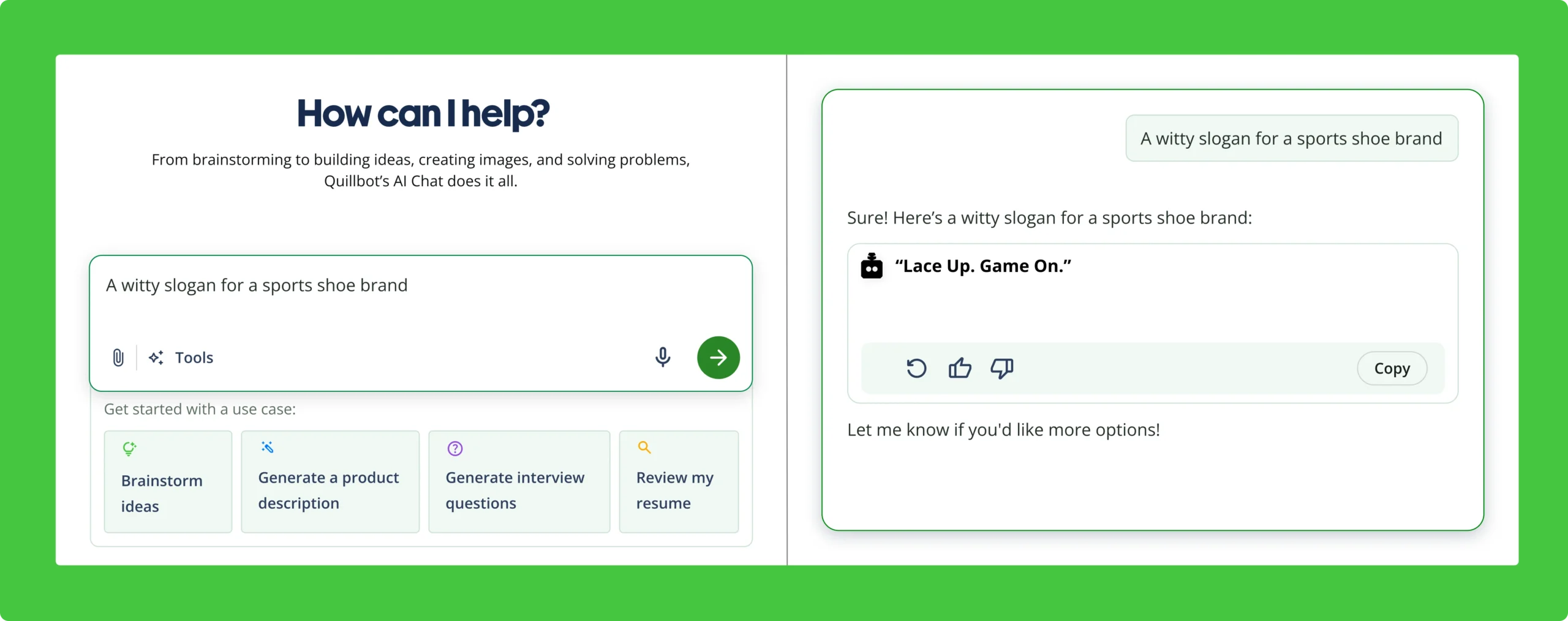
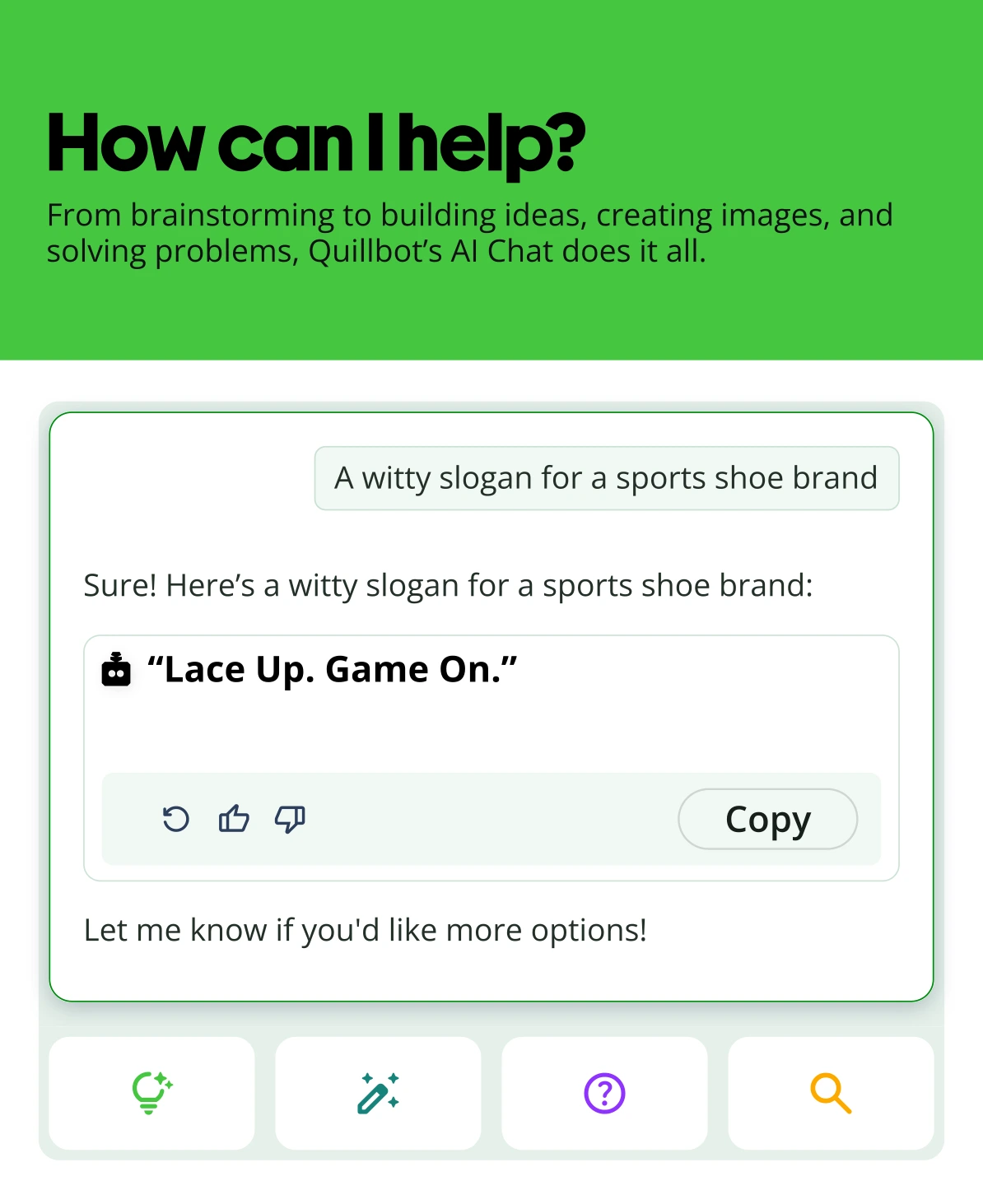
Table of contents
- What is a marketing funnel?
- Why marketing funnels matter
- Marketing funnel stages
- Marketing funnel models
- B2B marketing funnel vs B2C marketing funnel
- Marketing funnel vs sales funnel
- Marketing funnel metrics
- How to build your marketing funnel
- Frequently asked questions about marketing funnels
- Other interesting articles
What is a marketing funnel?
A marketing funnel is a model that visualizes the customer journey from the moment a prospect becomes aware of your brand to the moment they make a purchase. It’s structured as a funnel because a large number of people enter at the top, but this number thins out as customers continue down through each subsequent layer.
The funnel concept has been around for decades and is a marketing fundamental for understanding and addressing different stages of the customer journey. That said, as markets, channels, and customers have evolved, so has the marketing funnel.
Why marketing funnels matter
Marketing funnels help businesses understand and manage the customer journey from initial awareness to conversion and beyond. A funnel framework helps you deliver the right message at the right time, guiding prospects through the buying process.
Some of the key benefits of marketing funnels include:
- More precise targeting: Different audiences require different messages. Funnels help marketers create awareness-focused content for new prospects, educational content for those considering solutions, and conversion-focused offers for buyers who are ready to act. Without a funnel, you might waste time and money promoting products to people who aren’t ready to buy or overlook opportunities to nurture interested leads.
- Leak detection: A well-structured funnel makes it easier to identify where leads drop off, or where your funnel is “leaking.” This can help you optimize marketing efforts and improve conversion rates. For example, if most visitors leave after viewing a landing page or fail to complete a checkout, you can pinpoint and address those friction points.
- More efficient use of resources: By aligning marketing activities with customer intent, you can allocate budgets more effectively and focus resources on the channels and tactics that generate the greatest impact.
- Improved trust: Most customers don’t make a purchase immediately. Funnels support long-term relationship building through educational content, email nurturing, social proof, and ongoing engagement that gradually increases buyer confidence.
- Better retention: Modern funnels go beyond the sale and help you map out how to turn first-time customers into repeat buyers, loyal customers, and brand advocates.
Marketing funnel stages
To fully grasp the marketing funnel, you need to understand its core stages: top (awareness), middle (consideration), and bottom (conversion). Like many marketing terms, these stages are typically known by their acronyms: TOFU, MOFU, and BOFU, respectively.
Top of funnel (TOFU): Awareness
The top of the funnel is the awareness stage. This is where prospects are just getting to know your brand and how it may solve their problems. Modern customers typically discover brands through ads, social media, or search results.
Your goal at this stage is to capture audience attention, build visibility for the brand, and educate leads about how your products or services help fix their problem. Customers at this stage want to know more about you, but they’re not ready to buy yet.
Some tactics for capturing customers at the TOFU stage are:
- Blog posts and infographics that educate customers about what your brand does and what problems it solves
- Social media content and digital PR that gets your brand name out there and shows what products and services you offer
- SEO-optimized content that customers see when they search for specific keywords relevant to their experiences and needs
At the top of the funnel, it publishes a blog post titled “10 Common Mistakes Spanish Speakers Make When Learning English” and optimizes it for Google search. The article explains frequent grammar and pronunciation challenges and briefly introduces the platform as a helpful resource without pushing a sale.
At the same time, it shares short, engaging Instagram reels like “3 English phrases you’re probably saying wrong” and collaborates with education creators to increase visibility.
A user searching “why is English pronunciation so difficult” finds the blog post, reads it, and discovers the platform for the first time. At this stage, they are simply learning and becoming aware of the brand, but aren’t ready to enroll yet.
Middle of funnel (MOFU): Consideration
The middle of the funnel is the consideration stage. Here, prospects are actively researching options and comparing you to your competitors.
Your goal at the MOFU stage is to engage these prospective customers, build trust with them, and position your brand as the best potential solution to their problems.
Strategies for accomplishing this include:
- eBooks and guides that explain how to solve common customer problems
- Webinars and educational sessions that demonstrate what your product or service can do
- Email nurturing campaigns that provide valuable information and keep your brand top of mind
- Case studies and testimonials that showcase real customer results
- Product comparisons and buyer’s guides that help prospects evaluate their options
Over the following weeks, the platform sends a series of emails with study tips, success stories from former students, and invitations to free online workshops. One email includes a case study showing how a Spanish professional improved their English and secured an international job opportunity after completing a course.
At this stage, the prospect is no longer just aware of the brand. They are actively evaluating whether the platform can help them achieve their goals and are comparing it with other language-learning options. The brand’s strategy at this point is providing useful information and building credibility rather than making an immediate sale.
Bottom of funnel (BOFU): Conversion
The bottom of the funnel is the conversion stage, when leads become real customers. A “conversion” is any desired action a business wants a lead to take, but it often refers to making a purchase. By this point, prospects understand their problem, have evaluated their options, and are ready to select a solution.
Your goal at BOFU is to drive the final conversion by making it as easy as possible for the customer to complete their purchase. This involves removing as much friction as possible, both practically and emotionally.
Good ideas for driving the final conversion are:
- Clear pricing, streamlined checkout processes, and flexible payment options that reduce barriers to purchase
- Free trials, personalized product demos, and special offers to make the customer feel more confident when buying
- Limited-time promotions and personalized offers that create a sense of urgency and help customers make a final decision
- Testimonials and reviews from other customers that offer social proof for the purchase
- Loyalty programs and post-purchase perks that encourage customers to buy now and return in the future
The platform sends them a personalized email offering a free trial lesson and a 15% discount if they enroll within the next seven days. The course page features student testimonials, success stories, and transparent pricing information. The enrollment process takes a few minutes and includes multiple payment options.
Because the brand has already built trust with the prospect, and the prospect feels fully informed to make a decision, these final incentives help remove any remaining hesitation. The prospect enrolls in the course, becoming a customer and completing the conversion.
Post-conversion
Traditional marketing funnels used to end with the conversion, or moment of purchase. But modern marketers recognize that retaining customers is just as important as acquiring new ones. Therefore, modern funnels usually include a post-conversion stage focusing on loyalty and advocacy.
Your goal at this stage is to foster strong relationships with your customers, encourage long-term engagement, and turn satisfied customers into repeat buyers and brand advocates. A positive post-purchase experience can increase customer lifetime value (CLV) and generate referrals, lowering your customer acquisition cost (CAC).
Effective post-conversion strategies include:
- Onboarding resources and customer support that help customers get the most value from their purchase
- Follow-up emails that provide tips, updates, and personalized recommendations
- Loyalty programs and rewards that encourage repeat purchases
- Customer feedback surveys that identify opportunities for improvement and make customers feel like their voices are heard
- Referral programs that reward customers for recommending your brand to others
- Community-building initiatives, such as forums, events, or social media groups, that deepen engagement
Once the course ends, the platform offers an advanced course at a discounted rate. A few weeks later, the student receives a referral offer: for every friend who enrolls, both people receive a credit to put toward future courses.
Since the student had a positive experience and continues to receive value after the purchase, they enroll in another course and recommend the platform to others. As a result, the company gains both a repeat customer and a new source of qualified leads.
Marketing funnel models
There are several marketing funnels, each with its own approach to mapping out the customer journey. All of them strive to explain how leads become customers, but they do this with different combinations of stages.
Basic marketing funnel
The basic marketing funnel is the simplest model. It divides the customer journey into three stages, all of which you learned about above:
- Top of funnel (TOFU): Awareness
- Middle of funnel (MOFU): Consideration
- Bottom of funnel (BOFU): Conversion
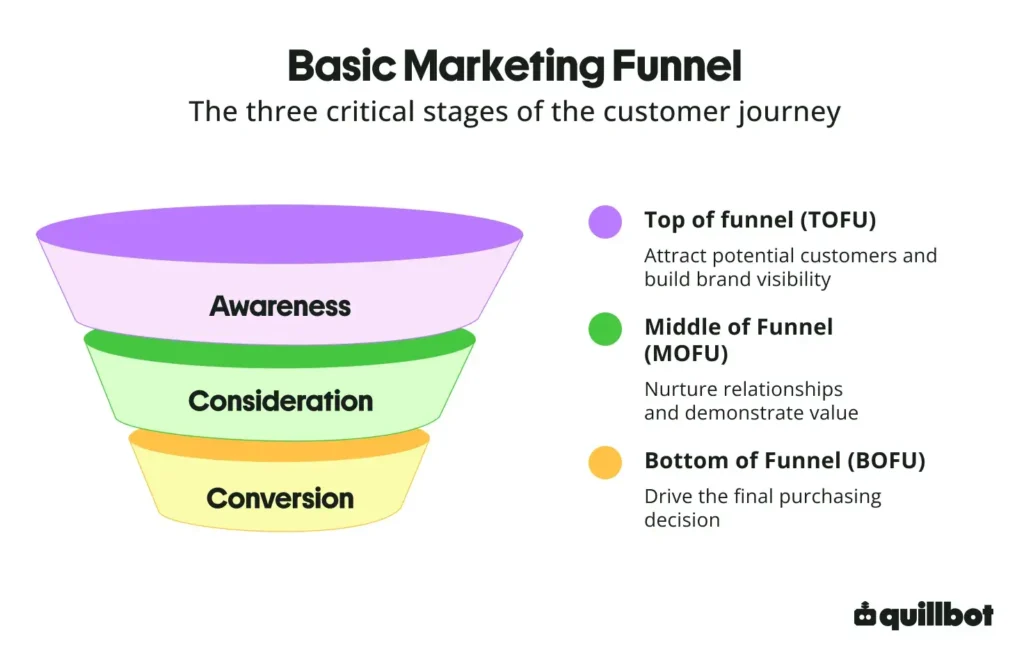
This model is easy to understand. But it assumes that customers move through the customer journey on a linear path, which isn’t always true. It also doesn’t account for post-purchase engagement. It’s good to be familiar with this most basic model, but in most cases, it’s not the best one to apply to your brand’s customer journey.
AIDA marketing funnel
The AIDA marketing funnel is one of the oldest marketing frameworks and remains widely used in advertising and copywriting. It was reportedly developed in 1898 by Elias St. Elmo Lewis, an American advertising advocate.
AIDA stands for the first letter of each of the four stages in the funnel:
- Awareness: Capture the audience’s attention
- Interest: Generate curiosity and engagement
- Desire: Create a strong preference for your solution
- Action: Encourage the customer to take the desired action
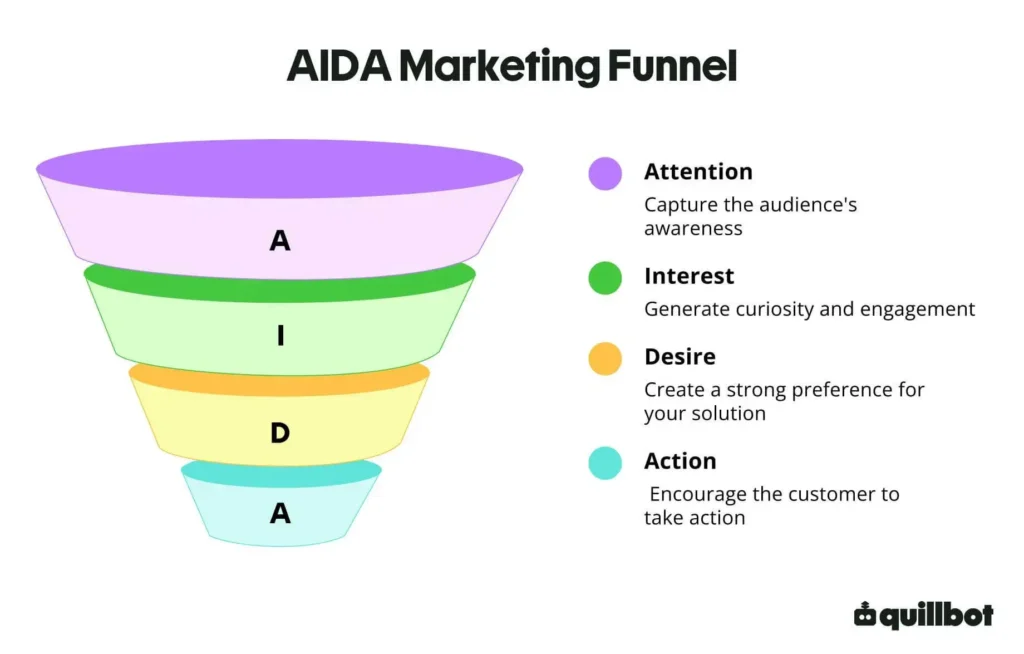
Unlike the basic funnel, AIDA focuses on the psychological journey customers experience before making a purchase. This helps you shape content that reacts to each of these psychological stages.
Modern marketing funnel
The modern marketing funnel expands on the basic funnel to include post-conversion stages. This model reflects the reality that the customer journey continues after the initial sale and that satisfied customers can become powerful repeat buyers and advocates.
The stages of the modern funnel are:
- Awareness: Prospects learn about your brand
- Consideration: They compare your brand to competitors
- Conversion: They decide to buy
- Loyalty: They make repeat purchases
- Advocacy: They recommend your brand to other people
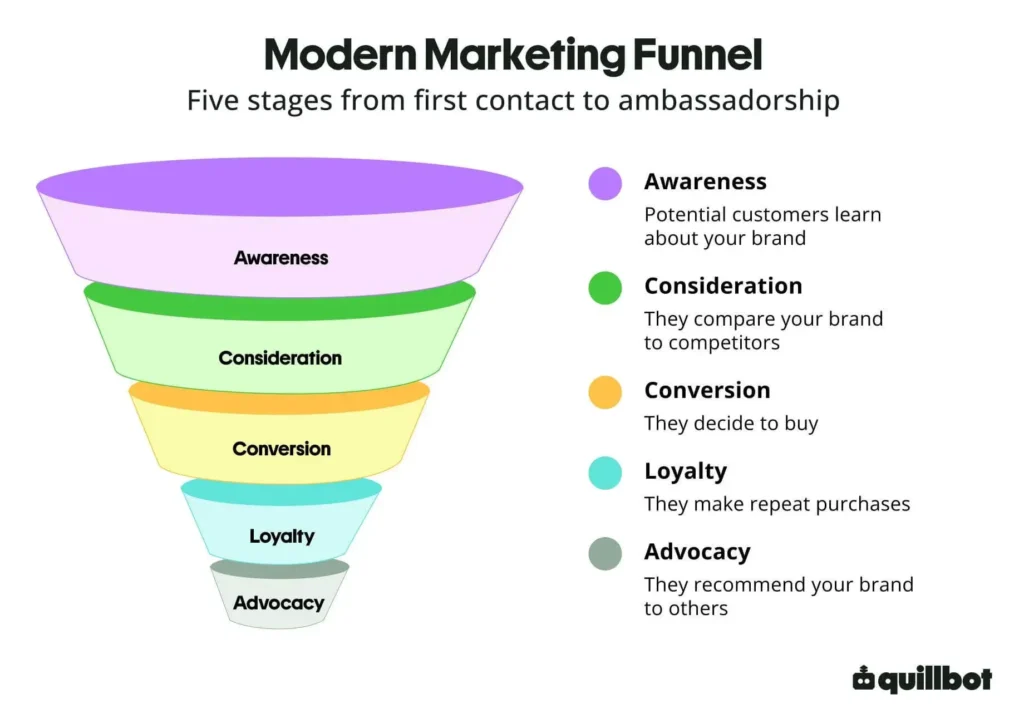
The modern funnel acknowledges the value of repeat customers and brand advocates. Today’s customer journey often doesn’t end at checkout, and this funnel reminds you to acknowledge and nurture them post-purchase.
Bowtie marketing funnel
The bowtie marketing funnel is arranged horizontally instead of vertically. This model acknowledges that customer journeys aren’t always a strict top-to-bottom funnel and that customer relationships can develop far beyond a purchase.
There are different groups of stages on either side of the “knot” in the center:
- Left (pre-purchase): Awareness, Education, Consideration
- Center (purchase or commitment): Conversion
- Right (post-purchase): Adoption, Retention/Expansion, Advocacy
The bowtie funnel is particularly popular among software-as-a-service (SaaS) and other subscription-based companies. Rather than treating a purchase as the end goal, these businesses treat it as the midpoint of a much longer customer relationship, which includes these post-conversion stages:
- Adoption: Your new customer begins using your product or service and learns how to get value from it.
- Retention/Expansion: Your business works to retain the customer and increase the value of the relationship through tactics like cross-selling and upselling.
- Advocacy: Satisfied customers recommend your brand, creating potential new customers.
B2B marketing funnel vs B2C marketing funnel
Business-to-business (B2B) and business-to-consumer (B2C) marketing strategies have some key differences it’s important to be aware of. Likewise, the marketing funnel, when applied to B2B or B2C environments, varies slightly.
The goal is still the same—to move people from awareness to purchase and beyond—but there are key differences when it comes to decision-making, purchase motivation, and how long the sales cycle takes.
| Aspect | B2B | B2C |
|---|---|---|
| Primary goal | Achieving a business goal or solving a business problem | Meeting a personal need or fulfilling a personal desire |
| Top of funnel | Narrow and targeted | Wide with broad appeal |
| Marketing approach | Relationship-driven and educational | Emotion-driven and persuasive |
| Typical funnel focus | Lead generation, qualification, nurturing, and building trust throughout a longer buying process | Awareness, consideration, conversion, and repeat purchases |
| Audience | Other businesses, corporate buyers, and institutional stakeholders | Individual consumers making purchases for personal use |
| Decision-makers | Multiple stakeholders (e.g., finance, marketing, and IT departments) | Usually one person or a small group (e.g., an individual, a couple, or a family) |
| Purchase drivers | Return on investment, efficiency, cost savings, business needs, risk reduction, and long-term value | Price, convenience, quality, personal preferences, brand perception, and emotional appeal |
| Sales cycle | Slow, often with extra time for weighing options and conferring with other stakeholders | Fast, and can at times even be impulsive |
| Customer journey | Prospects often spend a lot more time at each stage of the funnel | Prospects typically move through the funnel quickly, with a faster path to purchase |
| Content strategy | In-depth content such as case studies, white papers, webinars, reports, and product demos | Accessible content such as social media posts, product pages, videos, reviews, email campaigns, and promotions |
The project manager may discover the software through LinkedIn, download a guide, request a demo, compare competitors, and seek approval from several stakeholders, like the CEO of their company, before purchasing. The process can take weeks or months.
Meanwhile, the amateur runner might come across running shoes on social media, check out reviews and prices, compare them to a few other options, and make a purchase within the same day.
Marketing funnel vs sales funnel
The marketing funnel focuses on generating and nurturing demand for a brand’s products or services, while the sales funnel focuses on turning qualified leads into customers. These funnels naturally overlap, but aren’t exactly the same.
| Aspect | Marketing funnel | Sales funnel |
|---|---|---|
| Primary goal | Attract prospects and build interest in a product or brand | Convert qualified prospects into customers |
| Main focus | Awareness, education, engagement, and lead generation | Qualification, negotiation, conversion, and closing |
| Audience | Broad audience of prospects | More qualified prospects or leads |
| Typical activities | SEO, content marketing, social media, email campaigns, advertising | Sales calls, product demos, proposals, negotiations, follow-ups |
| Owner | Primarily the marketing team | Primarily the sales team |
Traditionally, the “end point” of the marketing funnel is when a prospect becomes a qualified or sales-ready lead, while the sales funnel ends when a purchase is completed. However, modern approaches to marketing and sales recognize that there is still value beyond these points, whether through customer retention, expansion, or brand advocacy. Both funnels can therefore extend beyond the initial conversion—and overlap at various points throughout the customer journey—to account for the ongoing customer relationship.
After being onboarded by Customer Success, the team begins using the new tool and getting value from it. As active users, they receive educational content and product updates from Marketing, helping to support retention and loyalty in the marketing funnel. Later, Customer Success helps the team upgrade their subscription, moving them into the sales funnel again, this time at the expansion stage.
The team has a positive experience, so they leave a good review on a SaaS review site and recommend the tool to another marketing team. They’ve now reached the advocacy stage of the marketing funnel.
Marketing funnel metrics
If you’re setting up a marketing funnel, it’s important to know what metrics to measure at each stage. Otherwise, you won’t be able to see if your funnel is working as you intended.
| Stage | What you want to know | Common metrics |
|---|---|---|
| Awareness | How many people are being exposed to or discovering the brand | Impressions, reach, website traffic, brand mentions |
| Consideration | How effectively you are informing prospects and how many of them are seriously evaluating your product or service | Content engagement, time on page, demo requests, free-trial sign-ups, product-page views, email engagement |
| Conversion | How effectively prospects are becoming customers | Conversion rate, number of new customers, customer acquisition cost (CAC) |
| Adoption | Whether new customers are using the product or service and getting value from it | Activation rate, onboarding completion, product usage, feature adoption, customer satisfaction surveys |
| Retention | How effectively you are keeping customers over time | Customer retention rate, churn (cancellation) rate, repeat purchase rate, customer lifetime value (CLV) |
| Expansion | How effectively you are increasing the value of existing customer relationships | Upsell rate, cross-sell rate, expansion revenue, average revenue per customer |
| Advocacy | Whether satisfied customers are recommending the brand to others | Reviews, referrals, Net Promoter Score (NPS) |
How to build your marketing funnel
To build your own marketing funnel, you need to have a firm grasp on your company’s target audience, customer journey, and business objectives. Follow these eight steps to construct a funnel model unique to your business.
1. Know your target audience
Start by identifying who you want to attract. Research your target audience’s demographics, needs, challenges, motivations, and behaviors. Use market research, customer surveys and interviews, website analytics, and any other data you have to answer these questions:
- Who are these people and where do they come from?
- What types of lifestyles do they lead?
- What are they excited and worried about?
- What motivates them in the day to day?
- What problems do they need to solve or what needs do they need to fulfill?
For B2C businesses, focus on the emotions that guide your audience’s decision-making, and for B2B businesses, determine the different stakeholders involved in a purchasing decision.
2. Map the customer journey
Next, map out the steps your audience typically takes from not knowing your company at all to choosing you as a solution provider. This may include:
- Becoming aware of their problem or need
- Learning about ways to solve or fulfill it
- Discovering potential solutions
- Evaluating different options
- Making a purchase
- Continuing to use the product or service
- Purchasing additional products or services as their needs evolve
- Recommending your company to others
These steps will help you define the stages of your funnel and how to interact with your target audience during each.
3. Define your goals at each stage
Determine what you want to achieve at each stage of the funnel. This must be tailored to your business model, but generally speaking, stage-specific goals could look like this:
- Awareness: Increase website traffic, social media followers, or brand visibility
- Consideration: Improve newsletter signups, content downloads, or demo requests
- Conversion: Boost purchases or signups
- Adoption: Expand product usage or onboarding completion
- Retention: Reduce churn and increase repeat purchases or renewals
- Expansion: Increase upsells, cross-sells, or revenue from existing customers
- Advocacy: Encourage positive reviews, referrals, or testimonials
Having a clear goal for each stage of the marketing funnel will make it much easier to construct a strategic model that actually helps you get results.
4. Build the top of your funnel
TOFU is where you attract new people who have a problem or need your business can address but who aren’t familiar with your brand yet. Don’t push sales here, as people don’t trust you enough at this stage to make that decision.
When building this stage of the funnel, you should:
- Choose the right channels: Focus on channels where your target audience spends time, such as YouTube, social media, or search engine results.
- Create helpful, relevant content: Address your audience’s problems, needs, questions, and pain points with broad, accessible content such as blog posts, social media posts, quizzes, and checklists.
- Guide prospects toward the next stage: Include a clear CTA in your awareness-stage content that encourages prospects to learn more about your company or consider your products or services as a potential solution. This could be as simple as a “Learn more” or “Explore your options” button.
The overall aim is to capture your audience’s attention and encourage them to engage further with your brand.
5. Build the middle of your funnel
At MOFU, your audience is already aware of their problem or need and they know that your brand exists. At this stage, your content should help prospects understand their options and evaluate whether you are the right solution for them.
To construct this stage of the funnel:
- Consider how people arrive here: Identify what prospects already know about their problem and your brand, and what information they need to move closer to a purchasing decision.
- Create more specific, in-depth content: This content should demonstrate your expertise, help prospects make an informed decision, and may include case studies, comparisons, webinars, product demos, and free trials or samples.
- Guide prospects toward the next stage: Include clear CTAs that encourage prospects to take a step toward conversion, such as requesting a demo, starting a free trial, booking a consultation, or contacting your sales team.
Your main goal is to build trust and move interested prospects closer to a purchasing decision.
6. Build the bottom of your funnel
At BOFU, your audience is already familiar with your brand and has evaluated their options. At this stage, your content should give prospects the information and reassurance they need to make a final decision and convert.
To construct this stage of the funnel:
- Anticipate what might prevent conversion: Identify any remaining questions, concerns, or barriers that could stop prospects from choosing your product or service, like inflexible payment methods or a confusing checkout experience.
- Create decision-focused content: Give prospects the specific information they need to make a purchase, such as detailed product pages, pricing information, customer reviews, and testimonials.
- Guide prospects toward conversion: Include clear, action-oriented CTAs that encourage prospects to complete the desired action, such as “Buy now,” “Start your free trial,” “Book a consultation,” or “Contact sales.” Your CTAs should always be specific and accurate so that you don’t damage trust at this critical stage.
Your goal here is to remove friction, reinforce your value, and make it as easy as possible for prospects to turn into customers.
7. Create a post-purchase strategy
Your marketing funnel shouldn’t suddenly end when a prospect becomes a customer. You should either add further stages, use a bowtie funnel, or create a separate post-purchase funnel to address turning new customers into satisfied, loyal ones who continue to buy from you and recommend your brand to others.
To build a post-purchase strategy:
- Plan for adoption: What do new customers need in order to get value from your product or service? This might include onboarding emails, tutorials, training resources, or customer support.
- Encourage retention: Offer customers useful content, product updates, personalized communications, loyalty programs, special offers, or other incentives that encourage them to continue using your product or service or stay engaged with your brand.
- Look for expansion opportunities: Identify opportunities to introduce existing customers to additional products, services, features, or higher-tier plans that meet their evolving needs.
- Encourage advocacy: Give satisfied customers opportunities to share their experiences through reviews, testimonials, referrals, or user-generated content.
Your goal is to build an ongoing relationship with customers that encourages them to stay, spend more, and recommend your brand to others.
8. Track and optimize as you go
Building a marketing funnel isn’t a one-time task. It requires analysis and optimization to keep it working. Once you’ve built your funnel, analyze performance at each stage to understand what’s going well, where prospects are dropping off, and what areas you can improve.
Some ways to track your funnel include:
- Using analytics tools like Google Analytics or Amplitude to monitor website traffic and sources
- Checking content downloads and social media interactions
- Reviewing demo requests and free trial signups and the paths users took to reach those points
- Monitoring revenue and whether it comes from new sales, retention, or expansion
- For subscriptions, analyzing churn rate and the reasons behind cancellations
- Tracking referrals and identifying patterns
- Reading and responding to customer reviews and feedback
Based on what this data shows you, identify where the funnel is weak and test different approaches for optimization. Experiment with different content, channels, CTAs, offers, and messaging to see what resonates most with your audience. A/B testing can help give you clearer insights into what your audience prefers.
It’s extremely difficult to create a perfect funnel from the start, but it’s possible and realistic to continually learn from your data and improve the customer journey over time.
Frequently asked questions about marketing funnels
- What is a full funnel marketing strategy?
-
A full-funnel marketing strategy is a plan that guides prospects through every step of the customer journey, from first learning about your company to making a purchase to becoming a loyal customer.
A full-funnel strategy uses the marketing funnel as its conceptual anchor, and develops goals and content for each stage of the funnel.
Full-funnel strategies address marketing holistically, instead of focusing on individual campaigns. To learn more about it, ask Quillbot’s AI Chat.
- What is an email marketing funnel?
-
An email marketing funnel is a marketing funnel applied specifically to the email channel. It helps teams develop strategies to guide recipients from learning about your company to becoming loyal customers.
Email marketing for each funnel stage may look like:
- Awareness: A welcome email sent after sign-up
- Consideration: Emails with useful tips and case studies
- Conversion: Special offer emails with strong, urgent CTAs
- Retention: Onboarding sequences and product updates
- Advocacy: Emails presenting loyalty and referral programs
To brainstorm ways you can map the marketing funnel to your email strategies, discuss with Quillbot’s AI Chat.
Other interesting articles
If you want to know more about colors, letters, or the meaning of emojis, make sure to check out some of our other articles with explanations and examples.