Marketing Campaigns | Definition, Types & How To
Marketing campaigns are coordinated, objective-driven initiatives designed to promote a brand, product, or service to a target audience within a predefined timeframe. Marketing campaigns require strategic planning of the campaign’s goal, target audience, content and actions, and how to measure its results.
This guide explains what a marketing campaign is, the core elements needed to run one, and the different types of campaigns according to goals and channels. If you’re setting up your own marketing campaigns, Quillbot’s AI Chat can help you brainstorm ideas.
Key takeaways
- Marketing campaigns are coordinated efforts that use multiple channels and consistent messaging to achieve a specific business goal within a set timeframe.
- A successful campaign starts with a SMART objective, defined target audience, clear message, appropriate channels, budget, timeline, and measurable KPIs.
- Campaigns can serve different purposes, including building awareness, acquiring customers, driving conversions, launching products, increasing engagement, and retaining existing customers.
- To create an effective campaign, plan your strategy, create and schedule your assets, launch across your chosen channels, monitor performance, and optimize based on the results.
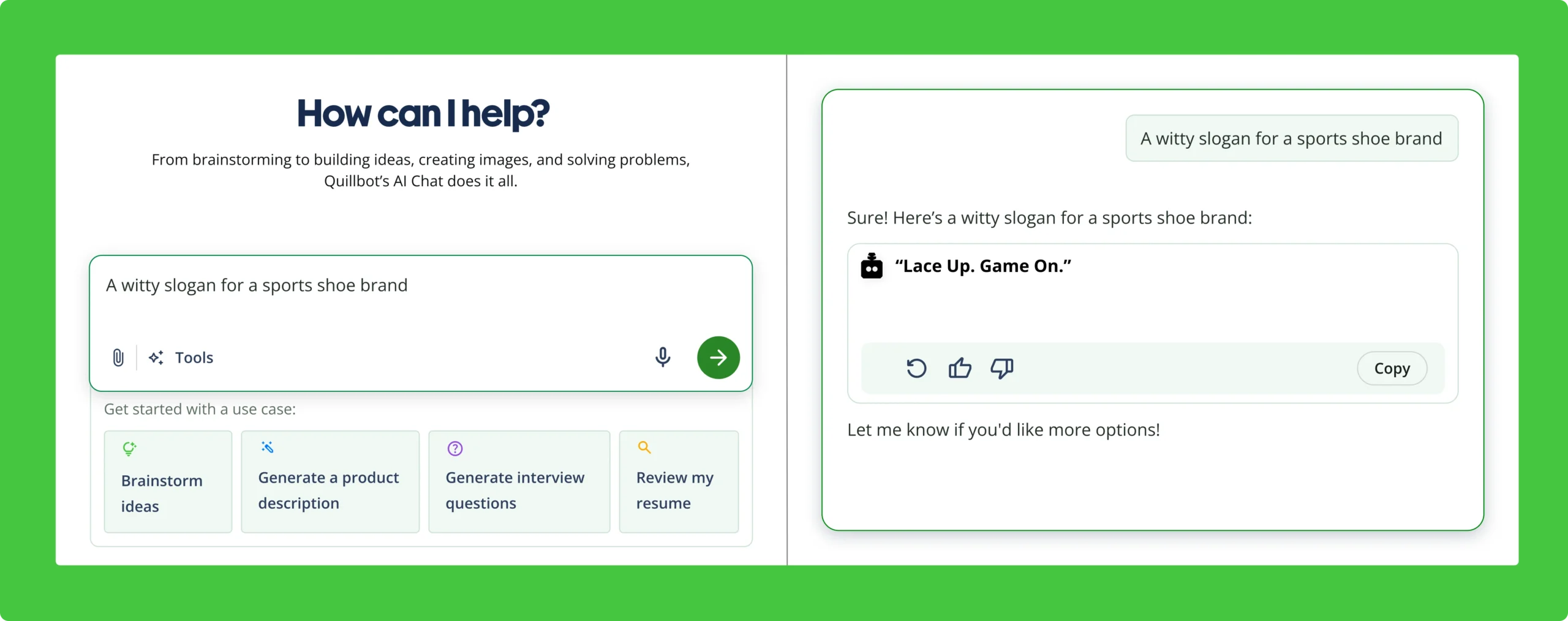
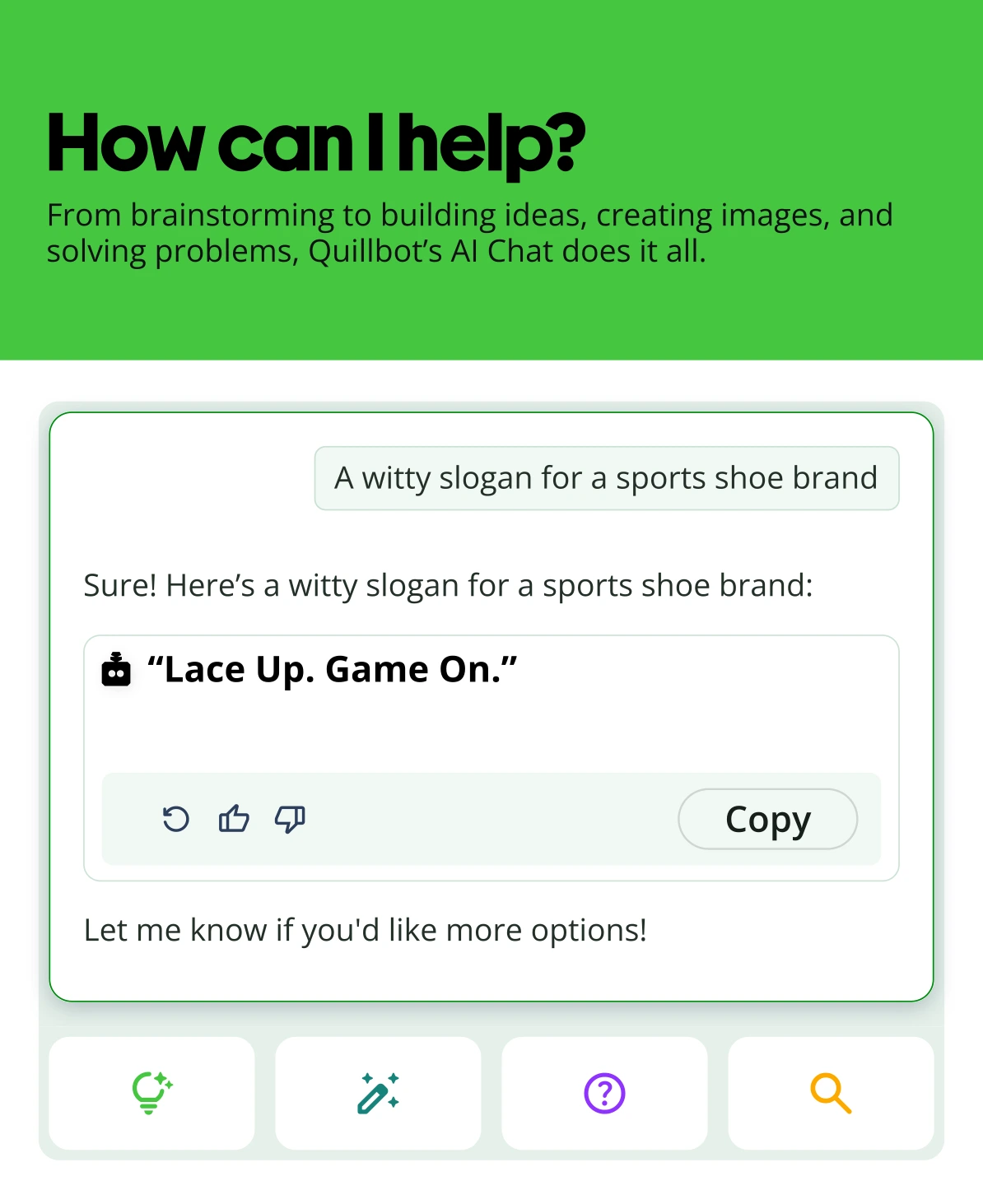
Table of contents
- What is a marketing campaign?
- Core elements of marketing campaigns
- 10 types of marketing campaigns
- Marketing campaign channels and tactics
- How to measure marketing campaigns
- How to create a marketing campaign
- Marketing campaign examples
- Frequently asked questions about marketing campaigns
- Other interesting articles
What is a marketing campaign?
A marketing campaign is a strategic plan designed to achieve a specific goal while promoting a brand, product, or service. They target specific, focused audiences within a set timeframe and most typically take place across various channels, like websites, email, and social media. Common goals of marketing campaigns include brand awareness, engagement, and conversion.
For example, a consumer beauty company may run a marketing campaign to promote a new product they’ve just launched. This campaign may last a few weeks and take place on the brand’s website, social media profiles, and email newsletters with content produced by the brand and influencers. All of this content has a unified message and aesthetic, helping the target audience recognize the campaign and reinforcing its core message across channels.
Marketing campaigns are sometimes confused with advertising campaigns, and although they’re similar, there are a few key differences. An advertising campaign is a type of marketing activity that could be part of a marketing campaign. Marketing campaigns typically build long-term recognition and loyalty, while advertising campaigns usually drive immediate action like sales or clicks, although there are also advertising awareness campaigns that aren’t aimed at this. Finally, marketing campaigns often rely on free, organic channels, but advertising campaigns strictly use paid channels.
Core elements of marketing campaigns
All marketing campaigns need a few core elements in order to run successfully. These elements are marketing fundamentals across the field, but they’re especially relevant when you’re investing time, money, and effort in a campaign:
- Objective: Your campaign needs a clear goal directly tied to business outcomes, such as lead generation or brand awareness. Your goal should be specific, measurable, achievable, relevant, and time-bound (i.e., “SMART”).
- Target audience: You also need to know who you want your campaign to reach. Use customer data, buyer personas, demographics, psychographics, and customer pain points to define the audience of your campaign. Don’t rely on broad assumptions about who might listen.
- Compelling, unified message: What message should the audience take away from your campaign? Create a narrative that communicates your brand’s unique value proposition and the solution you offer customers. When executing this via copywriting and content writing, make sure the message stays unified across channels.
- Channels: Choose the channels you’ll use in the campaign based on the resources you have available to you and where your target audience spends its time. Using every channel available to you simultaneously isn’t usually wise; it’s better to take a strategic, targeted approach. For example, if you’re trying to encourage follow-up purchases from existing customers, an email campaign would probably work better than launching content across your blog, socials, and paid ads.
- Budget: Define the financial resources available for your campaign. Consider how much it will cost to produce content assets; secure ad space; pay freelancers, partners, and influencers; and measure results.
- Timeline: Establish a calendar and schedule for your campaign. Think about how much time you need to prepare materials pre-launch, execute the campaign itself, wrap it up, and measure the results and extract conclusions. Marketing campaigns typically last 1–12 weeks depending on the goal; a seasonal promotion may run for 1–3 weeks, while a brand awareness campaign needs more time, around 6–12 weeks.
- Measurement: What will determine if your campaign is successful or not? Going back to your campaign goal, remember that it needs to be measurable. Define a few key performance indicators (KPIs) that will show you if you achieved what you set out to do. KPIs depend directly on the goal itself; for example, a conversion campaign should look at conversion rate, and an engagement campaign may measure interactions on social media.
10 types of marketing campaigns
Understanding the different types of marketing campaigns by goal can help you understand why marketers launch campaigns in the first place and which type may be appropriate for you.
Brand awareness campaigns
Brand awareness marketing campaigns aim to build recognition and familiarity with a brand among the target audience. These campaigns do not focus on immediate sales; rather, they strive to introduce and reinforce brand identity and product and/or services so that consumers become familiar with them and begin to see how such may solve their problems.
Typical channels for awareness campaigns are social media, content marketing, public relations, advertising, and influencer marketing. Common metrics for measuring brand awareness campaigns include reach, impressions, website traffic, and branded search volume.
The campaign isn’t primarily designed to generate immediate sales. Instead, Verde Skin wants more people in its target audience to recognize and become familiar with the brand.
Acquisition campaigns
Acquisition marketing campaigns seek to attract (or acquire) new customers, users, or leads. While awareness campaigns focus on “getting the word out there” about a brand and its products/services, acquisition campaigns focus on moving people further down the marketing funnel and turning them into leads or customers.
Channels that are often used in acquisition campaigns include search engine optimization (SEO), paid advertising, email marketing, or lead-generation offers such as lead magnet downloads, free trials, or product demos. Metrics used to measure acquisition campaigns usually include new customers, leads, sign-ups, customer acquisition cost (CAC), cost per lead, and conversion rate.
Engagement campaigns
Engagement marketing campaigns encourage an audience to interact with a brand. Interactions may include social media likes, comments, saves, and shares; responses to polls, quizzes, or interactive content; or participation in contests. These interactions help build relationships with potential and existing customers while also increasing human interest and algorithmic attention to the brand’s content.
Channels that normally work well for engagement campaigns are social media, email, and interactive content. Engagement campaigns usually measure metrics including likes, comments, shares, clicks, survey or poll responses, participation rates, and engagement rates.
Conversion campaigns
Conversion marketing campaigns focus on getting the audience to complete a specific desired action, called a “conversion.” What exactly “conversion” means depends on the business, but it usually refers to making a purchase, signing up for a service, requesting a quote, booking an appointment or sales demo, or completing a form.
Some channels used for conversion campaigns are paid advertising, retargeting advertising, email marketing, and landing pages, especially when combined with promotional offers and clear calls to action (CTAs). Metrics used to measure conversions include conversion rate, sales, sign-ups, form completions, revenue, cost per acquisition (CPA), and return on ad spend (ROAS).
The campaign targets people who have already shown an interest in the products and aims to turn that interest into completed purchases.
Brand launch campaigns
Brand launch campaigns introduce a new brand to its target audience and focus on communicating its identity and positioning. They take place when a brand first presents itself to the world or when an existing brand decides to branch into a new geographical market, lifestyle segment, or product category.
The usual channels for brand launch campaigns are social media, influencer marketing, public relations, advertising, content marketing, and event marketing. Metrics for measuring the success of these campaigns are similar to awareness metrics and include reach, website traffic, branded search volume, social media engagement, and new leads and customers.
Product launch campaigns
Product launch campaigns encourage the audience to adopt a new product, service, or feature. They aim to generate awareness and interest before and during the launch date and adoption of the new feature or purchase of the new product/service after the launch.
Businesses may use email marketing, social media, content marketing, paid advertising, influencer marketing, and events as channels for a product launch campaign. They’ll typically measure metrics like sales, revenue, website traffic, sign-ups, and conversion rates.
The campaign combines several marketing channels to generate interest in the new product and drive sales after its launch.
Seasonal and holiday campaigns
Seasonal and holiday campaigns help businesses respond to seasonal changes in customer behavior to promote relevant products and/or services and promotional offers at the right time. Common examples of seasonal and holiday campaigns include Black Friday, Christmas, Valentine’s Day, Halloween, summer, and back-to-school.
Typical channels for seasonal and holiday campaigns include email marketing, social media, advertising, website landing pages, and seasonal content. Common metrics for measuring seasonal and holiday campaigns include sales, revenue, website traffic, conversion rate, average order value, and ROAS.
Upselling and cross-selling campaigns
Upselling and cross-selling campaigns attempt to increase the value of existing customers. Upselling encourages customers to purchase more expensive or upgraded products or services, and cross-selling recommends products or services that are complementary to what customers have already purchased.
Usual channels include personalized email campaigns, in-app messages, and personalized outreach from Sales and Customer Success teams. Some metrics that marketers typically measure to track the success of these campaigns are average order value, revenue per customer, upgrade rate, repeat purchases, and customer lifetime value (CLV).
Loyalty and advocacy campaigns
Loyalty and advocacy campaigns focus on retaining existing customers and encouraging them to recommend the brand to others. Loyalty campaigns encourage repeat purchases and continued engagement, while advocacy campaigns motivate customers to share their experiences, make referrals, or create UGC about a brand.
Typical channels are email marketing, social media, and community servers or message boards, and tactics involve loyalty programs, referral programs, and exclusive offers. Marketers usually measure the success of these campaigns by looking at customer retention rate, repeat purchase rate, CLV, referral rate, number or referrals, and number of UGC.
The campaign encourages existing customers to continue buying from TrailFuel while giving them an incentive to recommend the brand to others.
Rebranding campaigns
Rebranding campaigns communicate a company’s rebranding, which often involves a new visual identity, brand voice, and brand messaging framework. A rebranding campaign strives to build recognition for this makeover and communicate why the company is changing things up.
Rebranding campaigns often rely on public relations, advertising, social media, email marketing, and website updates. All channels should introduce the brand’s new identity. Common measurement metrics include reach, website traffic, engagement, branded search volume, and customer feedback.
Marketing campaign channels and tactics
Depending on their goals, audience, and resources, marketing campaigns may use one or several channels. Understanding the common channels and tactics can help you plan the execution of your own campaign.
| Channel | Typical tactics | Commonly used for |
|---|---|---|
| Email marketing | Newsletters, promotional emails, product announcements, automated sequences, abandoned-cart emails | Acquisition, engagement, conversion, retention, loyalty |
| Social media marketing | Organic posts, short-form video, contests, polls, user-generated content, social ads | Awareness, engagement, acquisition, product launches |
| Content marketing | Blog posts, ebooks, guides, case studies, videos, podcasts, webinars | Awareness, acquisition, engagement, lead generation |
| SEO | Keyword research, content optimization, technical SEO, link building, updating existing content | Awareness, acquisition, lead generation |
| Paid advertising | Search ads, display ads, social ads, video ads, retargeting | Awareness, acquisition, conversion, product launches |
| Influencer marketing | Sponsored posts, product reviews, demonstrations, affiliate links, creator partnerships | Awareness, engagement, acquisition, product launches |
| Affiliate marketing | Affiliate links, discount codes, product reviews, comparison content, commission programs | Acquisition, conversion, sales |
| Traditional media | TV ads, radio ads, print ads, billboards, direct mail | Awareness, product launches, seasonal campaigns |
| Direct marketing | Direct mail, SMS, telemarketing, personalized offers, targeted promotions, direct response marketing | Acquisition, conversion, retention, reactivation |
| Event marketing | Conferences, trade shows, webinars, workshops, pop-up events, product launches | Awareness, engagement, lead generation, product launches |
| Public relations | Press releases, media outreach, interviews, press events, thought leadership | Awareness, brand launches, product launches, rebranding |
| Referral marketing | Referral programs, customer incentives, referral links, rewards | Acquisition, loyalty, advocacy |
| Partnership marketing | Co-branded campaigns, cross-promotions, joint events, shared content | Awareness, acquisition, product launches |
| Mobile marketing | SMS, push notifications, mobile apps, in-app messages, mobile ads | Engagement, conversion, retention, loyalty |
| Integrated marketing | Coordinated messaging across multiple channels with shared brand assets | Awareness, acquisition, launches, major promotions |
How to measure marketing campaigns
Before you set up a marketing campaign, it’s important you know how to measure its success. The metrics you measure depend on the campaign’s goal and channels, but some of the most common ones are:
- Bounce rate: The percentage of visitors to your website who leave the page they land on immediately without navigating to any other pages
- Branded search volume: The number of searches for your brand name or another brand-specific term, which shows how many people are actively looking for your brand
- Clicks: The number of times people click on a link, ad, button, or other clickable element
- Click-through rate (CTR): The percentage of people who click an ad or a link in an email after viewing it
- Conversion rate: The percentage of people who complete the desired conversion defined by your campaign
- Cost per acquisition (CPA): The average cost of generating a desired conversion or acquisition, calculated by dividing campaign costs by the number of conversions or acquisitions generated
- Cost per click (CPC): How much you pay each time a user clicks on of your paid ads
- Cost per lead (CPL): The average amount spent to generate one lead, calculated by dividing campaign costs by the number of leads generated
- Customer acquisition cost (CAC): The average amount spent to acquire a customer, calculated by dividing the total cost of acquiring customers by the number of customer acquired
- Customer lifetime value (CLV): The estimated total revenue a customer will generate for your business throughout the lifetime of their relationship with it
- Engagement rate: The percentage of people who interact with your content after seeing it; interactions can include likes, comments, shares, saves, clicks, or other actions, depending on the channel
- Impressions: The total number of times your campaign content is displayed, including multiple views by the same user and regardless of if the users interacts with it or not
- Keyword rankings: How many pages rank in top positions for the organic search keywords they target
- Leads: Potential customers who have expressed an interest in your business by performing an action like filling out a form, requesting a demo, or signing up for an email list
- Open rate: The percentage of people who open your successfully delivered emails
- New customers: The number of people who turn into customers because of the campaign
- Net promoter score (NPS): A website visitor’s overall satisfaction with your brand based on scale of 1–10
- Reach: The number of unique people that your campaign content reaches at least once
- Referral rate: The percentage of customers who refer others to your business
- Referrals: The number of new customers or leads who come to a business through recommendations from existing customers
- Repeat purchase rate: The percentage of customers who make more than one purchase in a defined period of time
- Return on ad spend (ROAS): The revenue generated for every dollar spent on advertising. For example, a ROAS of 4 means that a business generated $4 in revenue for every $1 spent on advertising
- Retention rate: The percentage of customers who continue using a product or service over a specified period
- Revenue: The money generated by a campaign before you take into account the costs of producing and running the campaign
- Reviews: The number of customer reviews generated by a campaign
- Sales: The number of transactions generated by the campaign
- Time spent on page: The average amount of time a user spends on a page of your website
- User-generated content (UGC): Content created by customers or other members of the audience about a brand, product, or service, such as social media posts, videos, photos, or reviews
- Website traffic: The number of visits to your website or a specific page generated during the campaign
How to create a marketing campaign
Creating a marketing campaign involves defining a clear objective, identifying your target audience, and planning how to reach them. Follow these 10 steps to turn your marketing goals into an actionable campaign.
1. Define your goal
First, decide what you want your campaign to achieve based on what your business needs at the moment. Make sure your objective is specific, measurable, achievable, relevant, and time-bound (SMART). Some examples of marketing campaign goals are:
- Increase branded search volume by 20% among the target audience within three months.
- Generate 1,000 product sign-ups before the launch date through email and social media campaigns.
- Increase online sales of a new product by 15% during the first month after launch.
- Increase customer referrals by 20% within two months through a referral program.
- Increase the average social media engagement rate from 3% to 5% during a six-week campaign.
2. Identify your audience
Next, determine who you want your campaign to target. Research your ideal customers, their needs, interests, lifestyle, and pain points to develop a clear view of your target audience. Think about where they spend their time online and which channels best help you connect with them. To research your customers, you could:
- Analyze existing customer data
- Review market and competitor research
- Run customer polls, surveys, and interviews
- Build buyer personas
3. Set your budget and timeline
Define how much you can spend on your campaign and how long it will run for. Account for the costs of creating content, paid advertising, hiring freelancers, and monitoring and measuring results. Set a timeline that includes preparation, launch, active promotion, and post-campaign analysis.
4. Develop your message and offer
Create a unified campaign message that speaks to your brand’s value and resonates with your target audience. This message may be communicated slightly differently on different channels, but the main idea and feeling should be the same across all of them. For example, the copy you use on social media won’t be the same as what you write in an email, but both should communicate the same core message.
If your campaign promotes a specific product, service, or event, decide what offer will encourage people to take action, such as a discount, free trial, or exclusive content. A few examples of campaign messages and offers are:
- Product launch: A skincare brand launching a new moisturizer might use the message, “Hydration that lasts all day, without the heavy feel.” Its offer is 20% off for first-time customers during launch week.
- Lead generation: A marketing software company promoting a downloadable guide might use the message, “Learn how to create a marketing strategy that drives results.” Its offer could be a free ebook in exchange for an email address.
- Seasonal promotion: An online clothing retailer running a summer sale might use the message, “Your summer wardrobe, now at a lower price.” Its offer could be 25% off selected items for a limited time.
- Customer retention: A coffee subscription service encouraging repeat purchases might use the message, “Your favorite coffee, delivered whenever you need it.” Its offer could be a discount on the customer’s next subscription renewal.
- Brand awareness: A sustainable skincare brand might use the message, “Better skincare for you and the planet.” Its campaign could offer educational content about sustainable ingredients and packaging rather than a direct discount.
5. Choose channels
Choose the channels that support your campaign goals and help you connect with your target audience. You should also consider the strengths, weaknesses, and demands of each channel as well as the type of content you need to create and the resources available to you to do so. Focus on the channels most likely to help you achieve your goal instead of trying to use every one available.
6. Create campaign assets
Prepare the content, copies, and other materials needed to execute your campaign. These may include blog posts, social media posts, emails, landing pages, videos, advertisements, or other branded assets. Use your campaign message and visual identity to keep these materials consistent.
You should also consider setting up a brand asset management system so you have all your campaign assets stored in the same place. If you plan to use URL parameters to track the links in your campaign, you may want to set all these up at this point, too, so nothing falls through the cracks later.
7. Schedule content
Once you create your content, establish key dates for publishing content, sending emails, launching advertisements, and reviewing performance. You may want to integrate your campaign content into your regular content calendar so you have a global view of everything that needs to be published or delivered in the coming weeks.
8. Launch
Once your campaign materials are ready, launch your campaign. But before launching, do a final audit to make sure that everything is in place. You should check that:
- Your website, landing pages, and other channels are ready to receive your audience.
- Your content is error free and on brand.
- Messaging is consistent across all channels.
- All your campaign materials have clear CTAs that tell the audience exactly what to do next.
- All the links in your campaign work and navigate to the desired destination.
- Tracking and analytics are properly configured and working.
If everything looks good, you’re ready to launch. If your campaign uses multiple channels, coordinate their launch to create a unified experience.
9. Monitor
As your campaign is ongoing, monitor relevant KPIs depending on your goal so you can see how the audience is responding to your efforts. Regularly review your results to identify what is working and where adjustments may be needed. You may need to modify your messaging, targeting, budget, or channel strategy during the campaign.
10. Measure and optimize
Once your campaign ends, compare the final results with the objectives you set at the start. Analyze which channels and tactics best contributed to your performance and which didn’t add much. Finally, ask yourself: Did your campaign achieve its goal?
Use these insights to improve future marketing campaigns. If certain content, messages, or channels performed well, consider how you can apply those lessons to your next campaign. And if the campaign fell short of its goal, identify what could be changed or tested in the future.
Marketing campaign examples
Marketing campaigns can take many forms, from personalized digital experiences to large-scale product advertising. These examples demonstrate how businesses have used different channels and tactics to achieve their goals:
- Spotify Wrapped: Spotify’s annual end-of-year campaign turns users’ listening data into personalized, shareable summaries. Users get statistics and insights about the music they listened to that year that they can easily share on social media, which effectively turns them into distributors of the campaign. This campaign combines data, personalization, and social media to encourage engagement and reinforce Spotify’s brand.
- Shot on iPhone: Apple’s campaign showcases photos and videos created using iPhones. This campaign uses the “show, don’t tell” principle; instead of telling consumers about their product, the campaign shows them what it’s capable of. Apple has used customer-created content alongside advertising and outdoor displays, making the campaign an example of product-focused marketing that incorporates UGC.
- Why Do It?: Nike’s 2025 campaign reintroduced the spirit of the long-running “Just Do It” ethos to a younger generation of athletes, who may be dealing with self-doubt and the fear of failure. The campaign used a short cinematic film featuring athletes Carlos Alcaraz, LeBron James, Caitlin Clark, among others, with additional campaign extensions across multiple platforms. It provides an example of a brand using an established identity and message while adapting its campaign to a new audience.
- Real Beauty: Dove’s long-running campaign challenges conventional representations of beauty by featuring women with diverse appearances and encouraging a broader definition of beauty. It has used advertising, video, social media, research, and storytelling to communicate its message. It provides an example of a brand-awareness campaign built around consistent brand positioning rather than a specific product promotion.
- Ice Bucket Challenge: The ALS Ice Bucket Challenge became a viral social media campaign that encouraged people to dump ice water over themselves, share the video online, and nominate others to participate while encouraging donations to organizations working to help people with amyotrophic lateral sclerosis, also known as ALS or Lou Gehrig’s disease. The campaign relied heavily on user-generated content, social sharing, and participation rather than traditional advertising. It demonstrates how a simple action can encourage audience engagement and amplify a campaign through social networks.
Frequently asked questions about marketing campaigns
- How can I find the keywords for a marketing campaign?
-
To find keywords for a marketing campaign:
- Identify the terms your target audience uses when searching for information, products, or services related to your campaign.
- Use keyword research tools to evaluate search volume, search intent, and competition.
- Select keywords that align with your campaign’s goal, audience, and resources.
Use QuillBot’s AI Chat to research your topic and discover relevant keyword ideas for your marketing campaigns.
- How do you calculate ROI on marketing campaigns?
-
To calculate ROI (return on investment) on marketing campaigns, you need to subtract the costs of the campaign from the generated revenue. Then, divide this by the costs of the campaign and multiply by 100 to get the percentage ROI.
Suppose your company spends $2,000 on a social media marketing campaign, and as a result of the campaign, you generate $7,000 in new sales. You’d calculate the ROI on this campaign like this:
- $7,000 – $2,000 = $5,000
- $5,000 ÷ $2,000 = $2.50
- $2.50 × 100 = 250%
If you need help calculated the ROI on your marketing campaigns, ask Quillbot’s AI Chat.
- What are some Christmas marketing campaigns?
-
Some famous Christmas marketing campaigns are the ones from Coca-Cola, John Lewis, Starbucks, ALDI, and KFC Japan.
Christmas marketing campaigns often use seasonal promotions, gift guides, limited-time offers, email marketing, social media content, and holiday-themed advertising.
Just keep in mind that Christmas traditions and aesthetics differ around the world. For example, KFC Japan has had such successful campaigns because eating KFC on Christmas is a tradition in Japan.
If you’re planning Christmas campaign content, Quillbot’s AI Chat can help you brainstorm campaign ideas, messages, and content.
- What is inbound marketing vs outbound marketing?
-
Inbound marketing attracts people to a brand through content or experiences they seek out themselves, like SEO content, social media, or blog posts.
Outbound marketing initiates communication with audiences directly through channels such as advertising, cold emails, direct mail, and telemarketing.
Many marketing campaigns combine both approaches. Quillbot’s AI Chat can help you brainstorm inbound and outbound marketing tactics for your campaign.
Other interesting articles
If you want to know more about colors, letters, or the meaning of emojis, make sure to check out some of our other articles with explanations and examples.