How to Prepare for an Interview | 10-Step Checklist
Preparing for a job interview is about understanding the role and anticipating the questions you might be asked.
Follow this 10-step checklist to help you approach the interview with confidence, make a good impression, and show why you’re the right fit.
Why not use Quillbot’s free AI Chat to help you predict the kind of questions you could be asked in your interview?

Key takeaways
- Strong interview preparation starts with alignment: review the job description, reread your application, and connect your experience directly to the role’s requirements.
- Researching the company helps you answer “Why this role?” with confidence and gives you thoughtful questions to ask at the end of the interview.
- Prepare flexible examples for behavioral and tricky questions using the STAR method so you can speak clearly without sounding scripted.
- Practical details matter too: confirm the interview format, test your tech or route, prepare what you need to bring, and follow up afterward with a short thank-you email.
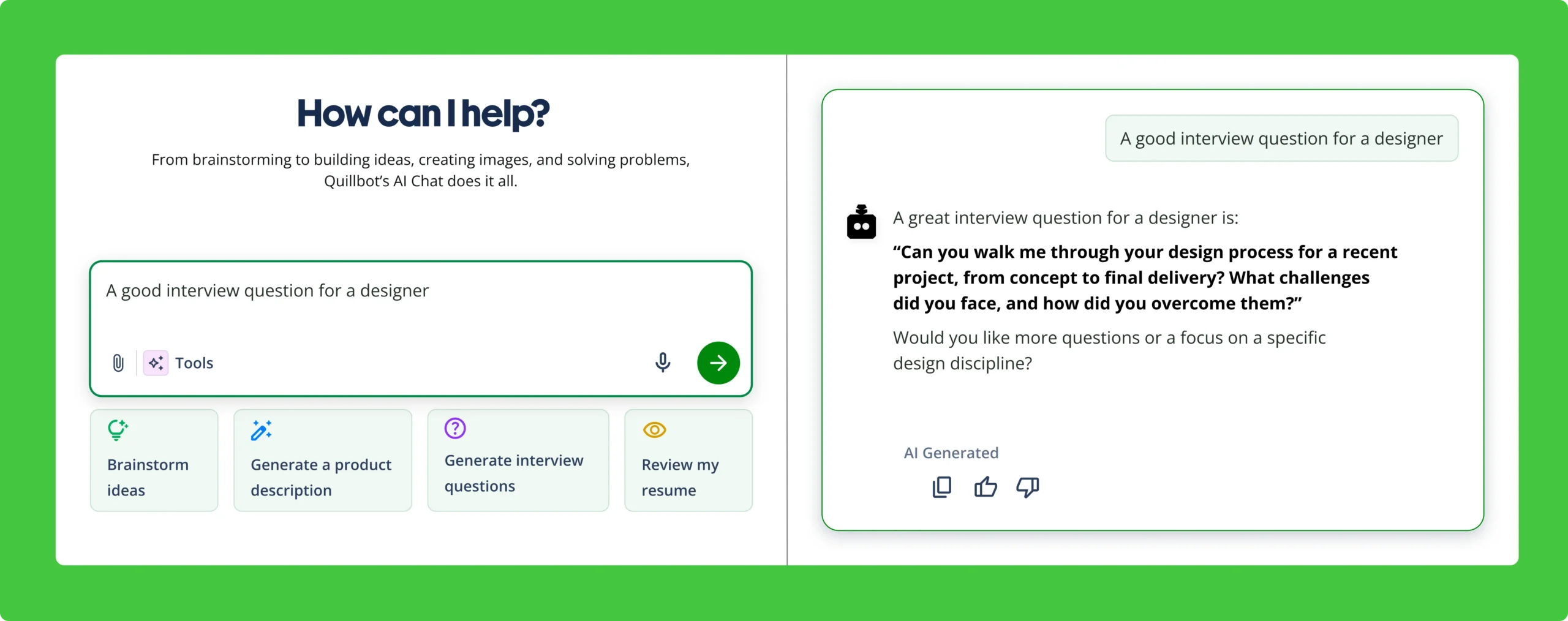
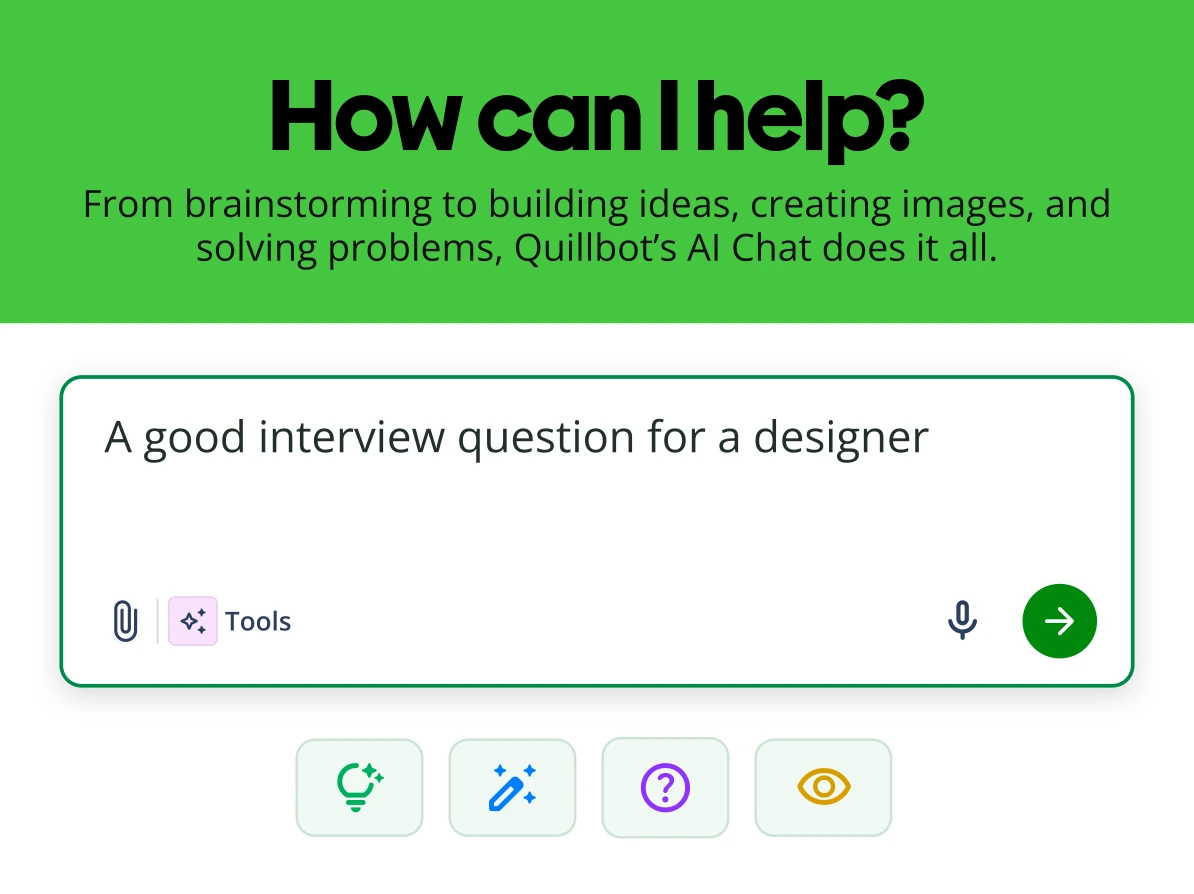
Table of contents
- 1. Review the job description
- 2. Reread your application
- 3. Confirm the interview format
- 4. Research the company
- 5. Prepare examples for behavioral questions
- 6. Prepare for tricky questions
- Sounding positive
- Talking about weaknesses
- 7. Prepare questions to ask the interviewer
- 8. Plan the practical details
- 9. Get into the right mindset
- 10. Follow up after the interview
- Frequently asked questions about how to prepare for an interview
- Other interesting articles
1. Review the job description
It’s probably been a few weeks since you applied for the job, so it’s important to refamiliarize yourself with the job description before the interview.
Hopefully, you saved the original job posting when you applied. If not, make a habit of doing this for future applications.
Before the interview, make sure the requirements from the job posting are fresh in your mind:
- The key hard skills
- The key soft skills
- The main responsibilities
- Specific qualifications or experience
This context will help you to give focused, relevant answers.
Notice the wording used to describe technical terms. If the interview process includes a conversation with someone who is not an expert in your specific role, such as a recruiter or HR representative, use these keywords when you’re talking to them. Using the same language as the job posting makes it easier for them to recognize your relevant skills, especially if they’re screening for specific requirements.
The next tip will also help you refresh your memory of the most important requirements mentioned in the job posting.
2. Reread your application
Revisit the resume and cover letter you submitted with your application, as well as any information you provided in the company’s online application form.
Pay attention to how you tailored your application to the job requirements. The specific skills, experience, achievements, and strengths you mentioned will help you answer many of the likely questions.
The interviewer may ask you to expand on information from your application, so be ready to talk about specific roles, projects, accomplishments, or career moves you included.
It’s also a good idea to remind yourself of the reasons for any gaps between jobs on your resume so you’re ready to explain them clearly and confidently.
3. Confirm the interview format
Knowing what type of interview to expect will help you prepare more effectively and feel more confident.
Check the information you’ve received about the interview carefully so you can answer these questions:
- Is it an in-person, virtual, or phone interview?
- Is it a single interview, or is it part of a longer interview process with multiple stages?
- Will the process include any other elements, such as a presentation, test, or case study?
- How long is the interview expected to last?
- Who will be interviewing you?
- Do you need to bring a portfolio or sample of your work?
4. Research the company
Learning about the company or organization you’re interviewing with will help you answer questions like “Why do you want to work here?” and “What interests you about this role?” It will also help you think of good questions to ask at the end of the interview.
Start with the company’s website. Read about its products or services, and look at pages such as “About,” “Mission,” or “Values” to get a better sense of the company’s goals and culture.
You can also:
- Search for recent news articles about the company.
- Check the company’s LinkedIn posts.
- Look up the company on employee review sites like Glassdoor, where you may find information about the interview process or the type of questions they like to ask.
- Research the company’s main competitors so you can show knowledge of the market they’re operating in.
- Review the job description again for clues about the company’s current priorities.
If you know someone who’s familiar with the company, talk to them before the interview. They may be able to give you useful context about the organization, culture, or hiring process.
5. Prepare examples for behavioral questions
Questions that start with phrases like “Tell me about a time …” or “Give me an example of …” are called behavioral interview questions.
Interviewers often ask these questions because a story about how you handled a real work situation or project can give them insight into your soft skills like problem-solving, communication, teamwork, adaptability, and leadership.
Make sure you have some examples ready for questions like these:
- Give me an example of a time when you helped resolve a disagreement within a team.
- Tell me about a time when you had to deal with a difficult customer or colleague.
- Give me an example of when you had to resolve a misunderstanding.
- Tell me about a time when you helped improve a process.
You can prepare for behavioral questions by thinking of about five examples from your work, school, volunteer experience, or other activities like sports or music. Try to choose examples that show different strengths, such as communication, problem-solving, leadership, adaptability, ownership, and teamwork.
For instance, a story about how you noticed that two teams had different expectations for a project, clarified the misunderstanding, helped everyone agree on next steps, and improved the handoff process could be adapted to answer all four of the example questions above. The key is to emphasize the part of the story that best matches the question.
A useful way to structure answers to behavioral questions is the STAR method:
S—Situation: What was the context?
T—Task: What needed to be done?
A—Action: What did you do?
R—Result: What happened?
You don’t need to memorize full answers. Just make sure the main points of each story are fresh in your mind so you can explain them clearly and naturally in the interview.
6. Prepare for tricky questions
Difficult interview questions are much easier to answer if you’ve prepared for them.
Be ready to answer questions about:
- Gaps in your resume
- Roles you left quickly
- Mistakes you’ve made
- Conflicts you’ve handled
- Challenges you experienced in previous jobs
If you’re asked about a difficult work situation in the past, focus on how you responded constructively and what you learned.
The interviewer may want to understand how you handle pressure, conflict, change, or setbacks, but they probably don’t need to hear your complaints about a previous manager, colleague, or workplace.
How to talk about challenges
| What you might honestly think | What it’s better to say in an interview |
|---|---|
| People left and weren’t replaced; we were so understaffed that we couldn’t do our jobs properly. | We lost some experienced members of the team and found it difficult to replace them. This made it harder to meet deadlines, so I suggested ways to prioritize urgent work and get temporary support from other teams. |
| My manager was disorganized and never gave clear instructions. | We missed some deadlines because there was some confusion about who was responsible for different tasks. After that, I started sending brief follow-up messages after meetings to confirm key information when it wasn’t included in the meeting notes. |
| The company kept changing direction, and it was frustrating. | The company’s priorities changed frequently, which meant we often had to change our plans quickly. I focused on clarifying which tasks were most urgent and communicating early when timelines or expectations needed to change. |
| A coworker was unprofessional and difficult to work with. | I worked with someone whose communication style was different from mine. I made sure to clarify expectations, keep conversations focused on the work, and confirm important decisions in writing. |
| I left because there was no room to grow. | I was ready for a role with more opportunities to develop my skills and take on new responsibilities, and that’s a reason why this position interests me. |
| I made a mistake because I didn’t get enough support. | I made a mistake because I wasn’t aware of a specific step in the process. Afterward, I asked for clarification, documented the correct steps, and used that experience to avoid similar issues in the future. |
Sounding positive
The words and phrases in this table are useful when you want to sound positive or objective when talking about a negative or frustrating situation.
Diplomatic language for sounding positive
| Word or phrase | Example | Instead of … |
|---|---|---|
| An issue with / some issues with | There were some issues with the implementation. | There was a problem with the implementation. |
| Limited | The budget was limited. | We didn’t have enough budget. |
| Miscalculation | We made a miscalculation about how long the task would take, so I adjusted the timeline and communicated the change early. | We got the timeline wrong. |
| Improvement | I saw an opportunity for improvement in how we tracked customer requests. | The system was inefficient. |
| Not aware / unaware | I wasn’t aware that the approval step had changed. | Nobody told me the process had changed. |
| Not fully clear | The responsibilities weren’t fully clear at first. | No one knew who was responsible. |
| Not happy with | We weren’t very happy with the outcome. | The outcome was poor. |
| There was / there were some … | There was some confusion about the deadline. | No one told us that the deadline had changed. |
| Could have been | Communication could have been better. | Communication was poor. |
| Challenge | One challenge was the short turnaround time. | The turnaround time was too short. |
| Room for improvement | There was room for improvement in how we communicated. | The team didn’t communicate properly. |
Talking about weaknesses
If you’re asked a question like “What are your weaknesses?” prepare to talk about one or two weaknesses in a specific scenario, explaining what you did to improve.
Choose a real weakness, but avoid mentioning anything that is essential to the role. For example, if you’re applying for a project management role, don’t say that you struggle with organization.
| Weakness | Example |
|---|---|
| Prioritization | In the first few weeks of the job, I realized that I could’ve been prioritizing my tasks better, so I started clarifying the urgency of each task when it was assigned to me and using a spreadsheet to keep track of my tasks. |
| Presenting | Presenting did not come naturally to me at first, so I took a presentation skills course and started looking for opportunities to practice in lower-pressure settings like team meetings. Over time, that helped me become more confident structuring my ideas and speaking in front of others. |
| Flexibility | Earlier in my career, I sometimes found it difficult when project requirements changed suddenly. I improved by focusing on the overall goal of the project and asking clarifying questions so I could adjust my work more quickly. |
| Negotiating | I used to find negotiation challenging because I wanted to avoid conflict. I improved by preparing my main points in advance, thinking about the other person’s priorities, and focusing on finding a solution that worked for both sides. |
| Giving feedback | I used to feel uncomfortable giving constructive feedback, especially to peers. I improved by making my feedback more specific, focusing on the work rather than the person, and balancing suggestions with positive comments. |
| Specific knowledge | When I started working with [specific tool/process/topic], I realized there were some gaps in my knowledge, so I took a short course, asked colleagues for advice, and practiced using it on smaller tasks until I became more confident. |
After you’ve predicted the kinds of questions that could come up in the interview, practice answering them out loud. For example, you could:
- Record yourself on your phone
- Do a mock interview with a friend
- Ask an AI tool like QuillBot’s free AI Chat to generate practice questions based on your notes
7. Prepare questions to ask the interviewer
Most interviewers will ask whether you have any questions toward the end of the interview. Asking thoughtful questions shows that you’re interested in the role and thinking seriously about whether it is a good fit.
Remember to note down questions that come to mind when you’re reading through the job description and researching the company or organization.
How is the team structured?
How would you describe the management style on this team?
What tools or processes does the team use?
What would you say is the most challenging aspect of this role?
It’s usually best to avoid asking about salary, benefits, or vacation time in the first interview unless the interviewer brings them up. Those questions are important, but it’s conventional to leave them to a second interview or after you’ve received an offer.
8. Plan the practical details
You don’t want to make a poor impression by arriving late or forgetting a document you’ve been asked to bring.
For an in-person interview, check the following information the day before:
- The address
- The name of the contact you should ask for at reception
- How you’re going to get there, including your route, travel time, parking, or public transportation tickets
- What you need to bring, such as certificates, identification, or work samples
- What you’re going to wear, and whether it’s clean and ironed
For a virtual interview, make sure you have:
- The meeting link
- The necessary software installed
- A working camera and microphone
- An appropriate background
- A quiet place where you won’t be interrupted
If you’re not going to be at home, make sure you know how you’ll connect to the internet and where you’ll sit for the interview. If you won’t be able to plug in your device, make sure the battery is fully charged.
It’s also useful to have the following things close at hand on the day of the interview:
- A copy of your resume
- Your cover letter
- The job description
- Your preparation notes
- A list of questions to ask
- A notepad and pen
- Your portfolio or work samples, if relevant
- Any instructions from the recruiter or hiring manager
You may also want to keep your preparation notes somewhere easy to access so you can review them on the way to the interview or while you’re waiting.
9. Get into the right mindset
Take confidence from the fact that you’ve been invited to an interview because the company or organization saw something promising in your application.
If you don’t like interviews, remember that you don’t need to be better at interviews than the other candidates; you just need to be the best overall candidate in the eyes of the company.
Your skills, experience, and qualifications count for a lot, and the interview is one part of the process.
Prepare as best you can and treat the interview as a learning experience; every interview you do will help you perform better at the next one.
10. Follow up after the interview
Sending a short thank-you email after the interview is a professional courtesy that may help you stand out. It reinforces your interest in the job and is a chance to subtly restate why you’re a good fit.
Even if you don’t get the position you interviewed for, a thank-you email can help you leave a positive impression that will stand you in good stead if you apply to the company for another suitable role in the future.
A thank-you email can also help you build a positive relationship with people in your industry who you may cross paths with again later in your career.
Frequently asked questions about how to prepare for an interview
- How should I prepare for an interview tomorrow?
-
If you have to prepare for an interview tomorrow, focus on the following crucial tasks:
- Reviewing the job description
- Rereading the resume and cover letter from your application
- Researching the company
- Planning how to get there on and what you’re going to wear
Then, if you have time, make some notes on how you’ll answer:
- “Tell me about yourself.”
- Any obvious tricky questions you think you may be asked (e.g., about a gap in your resume)
- A couple of behavioral interview questions aimed at getting you to talk about skills related to the role
- “Tell me about one of your weaknesses.”
You can use Quillbot’s free AI Chat to help you prepare for an interview tomorrow.
- How should I prepare for an engineering job interview?
-
As well as following general advice about how to prepare for a job interview, you can prepare for an engineering job interview by:
- Reading up on the technology behind the company’s products or services
- Refreshing your memory about engineering projects you’ve worked on that are relevant to the role
- Practicing how to explain your technical work clearly to both technical and nontechnical audiences in case you’re interviewed by a non-expert
You can use Quillbot’s free AI Chat to help you prepare for an engineering job interview.
- How should I prepare for an internship interview?
-
As well as following advice about how to prepare for an interview in general, you can prepare for an internship interview by:
- Thinking of examples from classes, projects, part-time jobs, volunteer work, or extracurricular activities that show relevant skills
- Practicing how to explain why you’re interested in the internship and what you hope to learn
You can use Quillbot’s free AI Chat to help you prepare for an internship interview.
Other interesting articles
If you want to know more about colors, letters, or the meaning of emojis, make sure to check out some of our other articles with explanations and examples.