How to Dress for an Interview | Dress Codes & Tips
Knowing how to dress for an interview is largely a matter of deciding how formally you should dress. The right level of formality will depend on the culture of the organization you’re interviewing with and the expectations of the industry, sector, or profession.
Try to work out what the organization’s office dress code is likely to be, and then dress a little more formally to be on the safe side. You can look at the company’s website and social media for clues, check sites such as Glassdoor for insights from previous interviewees, and ask people in your network who may be familiar with the organization.
Key takeaways
- How formally you should dress for an interview depends on the organization’s culture, industry, and the role you’re applying for.
- Use the organization’s usual dress code as a guide, and dress slightly more formally if you’re unsure.
- Company websites, social media, employee reviews, recruiters, and people in your network can all provide clues about interview dress expectations.
- Plan your outfit in advance and make sure it’s clean, comfortable, well-fitting, and suitable for the weather.
What to wear to an interview
The first step in deciding what to wear to an interview is to work out how formal the organization’s usual dress code is likely to be. Use this as a guide and err on the side of formality if you’re unsure. It’s better to dress slightly too formally than too casually. In the US, most workplaces broadly fall into one of the following categories:
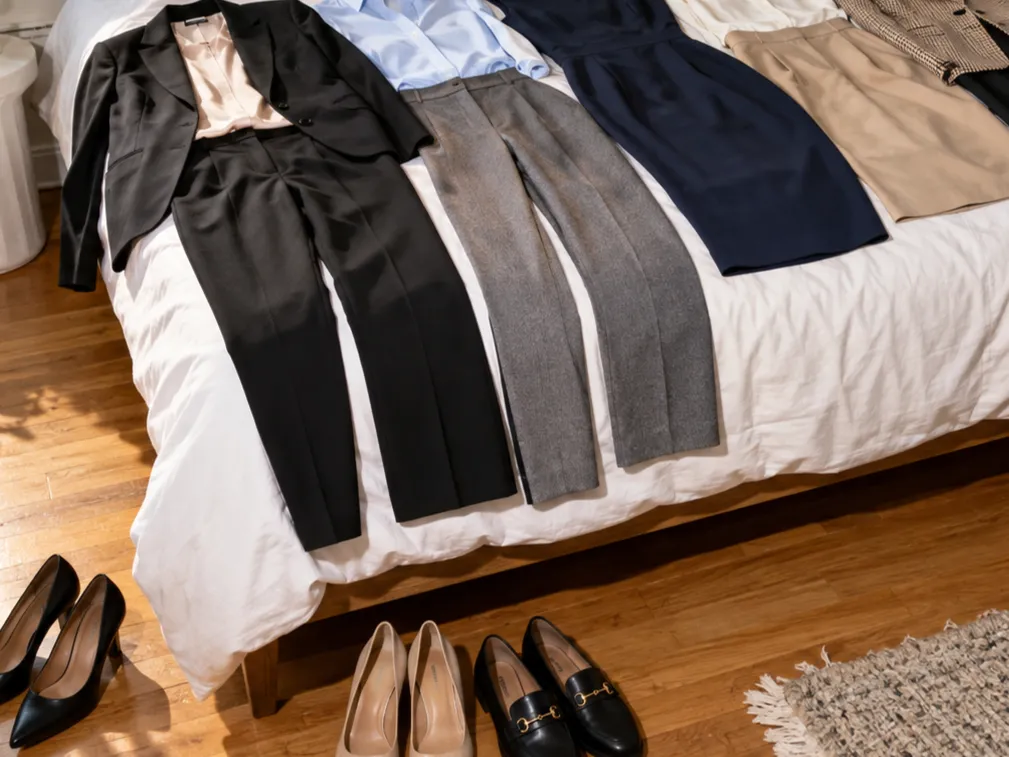
- Business professional: This is common in fields such as investment banking, corporate finance, law, management consulting, and some government roles. For female employees, typical options include a suit, tailored dress, or smart trousers or a skirt with a blouse and blazer. For male employees, this usually means a suit with a collared shirt and dress shoes, often with a tie.
- Business casual: This is common in fields such as marketing, HR, education, public relations, and many other office-based professions. For female staff, this might mean tailored trousers or a skirt with a blouse, shirt, sweater, or blazer, or a smart dress. For male staff, typical options include chinos or tailored trousers with a button-down shirt, polo shirt, sweater, or blazer.
- Casual: Casual dress codes are particularly common in some technology companies, startups, and creative workplaces. Jeans, T-shirts, sneakers, and other everyday clothing may be normal. For an interview, however, it is usually sensible to choose a slightly smarter version of the organization’s everyday style—for example, dark jeans or chinos with a neat shirt, blouse, sweater, or jacket.
You should also consider the particular role you’re applying for, as some jobs have higher expectations for how employees present themselves. This can be a clue that you should dress more formally for the interview. For example:
- More senior positions may call for a slightly more formal outfit than junior roles at the same organization.
- Customer- or client-facing roles may have smarter dress expectations than roles with little external contact.
You can use several sources of information to help you judge the organization’s dress culture:
- Look at the company’s website and social media accounts for photos of employees at work.
- Check recruitment pages, employee profiles, and videos for clues about how people typically dress.
- Read interview and workplace reviews on sites such as Glassdoor to see whether previous applicants mention the dress code.
- Ask anyone in your network who works at the organization or is familiar with its culture.
- If you are dealing with a recruiter, you can also ask them directly what people normally wear to interviews at the organization.
Interview attire tips
After deciding what level of formality is appropriate, there are some practical details to consider as part of your interview preparations that will help you look well presented and feel comfortable at your interview.
- Prepare your outfit in advance: Decide what you’re going to wear the day before to avoid any last-minute panic.
- Make sure everything is clean and in good condition: Check your clothes for stains, wrinkles, rips, loose threads, and pet hair. If you are wearing sneakers or other casual shoes, make sure they are clean and not noticeably worn.
- Choose clothes that fit well: An outfit that is too tight, too loose, or needs frequent adjusting can make you feel uncomfortable and distracted during the interview.
- Consider how comfortable the outfit will be: Avoid wearing clothes or shoes for the first time to an important interview if possible. Choose an outfit you already know you can sit, walk, and move comfortably in.
- Keep fragrance subtle: Avoid wearing large amounts of perfume, cologne, or other strongly scented products.
- Dress for the weather and season: Take the temperature and conditions into account when planning your outfit, especially if you will be traveling to the interview. Layers can make it easier to stay comfortable without changing the overall level of formality.
- Think about the whole outfit: Check that your outerwear, bag, and other accessories are appropriate for the level of formality you have chosen rather than focusing only on the clothes you will wear in the interview room.
Frequently asked questions about how to dress for an interview
- Should I wear a tie or no tie for an interview?
-
When deciding how to dress for an interview and whether to wear a tie or no tie for an interview, consider both the organization’s dress culture and the role you’re applying for. Some roles, particularly senior, client-facing, or externally representative positions, may call for a more formal appearance than others at the same organization.
A tie is usually appropriate in business-professional environments, such as investment banking, corporate finance, law, and management consulting. It may be unnecessary in business-casual workplaces, such as marketing, HR, education, and public relations, or in casual workplaces, such as many technology companies, startups, and creative organizations.
If you’re unsure, it’s generally safer to err on the side of formality.
Use Quillbot’s free AI Resume Builder to quickly create an impressively designed resume to take along to your interview.
Other interesting articles
If you want to know more about colors, letters, or the meaning of emojis, make sure to check out some of our other articles with explanations and examples.